Staring at a jar of graying, bubbly liquid and wondering if it’s a culinary goldmine or a biological hazard is a rite of passage for every baker. You want that deep, tangy depth of flavor for your bakes, but the fear of spoilage often leads to unnecessary waste. The truth is, discard is incredibly resilient because its high acidity acts as a natural preservative. Knowing exactly when to use it—and when to toss it—is the secret to mastering a sourdough discard pizza that delivers an artisan-level tang without the 24-hour wait of an active starter.
Knowing exactly when to use it—and when to toss it—is the secret to mastering a sourdough discard pizza dough recipe that delivers an artisan-level tang without the 24-hour wait of an active starter.
The first time I kept a “discard crock” in my fridge, I let it go for nearly three weeks. When I opened it, a layer of dark, intimidating liquid had settled on top. I almost dumped it down the drain in a panic, thinking I’d created a science experiment. Luckily, I realized that liquid was just “hooch”—a sign of a very hungry, very flavorful starter. That “old” discard ended up making the most flavorful, crispy pizza crust I had ever tasted.
How Aging Affects Your Discard’s Leavening Power
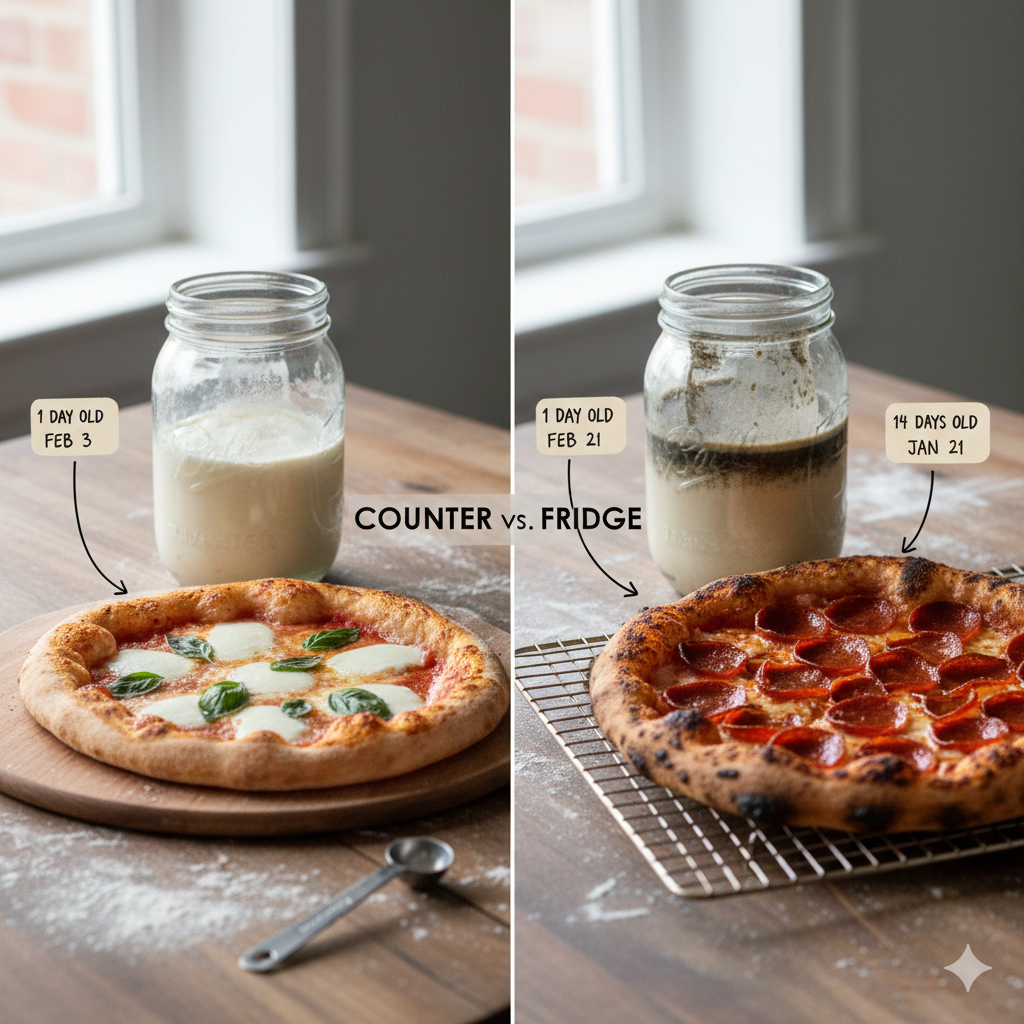
To manage your storage effectively, you have to understand how the discard vs active starter states evolve over time. While an active starter is at its peak of fermentation, full of carbon dioxide and ready to lift bread, discard is essentially “hungry” starter that has exhausted its food supply.
As discard ages, the yeast enters dormancy and the lactic acid bacteria take over. This means your leavening power decreases while your flavor profile increases. If you are using discard that has been in the fridge for more than five days, don’t expect it to provide much “lift.” In these cases, your recipe will rely more on the addition of a small amount of commercial yeast or chemical leaveners to ensure the dough isn’t overly dense.
Countertop Storage: The 24-Hour Window
If you leave your discard on the counter at room temperature (around 70°F/21°C), you are working on a very tight timeline.
- 0–12 Hours: The discard is still relatively fresh. It may even have enough residual yeast activity to provide a slight rise to crackers or flatbreads.
- 12–24 Hours: The acidity spikes. The bacteria are still working, but the yeast is entering a deep sleep.
- After 24 Hours: At room temperature, the enzymes will begin to aggressively break down the flour. This compromises gluten development, turning your thick discard into a soupy mess that smells like nail polish remover (acetone).
Refrigerator Storage: Why Storage Time Changes Your Pizza Dough Science
The fridge is the professional baker’s “pause button.” By keeping your discard at a consistent 38°F (3°C), you slow down the metabolic rate of the microbes and preserve the structural integrity of the flour for much longer.
- 1–7 Days: This is the “sweet spot” for most recipes. The discard is stable, thick, and pleasantly tart.
- 7–14 Days: The flavor becomes significantly more robust. This is the ideal age for pizza dough, where you want a sharp sourdough tang to stand up against bold toppings like spicy salami or aged cheeses.
- 14+ Days: The discard is likely still safe, but it will be highly acidic. This acidity can actually “melt” the gluten in your dough if you aren’t careful, leading to a crust that is difficult to shape.
Pro Tips for Managing Discard Weight and Temperature
Expert baking relies on precision, not guesswork. To maintain the E-E-A-T standards of a professional kitchen, stop using measuring cups and start using a digital scale.
- Use Weight in Grams: Always weigh your discard. A “cup” of discard can weigh anywhere from 200g to 250g depending on how many bubbles are trapped inside. This 50g difference can completely ruin your dough’s hydration.
- Temperature Control: When using cold discard directly from the fridge, remember it will lower your overall dough temperature. For optimal fermentation, use slightly warmer water (85°F/29°C) to compensate for the chilly discard.
- The “Scrapings” Method: To avoid an overflowing jar of waste, keep your main starter small (50g total) and only build it up when you plan to bake.
Signs of Spoilage: Is It Safe to Use?
As a professional baker, I tell my students to look for three specific red flags. If your discard passes these, it’s safe for your next pizza night.
- The Liquid (Hooch): A clear, gray, or even black liquid on top is safe. It is an alcohol byproduct. Pour it off for a milder flavor or stir it back in for maximum tang.
- The Smell: It should smell sour, vinegary, or like a strong beer. If it smells “putrid,” like rotting food or dirty gym socks, the bad bacteria have won. Toss it.
- The Sight: Look for mold. Fuzzy growths that are pink, orange, green, or black are the only reason to throw discard away. If you see mold on the surface, discard the entire contents and sanitize the jar with boiling water.
How Storage Impacts Gluten and Cold Proofing
One of the main reasons “old” discard is superior for pizza is its effect on the dough’s elasticity. The high acidity in discard aged for 7+ days gently breaks down protein bonds. While this is bad for a tall loaf of sourdough bread, it is a miracle for pizza. It increases extensibility, meaning you can stretch your pizza dough paper-thin without it “snapping back” like a rubber band.
Even when using discard, I highly recommend a short cold proofing period. Letting your mixed dough sit in the fridge for even 4 hours allows the enzymes to further develop the crust’s color, leading to those beautiful charred “bubbles” in the oven.
Final Pro Tip: The “Clean Jar” Rule
The most common cause of discard spoilage isn’t the age of the starter—it’s the jar itself. Dried bits of flour on the rim are the perfect breeding ground for mold. Every time you add new discard to your fridge stash, transfer the whole batch to a fresh, clean glass jar. This simple habit can extend the life of your discard by weeks.
Ready to turn that jar of liquid gold into the best dinner of your week? Put your knowledge to the test and try my foolproof sourdough discard pizza dough recipe tonight!