If you’ve been searching for a sourdough starter without yeast recipe, you’re not alone. Many beginners are confused about whether sourdough requires store-bought yeast packets. The truth is traditional sourdough starter never uses commercial yeast at all.
When people look for how to make sourdough starter without yeast, what they usually mean is:
“How do I make it without active dry yeast or instant yeast?”
The answer is simple. You only need flour and water.
This complete recipe for sourdough starter without yeast shows you how to cultivate natural wild yeast from scratch using just two ingredients and a little patience.
What Does “Without Yeast” Really Mean?
It’s important to clarify something:
Sourdough always contains yeast — but it’s wild yeast, not commercial yeast.
Wild yeast naturally exists:
- In flour
- In the air
- On surfaces in your kitchen
When flour and water are mixed together and left at room temperature, natural fermentation begins. This fermentation creates the rise, flavor, and structure needed to bake sourdough bread without using yeast packets.
So when you search for a sourdough starter without yeast recipe, you’re really learning how to activate natural fermentation.
Want a deeper explanation of why fermentation changes the nutritional profile of bread, see our full guide to why sourdough bread is considered healthier than regular bread.
How Long Does It Take to Make Sourdough Starter Without Yeast?
Most beginners can expect the process to take 5–7 days.
During that time:
- Bubbles will begin forming
- The smell will shift from flour-like to slightly tangy
- The mixture will begin rising after feedings
If you’re wondering how to make sourdough starter without yeast successfully, consistency is key. Daily feeding strengthens the wild yeast colony and builds fermentation power.
By the end of the week, you’ll have a fully active starter ready to bake with.
Why This Works (Simple Science)
Flour contains both wild yeast spores and beneficial bacteria called lactobacillus.
When hydrated:
- Wild yeast produces carbon dioxide (which creates rise)
- Bacteria produce lactic acid (which creates sour flavor)
This balance creates a natural leavening system — which is exactly why this recipe for sourdough starter without yeast works so reliably.
Once active, your starter becomes the foundation for baking sourdough bread without commercial yeast.
Once your starter is active, you can begin baking using our collection of sourdough bread recipes without yeast.
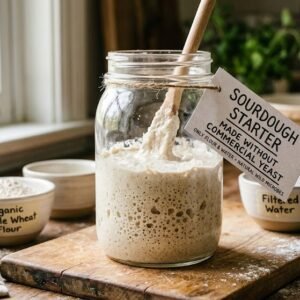
Sourdough Starter Without Yeast
Ingredients
- 120g 1 cup unbleached flour (whole wheat preferred for starting)
- 60g ½ cup filtered water (room temperature)
- Daily Feedings Days 2–7
- 60g ½ cup flour
- 30g ¼ cup water
Instructions
- Day 1
- In a clean glass jar, mix flour and water until no dry flour remains.
- Cover loosely with a lid or cloth.
- Leave at room temperature (68–75°F) for 24 hours.
- Day 2
- Check for small bubbles.
- Discard half of the mixture.
- Add fresh flour and water.
- Stir well and cover loosely.
- Days 3–5
- Repeat the discard and feeding process every 24 hours.
- Bubbles should increase.
- Starter should begin smelling slightly sour.
- Days 6–7
- Continue daily feedings.
- Starter is ready when it:
- Doubles in size within 4–6 hours
- Has consistent bubbles
- Smells pleasantly tangy
Notes
Once your starter is active, follow our complete guide for baking sourdough bread no yeast for step-by-step instructions.
Common Problems When Making Sourdough Starter Without Yeast
Even when following a sourdough starter without yeast recipe, beginners may encounter issues.
No Bubbles After 3 Days
- Room temperature may be too cold
- Water may contain chlorine
- Flour may be overly processed
Smells Like Acetone
This usually means the starter is hungry. Increase feeding frequency.
Mold on Top
If you see fuzzy green, black, or pink spots, discard and restart.
Learning how to make sourdough starter without yeast takes patience — but once established, it becomes very resilient.
Many beginners wonder whether sourdough actually contains yeast — this guide explains clearly is sourdough bread yeast-free.
What To Do After Your Starter Is Active
Once your starter is strong and doubling consistently, you can use it to bake naturally leavened bread.
Next step:
Follow our complete guide to baking sourdough bread no yeast for step-by-step instructions using your new starter.
Frequently Asked Questions
Is sourdough starter really made without yeast?
Yes. A traditional sourdough starter without yeast recipe does not use commercial yeast. Instead, it relies on naturally occurring wild yeast and beneficial bacteria found in flour and the environment.
How long does it take to make sourdough starter without yeast?
Most starters take 5 to 7 days to become fully active. If your kitchen is cooler, it may take slightly longer. Consistent daily feeding is key when learning how to make sourdough starter without yeast.
The timing and fermentation ratios in these recipes are all based on the approach detailed in our no-yeast sourdough loaf guide.
Can I make sourdough starter without yeast packets?
Yes. In fact, a proper recipe for sourdough starter without yeast never uses yeast packets. Only flour and water are needed to cultivate wild yeast naturally.
Why isn’t my sourdough starter bubbling?
If your starter isn’t bubbling, your room temperature may be too low, your water may contain chlorine, or your flour may be overly processed. Continue daily feedings and ensure your environment stays between 68–75°F.
Can I use all-purpose flour?
Yes, but whole wheat flour often activates faster because it contains more natural yeast and bacteria.