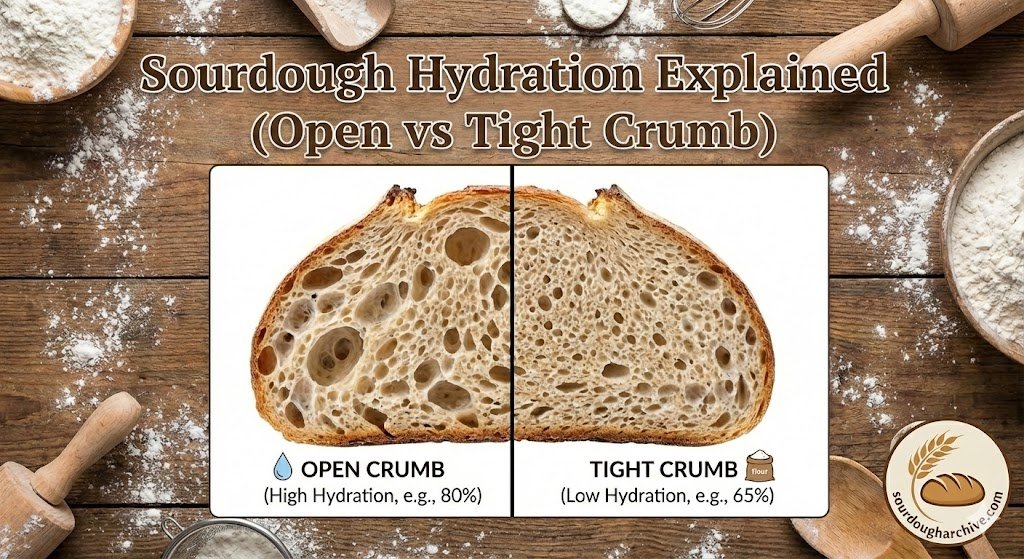
Sourdough hydration refers to the percentage of water compared to flour in your dough. Higher hydration creates a more open, airy crumb — but it also makes dough stickier and harder to control. Lower hydration creates a tighter crumb that’s easier to shape and manage.
If you’re following the full system, this guide connects directly to the Sourdough Mastery Beginner Guide, where hydration fits into the larger fermentation process.
What Does 70% Hydration Mean?
Hydration is calculated as water weight divided by flour weight.
- 500g flour
- 350g water
350 ÷ 500 = 0.70 → 70% hydration.
That percentage dramatically changes fermentation speed, dough strength, and crumb structure.
Low vs Medium vs High Hydration
65%–68% (Lower Hydration)
- Easy to handle
- Tighter crumb
- Great for beginners
- More predictable shaping
70%–75% (Balanced Range)
- Good oven spring
- Moderate openness
- Requires proper strengthening
78%+ (High Hydration)
- Very open crumb
- Sticky and challenging
- Requires strong gluten development
- Highly sensitive to fermentation timing
Why High Hydration Causes Sticky Dough
More water means weaker structural tension unless gluten is properly developed. If your dough feels unmanageable, review your Stretch & Fold Schedule and your Bulk Fermentation Timing.
Many beginner problems labeled “sticky dough” are actually fermentation timing issues. If you’re unsure, revisit How to Know When Your Dough Is Ready.
Hydration and Gummy Crumb
Excess hydration combined with underproofing is one of the most common causes of a gummy interior. If your loaf feels dense or sticky inside, read Why Your Sourdough Is Gummy (And How to Fix It).
Hydration must match flour strength and fermentation control. Temperature also plays a major role — review our Dough Temperature Guide if needed.
Beginner Recommendation
If you’re new to sourdough, start at 68%–72% hydration. Master fermentation and shaping before experimenting with higher percentages.
For a complete structured beginner path, follow the Sourdough Mastery System.