Quick Answer: Does Sourdough Help You Poop?
Yes, traditional sourdough bread helps you poop because its long fermentation process creates prebiotics and breaks down phytic acid, which improves gut motility and stool consistency.
For centuries, sourdough bread has been a staple of human diets, prized for its complex flavor and superior texture. Yet, in the modern era of refined flours and rapid-rise commercial yeasts, the true, profound health benefits of traditional sourdough fermentation have been largely forgotten. Many people who experience digestive discomfort, bloating, or constipation after eating conventional bread assume they must avoid all wheat products. However, the problem is often not the wheat itself, but the process by which the bread is made.
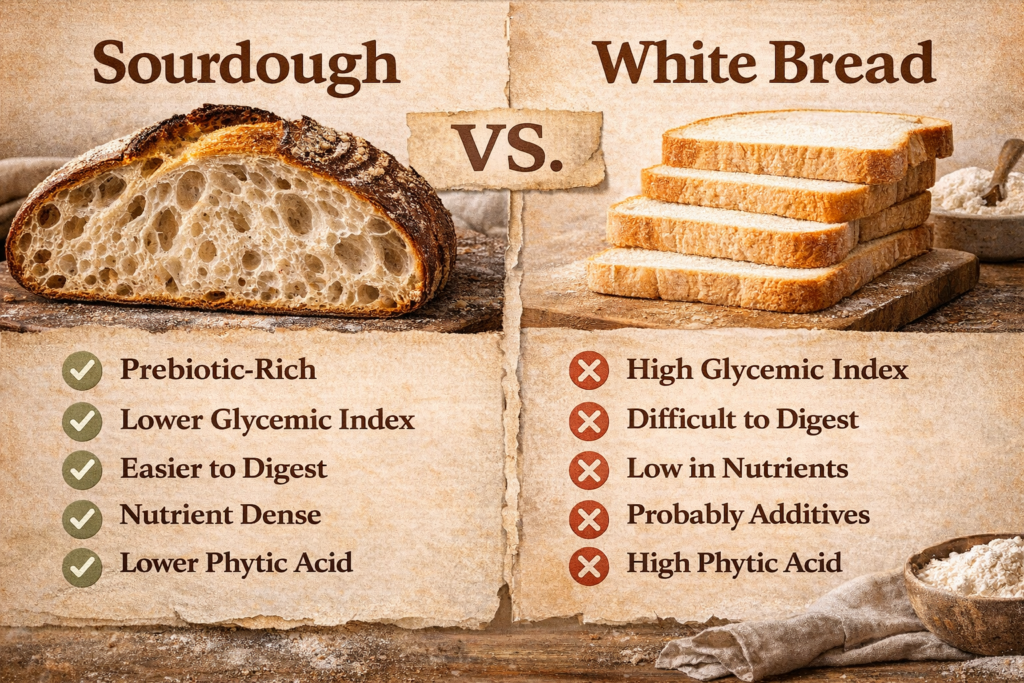
The difference lies in the symbiotic relationship between wild yeasts and Lactic Acid Bacteria (LAB) that define a true sourdough starter. This microbial powerhouse transforms the simple ingredients of flour and water into a functional food, fundamentally altering the grain’s chemical structure. This long, slow fermentation process is not merely about flavor; it is a sophisticated form of pre-digestion that unlocks nutrients and neutralizes compounds that are notoriously difficult for the human gut to process.
This article will delve into the cutting-edge science behind the sourdough revolution, revealing five distinct mechanisms by which this ancient bread can transform your digestive health. From fueling your colon muscles with powerful prebiotics to neutralizing “anti-nutrients” and creating a biological lubricant for smooth motility, the benefits of authentic sourdough are scientifically undeniable.
1. The Prebiotic Effect: Fueling Gut Muscles
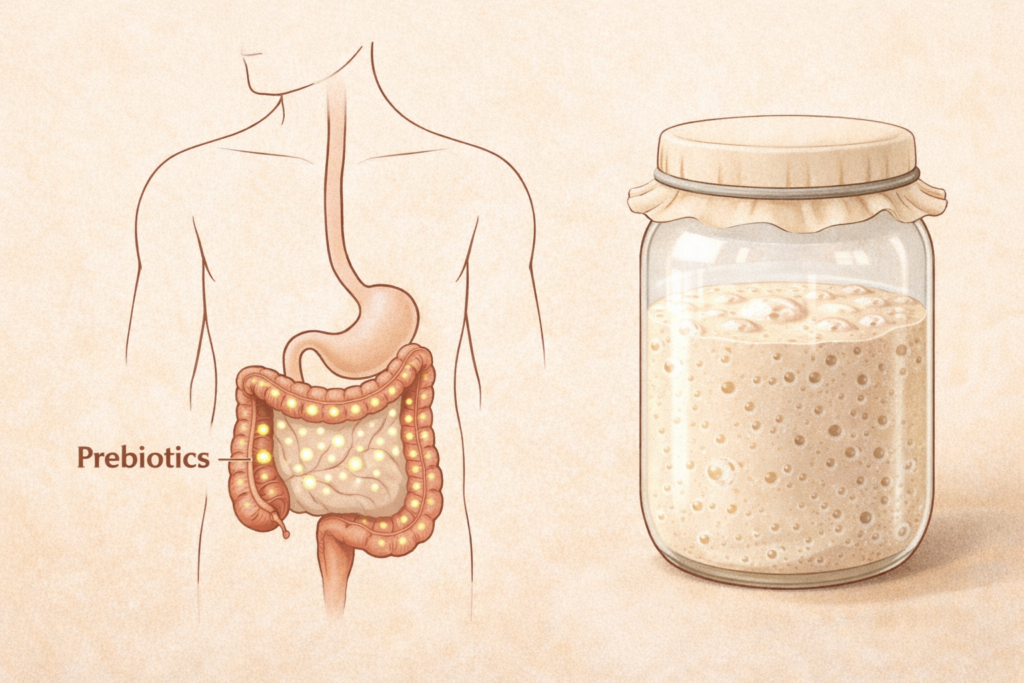
The health of your gut is intrinsically linked to the health of your gut microbiome—the trillions of bacteria that reside in your colon. These bacteria require specific nourishment, known as prebiotics, to thrive. While many associate sourdough with probiotics (the live bacteria), its most significant contribution to gut health is its powerful prebiotic effect, which acts as a “workout” for the colon muscles.
This effect is primarily driven by the production of Exopolysaccharides (EPS) during the long fermentation process [1]. EPS are complex carbohydrates, such as glucans and fructans, synthesized by the Lactic Acid Bacteria (LAB) in the sourdough culture. Unlike the starches in commercial bread, these EPS are resistant to digestion in the small intestine, allowing them to travel intact to the colon.
Once in the colon, these EPS become the preferred food source for beneficial gut flora, particularly Bifidobacteria and Lactobacilli [2]. This feeding process, or fermentation by the gut bacteria, produces a cascade of beneficial metabolites. This increased microbial activity and the resulting metabolic byproducts are what stimulate the colon’s peristaltic movements—the rhythmic, wave-like contractions that physically move waste through the digestive tract.
| Sourdough Component | Mechanism of Action | Gut Health Benefit |
|---|---|---|
| Exopolysaccharides (EPS) | Non-digestible fiber synthesized by LAB. | Acts as a prebiotic, feeding beneficial gut bacteria. |
| Microbial Activity | Fermentation of EPS by gut flora. | Produces metabolites that stimulate peristalsis (colon muscle movement). |
| Long Rise Time | Essential for sufficient EPS synthesis. | Ensures a high concentration of prebiotics in the final bread. |
In essence, the EPS from a properly fermented sourdough loaf are like resistance training for your digestive system. They provide the necessary fuel for your gut bacteria, and the resulting metabolic activity ensures your colon muscles are strong and active, promoting regularity and reducing the sluggishness often associated with poor digestion.
2. Neutralizing Phytic Acid: The Fiber Unlock
Whole grains are often lauded for their high fiber content, but they also contain a compound known as phytic acid, or phytate. Phytic acid is often referred to as an “anti-nutrient” because it strongly binds to essential minerals like magnesium, calcium, iron, and zinc, preventing their absorption in the small intestine [3]. Furthermore, phytic acid can inhibit digestive enzymes, which can slow down the entire digestive process and contribute to common issues like bloating and constipation.
This is where the magic of sourdough fermentation truly shines. The Lactic Acid Bacteria in the starter produce an enzyme called phytase. This enzyme is naturally present in wheat flour, but it is only fully activated in the warm, acidic environment created by the long, slow sourdough process [4].
The LAB produce an enzyme called phytase, which breaks down phytic acid, effectively “unlocking” these vital minerals and enhancing their bioavailability.
During a traditional, long-rise sourdough fermentation (often 12 to 24 hours), the phytase enzyme works tirelessly, breaking down the phytic acid into inositol and phosphate. Studies have shown that this process can neutralize phytic acid by up to 90% [5].
The result is a double benefit for your gut:
- Mineral Bioavailability: Essential minerals like magnesium, which is crucial for muscle relaxation and bowel movement, are “unlocked” and made available for absorption.
- Fiber Efficacy: The fiber in the whole grain is no longer hindered by the phytic acid’s anti-nutrient effect. Instead, it can perform its intended function—adding bulk and promoting healthy transit—without the digestive drag caused by phytate.
By neutralizing this anti-nutrient, sourdough transforms whole grain bread from a potential digestive burden into a highly bioavailable, gut-friendly food.
Deep Dive: Sourdough, Inflammation & Fiber
Does Sourdough Bread Cause Inflammation?
This is one of the most common questions we get. The answer lies in Lectins. Standard whole wheat contains high levels of Wheat Germ Agglutinin (WGA), a lectin that can irritate the gut lining and trigger systemic inflammation (bloating, brain fog, joint pain).
Sourdough acts as a shield.
Studies show that the specific bacteria in sourdough starter (Lactobacillus) actively degrade these lectins. By fermenting the dough for 24+ hours, you are essentially “disarming” the inflammatory markers in the wheat.
Is Sourdough Bread Low Fiber?
It depends on the flour you use, and this distinction is critical for your gut:
- White Sourdough: Yes, this is a Low Fiber / Low Residue food. It is incredibly easy to digest and recommended for people with active flare-ups (like Diverticulitis or Crohn’s) who need to rest their bowel.
- Whole Wheat Sourdough: This is High Fiber. It is the “sweeper” for constipation.
The Verdict: If you are backed up, choose Whole Wheat Sourdough. If you are loose or recovering from a stomach bug, choose White Sourdough.
3. Pre-Digested Gluten: Reducing Gut “Glue”
For many individuals, the consumption of commercial bread leads to a feeling of heaviness, bloating, and intestinal discomfort. This is often due to the nature of modern, rapidly-produced bread, where the gluten structure remains largely intact. In the gut, this can sometimes feel like a sticky, dense mass—the intestinal “glue” that slows transit and causes distress.
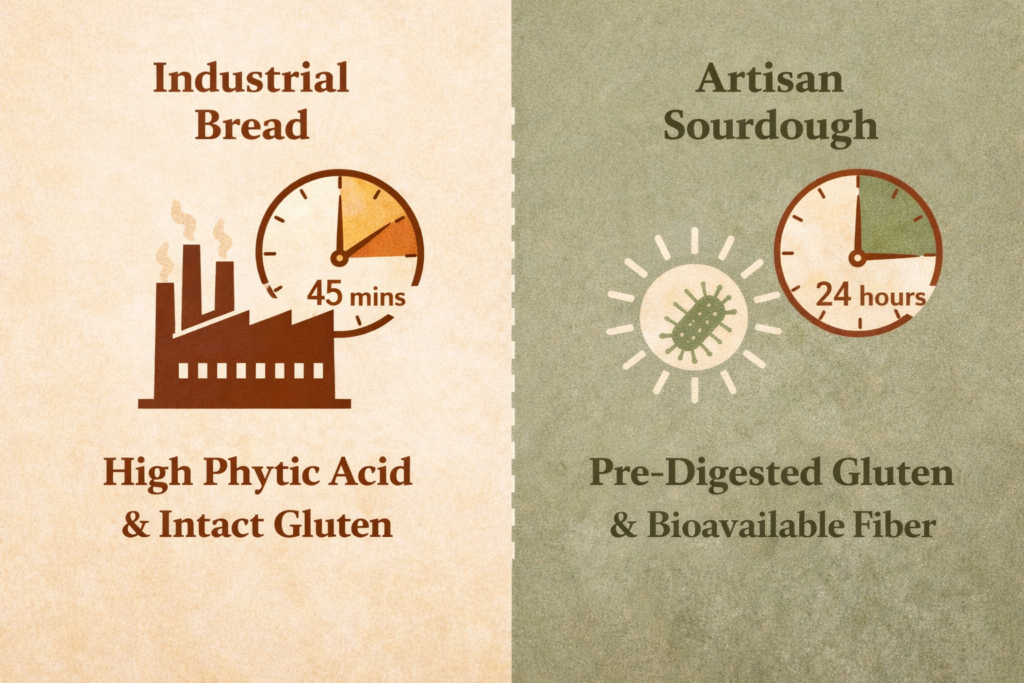
Gluten is a complex protein composite found in wheat, composed mainly of gliadin and glutenin. In commercial bread, the fermentation process is typically short (often less than an hour), relying on baker’s yeast to quickly inflate the dough. This short time is insufficient to significantly alter the gluten structure.
In contrast, the sourdough process is a masterclass in pre-digestion. The Lactic Acid Bacteria (LAB) in the starter produce powerful proteolytic enzymes [6]. These enzymes act as molecular scissors, systematically breaking down the complex gluten proteins into smaller, more manageable peptides and free amino acids before the bread even enters your mouth.
Table Data
| Metric | Industrial White Bread | Artisan Sourdough |
| Fermentation Time | 45 minutes | 12 – 24 hours |
| Gluten Level | High & Intact | Pre-digested by bacteria |
| Phytic Acid | Blocks mineral absorption | Neutralized (BIO-available) |
| Prebiotic Fiber | Low / Destroyed | High (Exopolysaccharides) |
| Gut Motility Effect | Sluggish / “Bread Baby” | Promotes transit speed |
| Stool Consistency | Can lead to hard/dry stools | Softens via hydration & SCFAs |
| Glycemic Index | High (Spikes insulin) | Low (Sustained energy) |
While sourdough helps keep things moving, it also solves the ‘after-bread’ gas bubble. If you struggle with pressure after meals, see Why Sourdough Doesn’t Make You Bloat.
This pre-digestion is why many people who report sensitivity to commercial wheat bread find that they can consume authentic sourdough without issue. The bacteria have done much of the heavy lifting, reducing the burden on your own digestive system. While sourdough is not gluten-free and is not safe for those with Celiac Disease, its ability to break down gluten before consumption is a key reason it is considered a superior, gut-friendly alternative to standard bread.
4. SCFA Production: The Biological Lubricant
The final, and perhaps most critical, scientific benefit of sourdough fermentation for gut health is its role in generating Short-Chain Fatty Acids (SCFAs). These organic compounds are the unsung heroes of colon health, acting as a powerful “biological lubricant” that ensures smooth, efficient waste transit.
SCFAs, primarily acetate, propionate, and butyrate, are produced when the beneficial bacteria in your colon ferment the non-digestible fibers (like the EPS discussed in Section 1) that arrive from the sourdough bread [8]. Of these, butyrate is the most celebrated.
Butyrate is not just a byproduct; it is the primary energy source for the cells lining your colon (colonocytes) [9]. By nourishing these cells, butyrate performs several vital functions:
- Strengthening the Gut Barrier: It helps maintain the integrity of the intestinal wall, reducing permeability (often called “leaky gut”) and protecting against inflammation.
- Regulating Motility: Butyrate plays a direct role in regulating the speed and efficiency of waste movement. It helps to balance water absorption in the colon, ensuring that waste is neither too dry (leading to constipation) nor too loose. This regulatory effect is the “biological lubricant” that keeps the system running smoothly.
- Anti-Inflammatory Effects: SCFAs, particularly butyrate, have potent anti-inflammatory properties, which can help soothe an irritated gut and contribute to overall digestive comfort [10].
The long, slow fermentation of sourdough maximizes the creation of the precursor materials (like resistant starch and EPS) that your gut bacteria will convert into these vital SCFAs. By consuming authentic sourdough, you are directly feeding the mechanism that lubricates, protects, and energizes your entire lower digestive tract.
What the Research Says
Clinical studies published in the Journal of Functional Foods (PMC11586379) suggest that the lactic acid bacteria in sourdough increase the bioavailability of dietary fiber, which is a key factor in reducing intestinal transit time.
5. Store-Bought vs. Real Sourdough (A Warning)
The four scientific mechanisms detailed above—the prebiotic effect, phytic acid neutralization, gluten pre-digestion, and SCFA production—are all dependent on one critical factor: time.
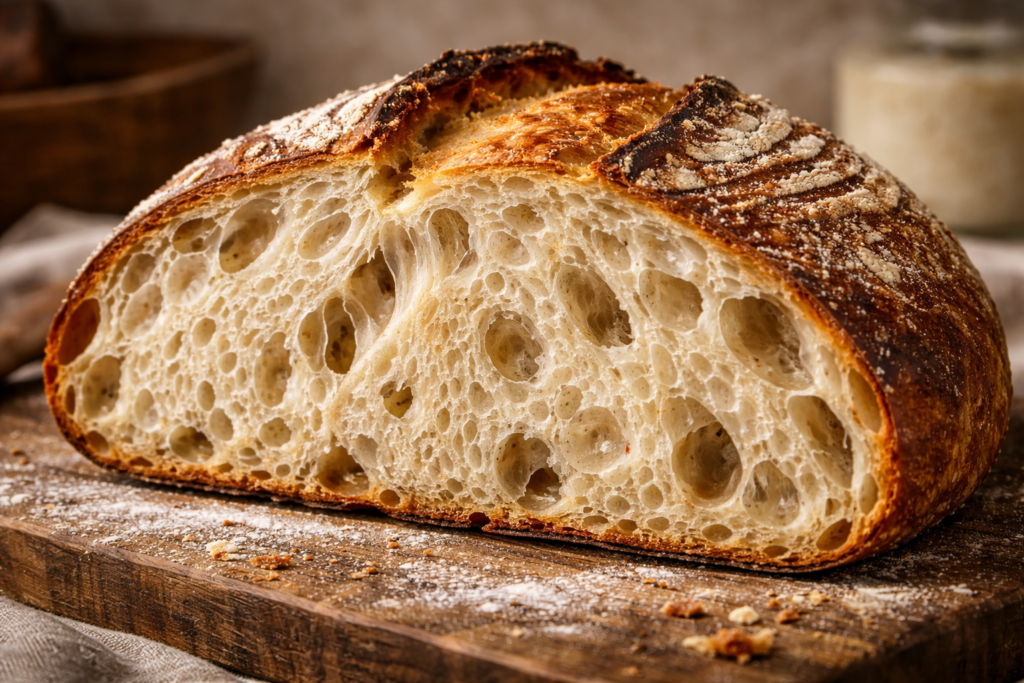
The beneficial chemical transformations that make sourdough a gut health powerhouse do not happen in an hour. They require a long, slow fermentation, often spanning 12 to 24 hours, which is the hallmark of the traditional artisan process. This extended period is necessary for the Lactic Acid Bacteria to fully synthesize EPS, activate phytase, and break down gluten proteins.
This brings us to a crucial warning: The “Sourdough Flavor” bread found in most commercial grocery stores does not work.
These loaves are typically made with a small amount of sourdough starter for flavor, but are primarily leavened with commercial baker’s yeast and rushed through a short proofing cycle. They may taste tangy, but they lack the essential Mastery Protocol—the scientifically-backed, time-intensive process required to achieve the profound chemical changes that benefit your gut. They are, in effect, little more than fast-fermented white bread with a sour taste added.
If you are seeking the genuine, life-changing digestive benefits of sourdough, you must learn the authentic process. You need a system that eliminates the guesswork and ensures you are executing the long, slow fermentation necessary for maximum gut health benefits.
Does sourdough bread cause gas?
While commercial yeast bread can cause gas due to unfermented fructans, traditional sourdough usually reduces gas. The bacteria ‘eat’ the gas-producing sugars during the long rise, leaving you with a comfortable, bloat-free stomach.
Unlock the Full Potential of Sourdough
To consistently bake bread that acts as a powerful gut health food, you need a proven framework. This is why we created The Complete Artisan Sourdough Mastery System.
This system is a scientifically backed, beginner-friendly framework designed to eliminate guesswork and ensure your bread achieves the full 24-hour protocol required for maximum prebiotic, anti-nutrient-neutralizing, and SCFA-producing power. It’s the difference between buying a “sourdough-flavored” loaf and baking a loaf that is a true functional food.
If you are ready to stop guessing and start baking bread that actively heals and supports your digestive system, it is time to master the process.
The Probiotic Myth: Is Sourdough “Alive”?
This is a common confusion. You often hear that sourdough is “full of probiotics” (good bacteria).
- The Dough: Yes, the raw dough is teeming with live probiotics.
- The Bread: No. The high heat of the oven (450°F+) kills the living bacteria.
However, the benefit remains. Even though the bacteria die, they leave behind “cell ghosts” and organic acids (Postbiotics) that reduce inflammation. More importantly, they leave behind Prebiotics (the fiber). Think of it this way: Probiotics are the “seeds.” Prebiotics are the “fertilizer.” Sourdough is the best fertilizer you can give your gut.
Is Sourdough Bread Good for Constipation?
Yes — traditional long-fermented sourdough is one of the best breads you can eat if you are constipated, but the type of sourdough matters significantly.
Whole wheat sourdough is the most effective choice for constipation. The combination of high fiber content and the fermentation process works on two levels simultaneously: the fiber adds bulk to stool and draws water into the colon, while the prebiotics produced during fermentation stimulate the peristaltic contractions that physically move waste through the digestive tract.
White sourdough, by contrast, is a low-fiber food. It is easier to digest and gentler on the gut, but it will not provide the same mechanical push against constipation that whole wheat sourdough delivers.
The key condition is fermentation time. A sourdough loaf fermented for 12–24 hours will have significantly reduced phytic acid — the anti-nutrient that blocks magnesium absorption. Magnesium is critical for bowel muscle relaxation and regularity. Store-bought sourdough, which is rarely genuinely fermented, does not provide this benefit and may contribute to constipation in the same way regular white bread does.
For constipation specifically:
- Choose whole wheat sourdough over white sourdough
- Ensure it is genuinely long-fermented — at least 12 hours
- Eat it with plenty of water — fiber needs hydration to work effectively
- Avoid supermarket sourdough-flavored bread, which lacks the fermentation benefits
Can Sourdough Cause Constipation?
Genuine long-fermented sourdough is very unlikely to cause constipation — but there are two situations where it can contribute to it.
1. White sourdough without enough water intake. White sourdough is a low-fiber bread. If you eat it without adequate hydration and without other fiber sources in your diet, it can slow digestion and contribute to harder stools. This is not unique to sourdough — it applies to all low-fiber white breads.
2. Store-bought “sourdough” that is not genuinely fermented. Most supermarket sourdough is made with commercial yeast and added vinegar for flavor, not through true long fermentation. It carries the full phytic acid load of regular bread, which blocks magnesium absorption and can slow gut motility. If you are experiencing constipation specifically after eating store-bought sourdough but not homemade, this is almost certainly the cause.
Authentic sourdough — made with a live starter and fermented for 12–24 hours — does not cause constipation in most people. Its prebiotic fiber, SCFA production, and reduced phytic acid content actively work against it.
Does Sourdough Make You Poop?
Yes, traditional sourdough does make you poop — and the mechanism is well understood. It works through three pathways covered in detail above, but here is the short version:
The prebiotic fiber (EPS) produced during fermentation feeds beneficial gut bacteria in the colon. Those bacteria produce short-chain fatty acids — particularly butyrate — which regulate colon motility and water balance in the stool. The result is more regular bowel movements with better stool consistency.
Additionally, sourdough fermentation neutralizes phytic acid, which frees up magnesium for absorption. Magnesium plays a direct role in relaxing the muscles of the bowel wall and is one of the most effective natural compounds for relieving constipation.
The effect is noticeably stronger with whole wheat sourdough than white, and with genuinely long-fermented loaves compared to commercial sourdough-flavored bread. Most people who switch from commercial bread to authentic sourdough report improved regularity within one to two weeks.
The Verdict on Sourdough and Your Gut
So, does sourdough bread make you poop? Yes, widely considered “nature’s broom” for bread lovers. By reducing phytic acid and feeding your good gut bacteria, sourdough acts as a gentle, natural way to support regularity.
The journey from conventional bread to authentic sourdough is a journey back to a healthier, more comfortable digestive life. The science is clear: the long, slow fermentation process is a sophisticated biological engine that transforms simple flour into a functional food. By producing powerful prebiotics, neutralizing anti-nutrients like phytic acid, pre-digesting complex gluten proteins, and generating vital Short-Chain Fatty Acids, traditional sourdough is arguably the most gut-friendly bread available. However, these benefits are exclusively tied to the mastery of the process. Do not settle for commercial imitations; embrace the science and the skill of true sourdough baking to unlock a new level of digestive wellness.
Explore More in the Archive
- Struggling with gas? Read Why Sourdough Doesn’t Make You Bloat.
- New to fermentation? See the 7 Benefits of Sourdough for Gut Health.
- Quick Win: Try our 30-Minute Sourdough Discard Pizza.
References
- Probiotics in the Sourdough Bread Fermentation: Research Gate
- Unlocking Nutrient Accessibility through Sourdough Fermentation. ScienceDirect
- Is Sourdough Bread Good for Constipation? (2026 Gut…). Sourdough Archive
- Short-Chain Fatty Acids and Gut Health. National Institutes of Health