The Short Answer
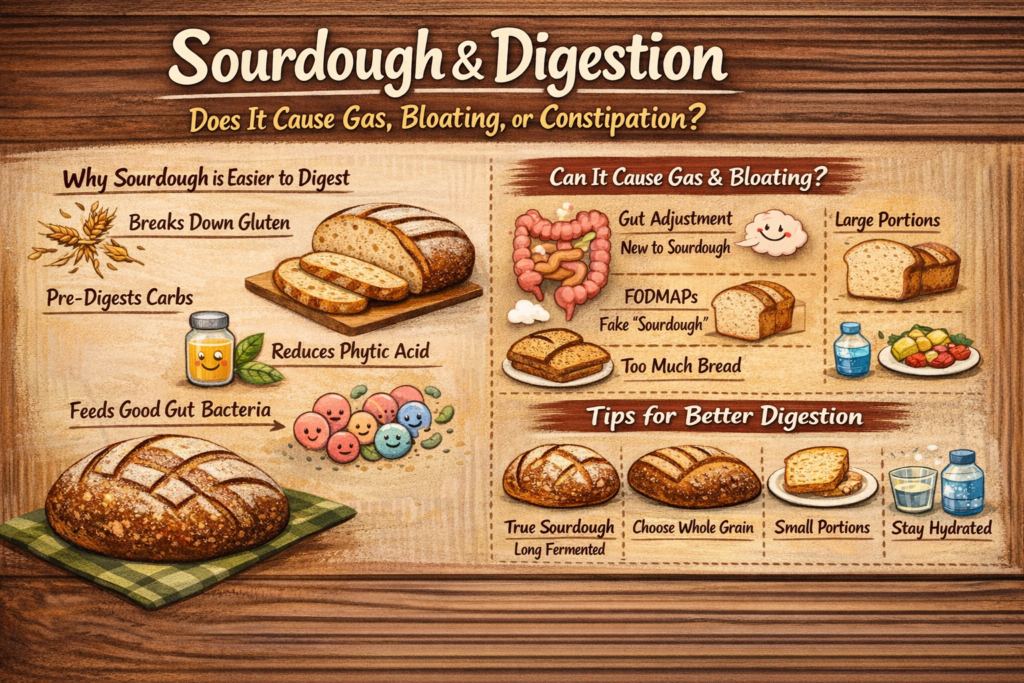
Sourdough can both cause and prevent bloating — depending on how it was made. True long-fermented sourdough breaks down the compounds that trigger gas and bloating in regular bread. But most grocery store “sourdough” skips the fermentation entirely, leaving those compounds fully intact. The bread isn’t the problem. The process is.
For a broader look at how sourdough affects your digestive system, see our full guide on sourdough and gut health.
Why True Sourdough Doesn’t Cause Bloating
Traditional sourdough undergoes 12–48 hours of fermentation — a biological process that transforms the bread at a molecular level before it ever reaches your gut. Here’s what that fermentation actually does:
1. It Breaks Down Fructans (FODMAPs)
The most common cause of bread-related bloating is fructans — short-chain fermentable carbohydrates found naturally in wheat. In commercial bread, fructans enter your large intestine intact, where gut bacteria ferment them and produce gas. In long-fermented sourdough, the wild yeast in the starter consumes most of these fructans before the bread reaches you. This is why many people following a low-FODMAP diet can tolerate a slice of genuine long-fermented sourdough when regular bread causes problems.
2. It Softens Gluten
Sourdough is not gluten-free, but the lactic acid bacteria (LAB) in the starter produce enzymes that degrade gluten proteins during fermentation. This makes the gluten significantly easier for your small intestine to break down. If you feel heavy or bloated after regular bread, it’s often your body struggling with unfermented gluten — sourdough starts that work for you before you eat it.
3. It Neutralizes Phytic Acid
All grains contain phytic acid, an anti-nutrient that can irritate the gut lining and block the absorption of minerals like magnesium and zinc. The acidity of sourdough fermentation activates an enzyme called phytase, which neutralizes phytic acid — reducing gut irritation and making the bread more nutrient-dense in the process. This is also one of the reasons sourdough is considered genuinely good for you beyond just taste.
4. It Lowers the Glycemic Response
Bloating is often tied to how fast your body processes sugar. Commercial bread causes a sharp blood sugar spike, which can lead to systemic inflammation and digestive sluggishness. Because sourdough fermentation consumes the simple sugars in the dough, it results in a lower glycemic index — the bread is processed slowly and gently. This is also why many people find sourdough easier to manage for blood sugar.
5. Fermentation Time Is the Real Secret
Modern grocery store bread is made in under two hours using high concentrations of commercial yeast. This speed-baking leaves fructans, phytic acid, and ATIs (alpha-amylase trypsin inhibitors) completely intact. A minimum 12-hour ferment is what separates gut-friendly sourdough from bread that causes bloating. Time is the only thing that truly transforms flour into a digestible food.
Why Sourdough Can Still Cause Gas — 5 Reasons
Even properly fermented sourdough can cause gas in some people. Fermentation reduces gas-producing compounds but doesn’t eliminate them entirely. Here’s why it still happens:
1. Remaining Prebiotic Fibers
Long fermentation significantly reduces fructan content but doesn’t remove it entirely. The prebiotic fibers that survive still ferment in your large intestine, producing gas as a natural byproduct of bacterial metabolism. For most people this is mild — but if your gut microbiome is less diverse or sensitive to specific carbohydrates, you may feel it more.
2. Residual ATIs (Alpha-Amylase Trypsin Inhibitors)
ATIs are proteins in wheat that activate immune responses in the gut, contributing to inflammation and digestive discomfort. Sourdough fermentation moderately reduces ATI activity, but some remains in the finished bread — enough to affect sensitive individuals.
3. Your Individual Gut Microbiome
Microbiome diversity determines much of your personal response. A gut populated with bacteria adapted to fermenting complex carbohydrates handles sourdough with less gas production than a less diverse microbiome. This is why two people can eat the same loaf and have completely different experiences.
4. You’re Eating “Sour-faux” — Not Real Sourdough
Most bread labeled “sourdough” at grocery stores isn’t true sourdough. Commercial bakeries frequently shortcut the fermentation process, leaving gas-causing compounds fully intact:
- Quick fermentation: Authentic sourdough ferments for 12–48 hours. Many commercial versions ferment for only 2–4 hours — not enough time for LAB to meaningfully break down fructans or reduce ATIs.
- Added commercial yeast: Some manufacturers add baker’s yeast to speed rising. The bread rises quickly but misses the enzymatic activity that makes real sourdough more digestible.
- Vinegar or citric acid flavoring: Some producers add vinegar or citric acid to mimic a sour taste without fermentation. The result has the flavour of sourdough but none of the digestive benefits.
Check the ingredient list. True sourdough contains only flour, water, salt, and a sourdough culture. Any listing of commercial yeast, vinegar, or dough conditioners means you’re not getting the digestive benefits of genuine fermentation. The most reliable way to ensure proper fermentation is to bake your own.
5. Histamine Sensitivity
Sourdough contains moderate histamine levels due to bacterial fermentation. Histamine-sensitive individuals may experience bloating, headaches, or skin reactions. The histamine content varies based on fermentation length, flour type, and bacterial strains present. Freshly baked bread typically contains less histamine than bread stored for several days — so if you notice this pattern, eat your sourdough fresh.
6. Medication Interactions Damage Your Tolerance
If sourdough suddenly started causing problems after a medication change, the bread isn’t the problem — your gut microbiome composition changed. Antibiotics are the most common culprit.
Antibiotics eliminate the beneficial LAB that evolved to ferment and process sourdough’s components. After a course of antibiotics, your tolerance for sourdough (and fiber generally) drops for 2–8 weeks. Your microbiome gradually rebalances, but probiotic supplementation may help accelerate recovery. Once your microbiome stabilizes, sourdough tolerance typically returns.
Other medications with measurable effects on sourdough digestion include proton pump inhibitors (reduce stomach acid), NSAIDs (damage gut lining), and hormonal contraceptives (alter gut sensitivity). If you started a new medication and sourdough suddenly became problematic, it’s worth discussing with your doctor whether the medication might be affecting your digestion.
Sourdough vs. Regular Bread: Digestibility Comparison
| Factor | True Sourdough | Regular Bread |
|---|---|---|
| Gluten Breakdown | Partial | None |
| Fructans (FODMAPs) | Significantly reduced | High |
| Phytic Acid | Neutralized | High |
| ATIs | Moderately reduced | Full |
| Digestibility | Higher | Low |
| Gas and Bloating Likelihood | Low to medium | Medium to high |
5 Ways to Prevent Sourdough Gas and Bloating
1. Prioritize Long Fermentation (12–48 Hours)
Fermentation time directly correlates with fructan reduction. A 24-hour bulk fermentation gives LAB adequate time to consume most fermentable sugars and begin breaking down ATIs. When baking at home, extend fermentation with a cold retard in the refrigerator. When buying bread, ask the baker about their fermentation schedule or look for artisan bakeries that advertise long fermentation times. Learn the process with our beginner sourdough recipe.
2. Toast Your Slices
Toasting sourdough converts some digestible starch into resistant starch, which passes through the small intestine undigested and feeds beneficial bacteria in the colon. Resistant starch tends to cause less acute bloating than rapidly fermented sugars. Toasting also slows your eating pace naturally, which aids mechanical digestion.
3. Control Portions and Pair with Protein or Fat
Eating large quantities of any bread increases gas potential. Limit portions to one or two slices per sitting. Consuming sourdough alongside protein (eggs, cheese, meat) or healthy fats (avocado, olive oil, butter) slows gastric emptying, reducing the volume of carbohydrates hitting your colon at once.
4. Hydrate Properly
Adequate water intake supports fiber moving through your digestive tract. When fiber absorbs water it forms a gel-like consistency that moves smoothly through the intestines. Insufficient hydration causes fiber to compact, slowing transit time and increasing fermentation. Drink water throughout the day, especially when eating whole grain sourdough.
5. Check Your Starter Health
If even homemade sourdough triggers symptoms, your starter might be out of balance. An unhealthy starter can produce off-fermentation byproducts that are harder on your gut. Check our guide on fixing a sourdough starter that smells like acetone to ensure your fermentation environment is healthy. Also make sure your loaf is fully proofed — underproofed or overproofed dough is harder to digest and more likely to cause gas.
Why Your Sourdough Tolerance Changes Day-to-Day
One of the most confusing aspects of sourdough digestion is this: you can eat the exact same loaf from the same bakery on Monday with zero issues, and experience significant bloating on Thursday from an identical slice. This isn’t in your head — it’s your body’s biological state changing in response to hormones, stress, sleep, and gut health.
Hormonal Cycles: The Hidden Variable in Sourdough Tolerance
If you menstruate, your gut has estrogen and progesterone receptors throughout your digestive tract. This means your tolerance for sourdough literally fluctuates with your menstrual cycle. Research shows 73% of women experience gastrointestinal symptoms during menstruation, with bloating and gas being the most common.
Follicular Phase (Days 1–14): Rising estrogen typically improves digestion. Stomach acid production stabilizes. This is often when sourdough feels easiest to tolerate — it may be worth noting if you notice better digestion earlier in your cycle.
Ovulation (Day 14): A brief estrogen spike often brings a 24–48 hour digestive sweet spot before the next phase begins.
Luteal Phase (Days 15–28): Progesterone rises and estrogen drops. Your gut becomes more sensitive. Stomach emptying speeds up by up to 28 minutes compared to the first half of your cycle. This faster transit time means sourdough (and any bread) is less thoroughly broken down before reaching your colon — increasing gas production. Bloating peaks 3–5 days before menstruation.
Menstruation (Days 1–5): Prostaglandin release causes more intense bowel contractions. You may experience cramping, loose stools, or the opposite — constipation with trapped gas. Sourdough’s fiber can either help (promoting movement) or exacerbate (if already experiencing cramping).
During Perimenopause: Hormonal fluctuation becomes even more chaotic. Estrogen levels drop unpredictably, and digestive symptoms can vary wildly day-to-day — even if you eat identically.
Stress and Cortisol: How Anxiety Sabotages Sourdough Digestion
When you’re stressed, your body releases cortisol and adrenaline — hormones that literally shut down digestion to prepare for “fight or flight.” Your stomach acid production drops, stomach motility slows, and your gut becomes more permeable (leaky gut). This isn’t metaphorical — it’s measurable physiology.
Even perfectly fermented sourdough is harder to digest under stress because your body can’t produce the stomach acid needed to break down the bread. The result: food sits longer in your stomach, ferments more in your colon, and produces more gas. Additionally, stress-induced slow digestion gives resident gut bacteria more time to ferment residual fructans, amplifying bloating.
The timing matters: If you’re eating sourdough during high-stress periods (tight deadlines, emotional events, poor sleep nights), you’re essentially testing your bread under the worst possible digestive conditions. This is why sourdough might feel fine on a relaxed weekend but problematic on a stressful workday — the bread isn’t the problem. Your stress state is.
Sleep Quality: The Overlooked Sourdough Variable
Poor sleep disrupts your circadian rhythm, which controls digestive enzyme production and gut motility patterns. A single night of 4–5 hour sleep can measurably impair stomach acid production the next day. Over multiple days, sleep deprivation compounds gut barrier damage and increases intestinal permeability.
If you notice sourdough bloating intensifies after poor sleep nights, this is the likely cause. It’s not the sourdough — it’s your digestive system running on depleted resources.
Medications That Interfere with Sourdough Digestion
Several medication classes disrupt the gut bacteria balance that makes sourdough digestible:
- Antibiotics: Destroy the LAB (lactic acid bacteria) in your gut that evolved to ferment and tolerate sourdough’s compounds. After a course of antibiotics, sourdough tolerance typically drops for 2–8 weeks until your microbiome rebalances. If you’re taking antibiotics, consider waiting 3+ weeks before re-introducing sourdough, or starting with smaller portions.
- Proton pump inhibitors (PPIs): Reduce stomach acid production, which is essential for breaking down sourdough’s proteins and activating digestive enzymes. People on long-term PPIs often struggle more with bread digestion generally.
- Hormonal birth control: Affects estrogen levels, influencing gut sensitivity similar to menstrual cycle changes. Some people find their sourdough tolerance improves or worsens when starting/stopping oral contraceptives.
- NSAIDs (ibuprofen, naproxen): Damage the gut lining and impair the barrier function. Regular NSAID use can increase intestinal permeability, making you more sensitive to residual fructans.
A Simple Tracking Protocol: Map Your Personal Sourdough Pattern
Instead of assuming sourdough causes YOU problems, track your individual variables for 2–4 weeks. Document:
- Day/time: When did you eat the sourdough?
- Portion size: How much did you eat?
- Sourdough type: Homemade, bakery, or store-bought? Fermentation time if known?
- Pairing: What did you eat it with? (Protein/fat slows digestion and reduces symptoms)
- Menstrual cycle day: If applicable, where are you in your cycle?
- Sleep last night: Hours slept + quality (1–10 scale)
- Stress level: 1–10 scale for that day’s stress
- Symptoms: Bloating (mild/moderate/severe), gas timing, other symptoms
- Medications/supplements: Any taken that day or recently?
After 2 weeks, patterns emerge. You might discover you tolerate sourdough fine in your follicular phase but struggle during your luteal phase. Or you might find that sourdough only bothers you on high-stress days. Or after antibiotic courses. This data is infinitely more useful than blanket advice.
If you’re also dealing with heartburn alongside bloating, see our guide on sourdough for acid reflux and GERD.
If you’re experiencing these symptoms, step through our guide to sourdough and constipation for targeted solutions based on your specific digestive pattern.
Frequently Asked Questions
Can sourdough cause gas but not regular bread?
Yes. Sourdough contains different proportions of fermentable compounds than regular bread. Some people have gut bacteria better adapted to the prebiotic fibers that survive sourdough fermentation. Others may react to the wild yeasts present in sourdough but absent in commercial bread. People also sometimes eat larger portions of sourdough due to its perceived health benefits, inadvertently increasing their carbohydrate load.
Why does sourdough affect me differently on different days?
Your gut microbiome fluctuates based on recent meals, stress levels, sleep quality, and physical activity. Hormonal cycles affect gut motility and sensitivity. The bread itself varies too — even loaves from the same bakery may have slightly different fermentation profiles. Track your symptoms alongside these variables to identify personal patterns.
Is sourdough good for people with IBS?
Many people with IBS find long-fermented sourdough easier to tolerate than regular bread because of its reduced fructan content. However, IBS responses are highly individual. If you have IBS, introduce sourdough gradually and monitor your response. Always work with your doctor or dietitian for IBS management.
Can sourdough cause diarrhea?
Yes, in some people. Sourdough can cause diarrhea if you’re sensitive to gluten, react to fermentation byproducts, or eat large amounts after a low-fiber diet. This is less common than bloating or constipation complaints but worth being aware of when first introducing sourdough. If you experience this, reduce portion size and introduce it more gradually. Also see our guide on sourdough and constipation for the full picture of how sourdough affects bowel movements.
Does sourdough help you poop?
Whole grain sourdough can support regular bowel movements through its fiber content and fermentation byproducts. It’s not a laxative, but properly fermented sourdough reduces digestive resistance and supports the gut motility signals that keep things moving. See our full guide on sourdough and constipation for more detail.
Why does sourdough bloating feel worse during my period?
During your luteal phase and menstruation, progesterone rises, estrogen drops, and your stomach empties 20–28 minutes faster than during your follicular phase. Faster stomach emptying means sourdough (and food generally) is less thoroughly broken down before reaching your colon. Additionally, prostaglandin release during menstruation causes more intense bowel contractions, amplifying gas sensations. This is normal — your digestion hasn’t changed, your hormones have. Eating smaller portions and pairing sourdough with protein during these phases can help.
Can stress make sourdough intolerance worse?
Yes. Stress hormones (cortisol, adrenaline) reduce stomach acid production and slow gastric motility. Even properly fermented sourdough is harder to digest when you’re stressed because your body literally cannot produce the stomach acid needed to break down the bread. If you notice sourdough bothers you on high-stress workdays but feels fine on relaxed weekends, stress is likely the culprit, not the sourdough. Stress management (sleep, exercise, meditation) can improve your tolerance.
Does sourdough tolerance change after taking antibiotics?
Yes, significantly. Antibiotics destroy the gut bacteria (including beneficial LAB) that evolved to ferment and tolerate sourdough’s compounds. After a course of antibiotics, sourdough tolerance typically drops for 2–8 weeks. Your microbiome gradually rebalances, but probiotic foods (yogurt, kefir, kimchi) and fermented vegetables can help. Once your microbiome stabilizes, sourdough tolerance usually returns to baseline. See our beginner sourdough recipe for reintroducing bread after antibiotic courses.
Can hormonal birth control affect how I tolerate sourdough?
Yes. Hormonal contraceptives alter estrogen levels, which affects gut sensitivity and motility. Some people find their sourdough tolerance improves when starting birth control (more stable hormone levels = more stable digestion). Others find it worsens. If you notice digestive changes after starting/stopping hormonal contraceptives, track your symptoms for 2–3 months to see if a pattern emerges as your body adjusts.
How do I know if my sourdough is truly fermented?
Check the ingredient list — real sourdough contains only flour, water, salt, and a sourdough culture. If it lists commercial yeast, vinegar, citric acid, or dough conditioners, it’s not genuinely fermented. When baking at home, a minimum 12-hour fermentation (ideally 24 hours) ensures the process has had time to work. Learn the full process in our guide to making sourdough from starter.
How to Enjoy Sourdough Without the Bloat
Start with a true sourdough. Look for loaves that don’t list yeast in the ingredients, have a long fermentation time (at least 12 hours), and use simple ingredients: flour, water, salt, and starter. If you want total control over fermentation quality, bake your own — our 72-hour starter guide is the best place to begin.
For a quick gut-friendly weeknight option, try our no-yeast sourdough flatbread — it uses discard and comes together in 20 minutes.
Learn More About Sourdough & Digestion
- Gut health benefits
- Is sourdough hard to digest?
- Sourdough and constipation
- Does sourdough help you poop?
- Sourdough and acid reflux
- Digestion, gas & bloating
- Sourdough and constipation
- Is sourdough anti-inflammatory
Written by Theresa, Sourdough Enthusiast and Long-Time Fermentation Learner. After baking hundreds of loaves and researching how fermentation affects digestion, Theresa shares evidence-backed insights to help home bakers understand sourdough and gut health.
2 Responses
I’m not gluten intolerant.
But properly make and fermented sourdough in a small bakery is lcausing and continueing my diarrhea!
I love my sourdough always eaten in moderation.
Darn
And suggestions ?
I’m sorry you’re dealing with that. Even if you don’t have gluten intolerance, sourdough can still trigger digestive symptoms for some people. It could be related to the type of wheat, the amount of fiber, FODMAPs, yeast, or another ingredient rather than the gluten itself.
Since it’s causing ongoing diarrhea, I’d stop eating it for now and see if your symptoms improve. If they continue or keep coming back, it’s a good idea to check in with your healthcare provider to rule out other causes, such as a food intolerance, infection, or an underlying digestive condition.
Keeping a simple food and symptom diary can also help identify whether sourdough is the only trigger or if other foods are involved. I hope you feel better soon!