📚 Part of our Sourdough Nutrition Guide: This guide covers fiber, macros, weight loss, and digestion. See the complete nutrition overview →
By Sourdough Archive · April 2026 · 7 min read
The short answer: Yes, sourdough bread has fiber — but how much depends almost entirely on the flour. White sourdough contains about 1–2 grams of fiber per slice, while whole wheat sourdough contains 3–5 grams per slice. The fermentation process itself doesn’t add fiber, but it does make the fiber (and other nutrients) easier for your body to absorb.
In this article
- How much fiber is in a slice of sourdough?
- Why flour type matters more than fermentation
- How fermentation changes fiber
- Sourdough fiber vs other breads
- How to get more fiber in homemade sourdough
- Frequently asked questions
How Much Fiber Is in a Slice of Sourdough Bread?
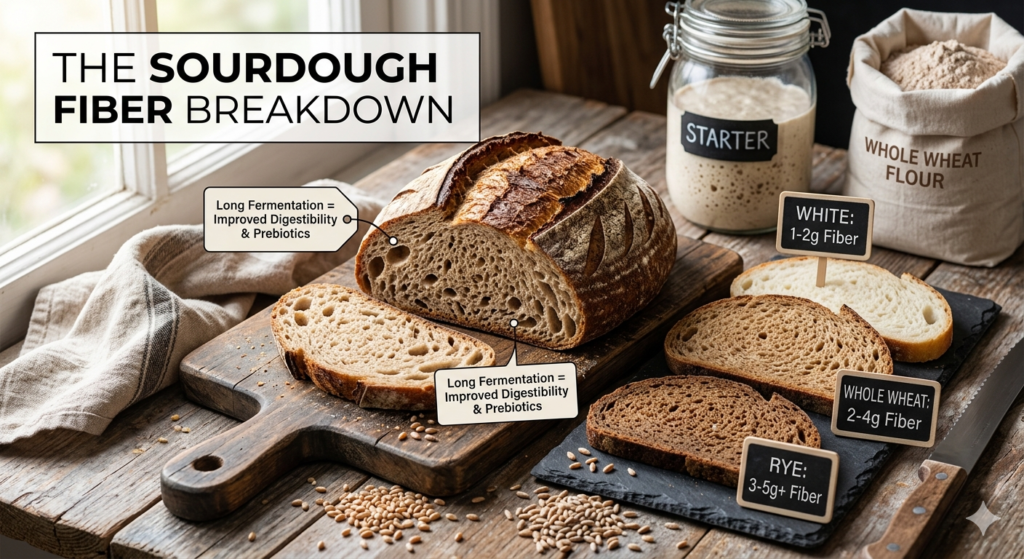
The fiber content of sourdough bread varies significantly based on the flour used. Here’s what a typical slice (about 50g) contains:
- White sourdough: 1–2 grams of fiber per slice
- Whole wheat sourdough: 3–4 grams of fiber per slice
- Rye sourdough: 3–5 grams of fiber per slice
- Seeded or multigrain sourdough: 5–7 grams of fiber per slice
- Sprouted whole grain sourdough: 4–6 grams of fiber per slice
For reference, the average adult needs 25–38 grams of fiber per day. A slice of white sourdough contributes modestly to that target, while two slices of whole wheat or seeded sourdough can deliver 8–14 grams — a meaningful portion of your daily needs.
If you’re tracking macros or trying to hit a specific fiber goal, the flour you choose matters far more than the fermentation method.
Why Flour Type Matters More Than Fermentation
Here’s the part most articles get wrong: sourdough fermentation does not create fiber. It works with whatever fiber is already present in the flour.
Fiber in bread comes from the bran and germ of the wheat kernel. When you use refined white flour, those components have been stripped away during milling — meaning the fiber is gone before the dough is even mixed. No amount of fermentation can put it back.
This is why:
- White sourdough is a low-fiber food. It’s healthier than white yeasted bread in other ways (blood sugar, digestibility, mineral absorption), but the fiber content is similar to any white bread.
- Whole grain sourdough is a meaningful fiber source. The bran and germ are retained, which is where most of the fiber lives.
- Seeded or multigrain sourdough is the highest-fiber option. The seeds add significant fiber on top of what the flour provides.
If a sourdough recipe uses bread flour or all-purpose flour, assume it’s on the lower end of the fiber range. If it uses whole wheat, rye, or sprouted grains, it’s a higher-fiber bread.
What Fermentation Actually Does to Fiber
While fermentation doesn’t add fiber, it does change how your body interacts with the fiber that’s there. This is where sourdough genuinely differs from yeasted whole wheat bread.
Fiber becomes more bioavailable
Whole grains contain phytic acid — an antinutrient that binds to minerals and makes them harder to absorb. During sourdough fermentation, bacteria produce phytase, an enzyme that breaks phytic acid down. This doesn’t change the fiber count on the nutrition label, but it means the nutrients bound up with that fiber (magnesium, zinc, iron) are more absorbable.
Resistant starch increases
Long fermentation — and especially cooling and reheating bread — creates resistant starch. This is a type of carbohydrate that behaves like fiber in your digestive system. It isn’t digested in the small intestine, feeds gut bacteria, and doesn’t spike blood sugar. Some research suggests properly fermented sourdough can contain up to 6% more resistant starch than conventionally made bread.
Prebiotic fiber is created
Sourdough fermentation produces short-chain carbohydrates that act as prebiotic fiber — food for the beneficial bacteria in your gut. This is why sourdough is often described as supporting gut health even when its total fiber content isn’t particularly high.
Some FODMAPs are reduced
Fermentation breaks down some of the fermentable carbohydrates (FODMAPs) that trigger digestive discomfort in sensitive people. This is why many people with IBS tolerate sourdough better than whole wheat yeasted bread, even though the fiber content may be similar.
The takeaway: fermentation doesn’t boost fiber numbers, but it makes the fiber function better in your body.
Sourdough Fiber vs Other Breads
Here’s how sourdough compares to other common breads on fiber content (per standard slice):
| Bread type | Fiber per slice | Notes |
|---|---|---|
| White bread (commercial) | 0.6–1g | Lowest fiber option |
| White sourdough | 1–2g | Low fiber, but other benefits |
| Whole wheat yeasted bread | 2–4g | Depends on brand |
| Whole wheat sourdough | 3–4g | Good fiber + fermentation benefits |
| Rye sourdough | 3–5g | High fiber, strong gut-health profile |
| Sprouted grain bread (e.g., Ezekiel) | 3–5g | Comparable to rye sourdough |
| Seeded multigrain sourdough | 5–7g | Highest-fiber bread option |
If fiber content is your only priority, whole wheat, rye, or seeded sourdough are your best choices. For a deeper breakdown comparing sourdough to whole wheat specifically, see our guide on sourdough vs whole wheat.
How to Get More Fiber in Homemade Sourdough
If you bake your own sourdough, you have full control over the fiber content. Here are the most effective ways to boost fiber in your bake:
1. Replace a portion of bread flour with whole wheat
The easiest upgrade. Swapping 20–30% of your bread flour for whole wheat roughly doubles the fiber per slice without dramatically changing the texture. You can push to 50% whole wheat for a noticeably denser, more nutritious loaf, or go 100% for a serious fiber boost (though the crumb will be tighter).
2. Add wheat bran
Adding 2–5% wheat bran to your flour mix is one of the most efficient ways to increase fiber without changing the flour profile too much. Bran absorbs extra water, so bump your hydration up by about 2–3%.
3. Include a seed soaker
Pumpkin seeds, sunflower seeds, sesame seeds, flax, and rolled oats all add significant fiber. Soak them overnight (they’ll absorb water and soften), then fold into the dough during mixing. A seed soaker can push a loaf from 3g to 6–7g of fiber per slice.
4. Use rye or spelt flour
Rye is especially high in soluble fiber. Replacing 20–30% of your bread flour with rye gives you both more fiber and a deeper, more complex flavor. Spelt behaves similarly and is often easier to digest for people sensitive to modern wheat.
5. Extend the fermentation
While longer fermentation doesn’t add fiber directly, it increases resistant starch and enhances the prebiotic effect of whatever fiber is present. A 24+ hour cold retard makes the fiber in your bread function better in your gut.
If you want to try a specific high-fiber recipe, see our beginner sourdough recipe and experiment with whole wheat substitution from there.
The Bottom Line
Sourdough bread does contain fiber — how much depends almost entirely on the flour you use, not the fermentation. White sourdough is a low-fiber bread; whole wheat and rye sourdough are moderate to high. Seeded multigrain sourdough is among the highest-fiber breads you can eat.
What sourdough fermentation does uniquely is make the fiber and nutrients more bioavailable, increase resistant starch, and create prebiotic fibers that feed your gut bacteria. So even a low-fiber white sourdough offers gut benefits beyond what the fiber count alone would suggest.
If fiber is a priority, bake with whole grains, add bran or seeds, and let your dough ferment long. You’ll get significantly more fiber than any supermarket loaf — and your body will use it better.
Keep reading
- Is Sourdough Bread Good for You?
- Sourdough vs Whole Wheat: The Complete Comparison
- Does Sourdough Bread Spike Blood Sugar?
- Does Sourdough Cause Gas and Bloating?
- Does Sourdough Help You Poop?
Frequently Asked Questions
Does sourdough bread have more fiber than regular bread?
Not inherently. Fiber content depends on the flour — a white sourdough and a white yeasted bread have similar fiber content (about 1–2g per slice). A whole wheat sourdough has similar fiber to a whole wheat yeasted bread. The fermentation process doesn’t add fiber, but it does make the fiber and nutrients more absorbable.
Is sourdough bread high in fiber?
White sourdough is not high in fiber — it typically contains 1–2g per slice. Whole wheat sourdough is moderate in fiber (3–4g per slice). Only seeded multigrain or heavily whole-grain sourdough (5–7g per slice) qualifies as genuinely high-fiber.
How much fiber is in a slice of sourdough bread?
A slice of white sourdough typically contains 1–2 grams of fiber. A slice of whole wheat sourdough contains 3–4 grams. Rye sourdough ranges from 3–5 grams, and seeded multigrain sourdough can contain 5–7 grams per slice.
Is white sourdough low in fiber?
Yes. Because refined white flour has had the bran and germ removed, white sourdough contains only 1–2 grams of fiber per slice. That said, white sourdough still offers benefits over regular white bread — lower glycemic index, better digestibility, and prebiotic effects from fermentation.
Does sourdough fermentation add fiber?
No. Fermentation does not add fiber to bread. It does, however, increase resistant starch (which behaves like fiber), create prebiotic short-chain carbohydrates, and make existing fiber more bioavailable. The total fiber on a nutrition label stays the same, but it functions better in your body.
Is sourdough good for a high-fiber diet?
Whole wheat, rye, or seeded sourdough can absolutely be part of a high-fiber diet. White sourdough is a poor fit if fiber is your main goal — choose whole grain versions instead. For the highest fiber content, look for multigrain sourdough with visible seeds and whole grains.
Does sourdough have soluble or insoluble fiber?
Both, in varying proportions depending on the flour. Wheat flour contains mostly insoluble fiber (from the bran). Rye and oats contain more soluble fiber (beta-glucan in particular). Seeded sourdough provides both, since different seeds contribute different fiber types.