Quick Answer: Can you make flatbread with sourdough discard and no yeast? Yes. By using the natural acidity of your sourdough starter combined with a pinch of baking powder, you can create soft, bubbly flatbread in 20 minutes without any rise time or commercial yeast.
If you loved our Sourdough Discard Tortillas, this flatbread is your new best friend. Understanding why sourdough bread is good for you starts with using your discard to create quick, fermented meals. This recipe uses that same ‘No Yeast’ magic but creates a thicker, fluffier bread ready in under 20 minutes.
Because this flatbread uses long-fermented discard, it’s a much gentler option for those following a low-acid diet for reflux.
Can You Make Sourdough With No Yeast?
Yes, you can make authentic sourdough with no commercial yeast. While standard bread requires a packet of store-bought yeast to rise, sourdough relies on a “starter”—a living culture of wild yeast and lactic acid bacteria captured from the air and flour. This natural process is the only way to make bread that is truly “commercial yeast-free,” making it the healthiest option for those with yeast sensitivities or digestive issues.
Many people search for ‘sourdough no yeast’ because commercial baker’s yeast is a primary trigger for acid reflux and stomach bloating. By using a long-fermented wild yeast starter instead of instant yeast, you allow the bacteria to pre-digest the flour, resulting in a loaf that is significantly easier on the gut.
Is sourdough starter considered yeast?
Technically, yes—but it isn’t the kind of yeast you find in a grocery store packet. A sourdough starter contains wild yeast (Saccharomyces exiguus) that exists naturally on flour and in the air.
The big difference is that commercial yeast is a single, aggressive strain designed to make bread rise in under an hour. Wild yeast, however, lives in a symbiotic relationship with beneficial bacteria. When people search for “no yeast” sourdough, they are usually looking to avoid commercial baker’s yeast, which hasn’t undergone the long fermentation process required to make bread digestible.
Can I use baking soda instead of yeast for sourdough?
Baking soda is a chemical leavener that reacts with the acid in your starter to create instant bubbles. While this is a great “cheat code” if you are in a rush, you miss out on the health benefits of a traditional bake. Without the 12–24 hour biological fermentation, the bread doesn’t have time to break down gluten or neutralize phytic acid. If you want the digestive benefits we discuss on this site, you must rely on the slow rise of wild yeast, not the instant reaction of baking soda.
Why ‘No Yeast’ bread is better for your gut?
The reason “no yeast” (meaning no commercial yeast) bread is a miracle for gut health is the presence of Lactic Acid Bacteria (LAB). In commercial bread, the yeast is so fast that the bacteria never have a chance to grow. In sourdough, the bacteria are the stars of the show.
As we’ve discussed regarding sourdough and constipation, these Lactic Acid Bacteria do the heavy lifting for your stomach. They produce organic acids that stimulate the Migrating Motor Complex (MMC), physically sweeping waste through your digestive tract. By avoiding industrial yeast and sticking to a wild-fermented starter, you are eating a “pre-digested” food that prevents the bloating, gas, and reflux associated with rapid-rise white breads.
Why this No-Yeast Flatbread is Easier on Your Gut
Most store-bought flatbreads and wraps are made with commercial yeast and fast-acting dough conditioners that can lead to that heavy, ‘brick-in-the-stomach’ feeling. Because this recipe uses sourdough discard, you are using flour that has already undergone a long, natural fermentation process in your starter jar.
The breakdown of fructans during fermentation is also why many of our readers find that sourdough doesn’t cause the bloating typically associated with quick-rise yeasted breads.
During its time in the jar, the wild yeast and lactic acid bacteria have already started ‘pre-digesting’ the flour by breaking down gluten and neutralizing phytic acid. This process is exactly why sourdough bread is good for you—it allows your body to absorb nutrients easily without the gas and discomfort caused by modern, rapid-rise breads.
If you have previously struggled with acid reflux or bloating after eating bread, this 20-minute sourdough flatbread offers a much gentler, gut-friendly alternative.
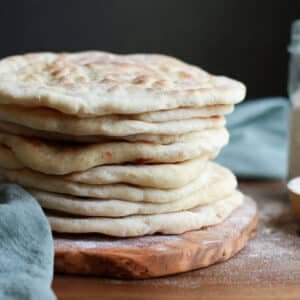
Quick Sourdough Discard Flatbread (No Yeast)
Ingredients
- 1 cup 250g Sourdough Discard (unfed, straight from the fridge)
- 1 cup 125g All-Purpose Flour (plus extra for dusting)
- 1 tbsp Olive Oil or melted butter
- 1 tsp Baking Powder
- 1/2 tsp Sea Salt
Instructions
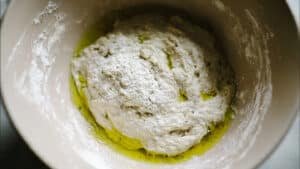
- Mix: In a medium bowl, combine the sourdough discard, olive oil, and sea salt. Stir well.

- Dry Ingredients: Add the flour and baking powder. Mix with a spatula until a shaggy dough forms.
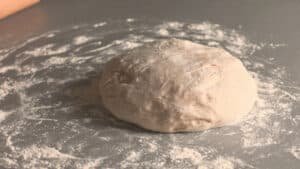
- Knead: Turn the dough onto a floured surface. Knead gently for 1–2 minutes until smooth. If the dough is too sticky, add 1 tbsp of flour at a time.
- Rest: Let the dough rest for 5 minutes (this relaxes the gluten for easier rolling).
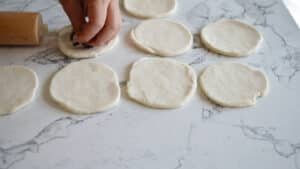
- Divide: Cut the dough into 6 equal pieces. Roll each piece into a thin circle (about 1/8 inch thick).
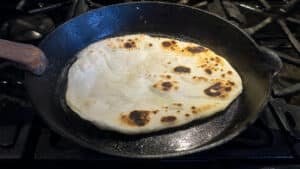
- Sear: Heat a cast-iron skillet or non-stick pan over medium-high heat. Do not add oil to the pan.
- Cook: Place one flatbread in the hot pan. Cook for 60–90 seconds until large bubbles form and the bottom has charred brown spots. Flip and cook for another 60 seconds.
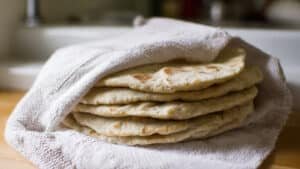
- Steam: Place finished flatbreads in a stack inside a clean kitchen towel to keep them soft.
Notes
Pro-Tip: If your discard jar has a strong chemical scent, don’t worry—it’s still safe for flatbread! Check our guide on why sourdough starter smells like acetone to get your starter back in balance
Troubleshooting: Why is my Sourdough Flatbread Tough?
“The goal of a perfect sourdough flatbread is a soft, flexible ‘fold’ that doesn’t crack. If your flatbreads are coming out hard or cracker-like, here are the three most common reasons why:
- The Pan Isn’t Hot Enough: You want a medium-high heat. If the heat is too low, the bread sits in the pan too long and dries out. It should only take about 60-90 seconds per side to see those beautiful charred bubbles.
- Over-Rolling: Don’t press too hard when rolling out your dough. You want to keep those tiny air pockets created by the sourdough starter intact.
- Not Resting the Dough: Even though there is no yeast-rise time, the flour needs about 5 minutes to ‘relax’ after you mix it. If the dough keeps shrinking back when you try to roll it, let it rest for another 5 minutes.
Pro-Tip for Extra Softness: As soon as you take a flatbread off the pan, stack it on a plate and cover it with a clean kitchen towel. The steam from the hot bread will soften the crust, making it perfectly pliable for wraps.
Simple Pantry Ingredients (No Yeast Required)
The beauty of this recipe is that you likely already have everything in your kitchen. Because we are using the Sourdough Archive method of ‘No-Wait’ baking, we rely on the chemical reaction between your acidic discard and a small amount of baking powder to provide the lift usually handled by commercial yeast.
- Sourdough Discard: Can be cold from the fridge or room temperature.
- All-Purpose Flour: Provides the structure. You can also use bread flour for a chewier bite.
- Olive Oil or Melted Butter: This is the secret to a soft, non-crackly flatbread.
- Baking Powder: Our ‘No Yeast’ shortcut for instant bubbles.
- Sea Salt: To enhance the natural tang of the sourdough.
If your starter has been sitting a while and smells like acetone, don’t worry—it’s still perfect for this recipe!
Best Ways to Serve Sourdough Flatbread
Because these are so quick to make, they are perfect for busy weeknights. Here are our favorite ways to use them:
- The Gyro Wrap: Load it with grilled chicken, cucumber, and tzatziki.
- The Sourdough Mezze: Serve warm alongside hummus, olives, and feta cheese.
- The 5-Minute Flatbread Pizza: If you don’t have time for our full No-Rise Sourdough Pizza, use these as a pre-made base. Just add toppings and broil for 3 minutes!
- Breakfast Tacos: Swap your Sourdough Tortillas for these fluffier flatbreads when making eggs and bacon.
3 Responses
This is a goopy mess – either too much starter or not enough flour.
Thanks for letting me know! A goopy dough usually means the moisture balance was off somewhere. This recipe uses sourdough discard, and because discard thickness can vary so much, your dough may need a small adjustment.
A few things to check:
* Did you measure your flour and discard by weight? Cups can vary quite a bit and can leave you with too much moisture.
* Was your discard very runny or did it have liquid sitting on top? That can add extra water to the dough.
* Did you accidentally add more discard than the recipe calls for?
Try adding a little extra flour (1 tablespoon at a time) until the dough becomes soft and workable instead of sticky. Then let it rest for about 5–10 minutes before rolling it out — this gives the flour time to absorb the moisture.
If you can tell me the exact amounts of flour and discard you used (and whether you measured with cups or grams), I can help figure out exactly what happened. 😊
This worked for me! I used discard from feeding night before and weighed both the discard and the flour. My discard was a little dry so all the flour didnt soak up and I just left that in the bowl. Brushed with butter and some garlic salt after. I had to use a dutch oven on stove to cook them up it worked fine. Was just what I needed to use up discard and enhance a dinner!