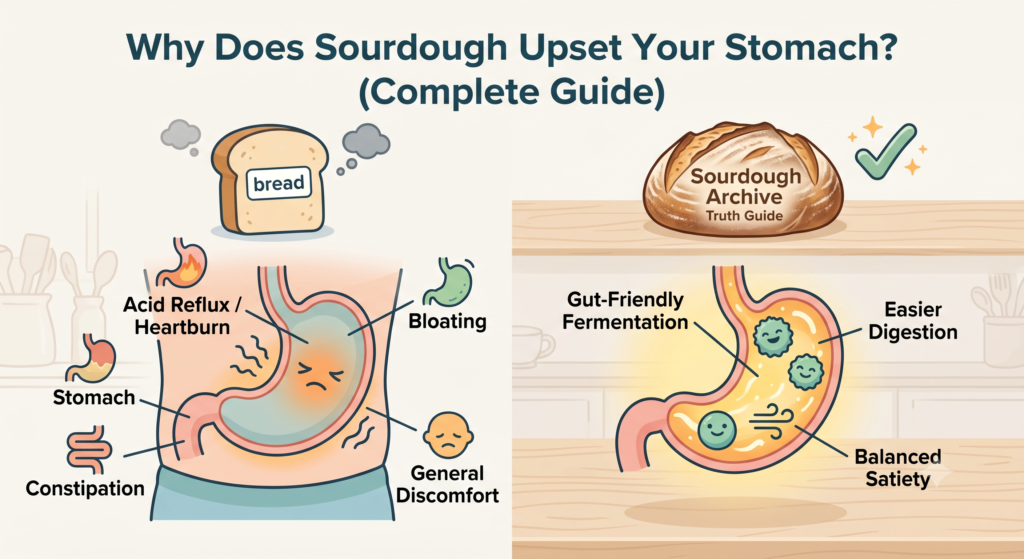
Can sourdough upset your stomach? Yes—but maybe not for the reason you think.
Sourdough is celebrated as the “healthier” bread option. It’s fermented. It’s easier to digest. Fewer people report digestive issues compared to regular white bread.
Yet some people experience bloating, gas, diarrhea, constipation, or general stomach discomfort after eating sourdough. Others are fine.
What’s going on?
The answer depends on how the sourdough was made, your individual sensitivity, and how much you’re eating. In this guide, we’ll break down exactly why sourdough upsets some stomachs—and what you can do about it. —
Does Sourdough Actually Cause Stomach Problems?
Not inherently. In fact, properly fermented sourdough is less likely to cause digestive issues than regular bread.
Here’s the science: During fermentation, wild yeast and bacteria break down gluten, phytic acid, and complex carbohydrates. This pre-digestion makes sourdough easier on your gut.
But— if the sourdough is underfermented (not given enough time to proof), or if you have specific sensitivities, it can absolutely upset your stomach.
Most stomach upset from sourdough falls into one of these categories:
- Diarrhea or loose stools
- Constipation or hard stools
- Bloating and gas
- Acid reflux or GERD
- General nausea or cramping
Let’s explore what causes each one. —
5 Main Reasons Why Sourdough Upsets Your Stomach
1. Incomplete Fermentation (Underproofed Dough)
This is the #1 culprit.
If sourdough doesn’t ferment long enough, the gluten and complex carbohydrates aren’t fully broken down. Your digestive system has to do the work instead—which causes gas, bloating, and sometimes diarrhea or constipation.
Signs your sourdough wasn’t fermented enough:
- Dough feels dense and heavy
- Crumb structure is tight (not open and airy)
- Loaf didn’t rise much during bulk fermentation
- Crust is pale (not golden brown)
The fix: Use a bulk fermentation chart to nail your proofing time. Temperature matters—at 70°F, bulk fermentation takes 8-12 hours. At 80°F, it’s 5-7 hours. The warmer your kitchen, the faster it goes.
A simple test: your dough should roughly double in size during bulk fermentation. Use the aliquot method (a jar test) to track rise percentage accurately.
2. FODMAP Sensitivity
FODMAPs are fermentable carbohydrates that some people’s guts struggle to digest. Even though sourdough fermentation reduces FODMAPs, some remain.
If you have IBS, Crohn’s disease, or SIBO, you might react to FODMAPs in sourdough—even if it’s well-fermented.
Symptoms include:
- Bloating and gas (sometimes hours after eating)
- Cramping or abdominal pain
- Diarrhea or constipation
- Brain fog or fatigue
The fix: Start small. Eat a thin slice and wait 2-3 hours. If you’re fine, gradually increase portion size. Some people tolerate sourdough better if they eat it with fat or protein (butter, cheese, eggs), which slows digestion.
3. High Histamine Content
Fermentation increases histamine levels in sourdough. For most people, this is fine. For people with histamine intolerance, it’s a problem.
Histamine intolerance symptoms:
- Flushing or redness
- Headaches or migraines
- Itching or hives
- Nausea or vomiting
- Bloating and diarrhea
The fix: If you suspect histamine intolerance, try low-histamine breads (white sandwich bread, fresh bagels made with commercial yeast—not fermented). Sourdough may not be for you.
4. Residual Gluten (For Gluten-Sensitive People)
Fermentation breaks down ~30-40% of gluten in sourdough. But it’s not gluten-free. If you have celiac disease or non-celiac gluten sensitivity (NCGS), sourdough can still cause issues.
Symptoms:
- Bloating, gas, cramping
- Diarrhea or constipation
- Brain fog or joint pain
- Skin rashes
The fix: If you have celiac or NCGS, avoid sourdough made with wheat, barley, or rye. Look for 100% gluten-free sourdough (made with GF flour blends).
5. Eating Too Much, Too Fast
Even well-fermented sourdough is denser and heavier than regular bread. A single slice has more fiber and nutrients than white bread.
If you’re used to light, fluffy sandwich bread and you suddenly eat two thick slices of sourdough, your gut may react with bloating or gas.
The fix: Start with one thin slice. Your gut microbiome needs time to adjust to the higher fiber and fermented compounds. After 2-3 weeks, most people tolerate larger portions. —
Why Some People Experience Each Symptom
Diarrhea or Loose Stools from Sourdough
Diarrhea after sourdough usually means:
- Underfermented dough — Undigested starches ferment in your colon, causing loose stools
- High fiber intake — Sourdough has more fiber than white bread; too much too fast causes loose stools
- Fructose sensitivity — Some sourdoughs are high in fructose (especially if made with whole wheat or rye)
Solution: Ensure proper bulk fermentation timing, start with small portions, and gradually increase intake over 2-3 weeks.
Constipation from Sourdough
Constipation is less common than diarrhea but it happens. Causes include:
- Not enough water intake — Fiber needs water to work; without it, you get constipation
- Gluten sensitivity — Can slow gut motility in sensitive individuals
- Histamine intolerance — Can affect gut muscle contractions
Solution: Drink more water, eat with vegetables or salad (adds fluid and fiber), and ensure the sourdough is well-fermented.
Bloating and Gas from Sourdough
Bloating and gas is the most common complaint. It means undigested food is fermenting in your colon.
Causes:
- Underfermented sourdough (most common)
- FODMAP sensitivity
- Eating too much too fast
- Poor digestion (low stomach acid, enzyme deficiency)
Solution: Prioritize proper fermentation. Use a bulk fermentation chart for your kitchen temperature. Start small (1 slice) and increase gradually.
Acid Reflux or GERD from Sourdough
Sourdough is actually better for acid reflux than regular bread because fermentation breaks down compounds that trigger reflux. But some people still experience it.
Why:
- Underfermented sourdough — The undigested starches cause fermentation in your stomach, creating gas and pressure
- High fat content — Sourdough made with butter or oil can trigger reflux in sensitive people
- Eating too close to bedtime — Lying down after eating triggers reflux
Solution: Ensure sourdough is well-fermented, eat smaller portions, and wait 2-3 hours before lying down. —
How to Prevent Stomach Upset from Sourdough
Step 1: Ensure Proper Fermentation
This solves 80% of digestive issues.
Use a bulk fermentation chart based on your kitchen temperature.
Key temperatures:
- 68-70°F: 10-14 hours bulk fermentation
- 72-75°F: 6-8 hours bulk fermentation
- 76-80°F: 4-6 hours bulk fermentation
Your dough should roughly double (60-70% rise) during bulk fermentation. Use the aliquot method (a jar test) for precision.
Step 2: Extend Cold Fermentation (Optional)
Cold proofing overnight (or even 48+ hours) in the fridge extends fermentation time even further. This increases gluten breakdown and makes sourdough even more digestible.
At fridge temperature (38-40°F), yeast works slowly, giving bacteria more time to break down compounds.
Step 3: Start Small, Go Slow
If you’re new to sourdough or have a sensitive gut:
- Week 1: Eat 1 thin slice, 2-3 times per week
- Week 2: Increase to 1 thick slice or 2 thin slices, 3-4 times per week
- Week 3+: Eat normal portions daily
Your gut microbiome needs time to adjust to fermented foods and higher fiber.
Step 4: Eat with Complementary Foods
Pair sourdough with:
- Fat: Butter, olive oil, cheese (slows digestion, prevents rapid fermentation in your gut)
- Protein: Eggs, meat, beans (stabilizes blood sugar, aids digestion)
- Vegetables: Salad, sautéed greens, soup (adds fiber and fluid)
Avoid eating plain sourdough on an empty stomach if you have a sensitive gut.
Step 5: Check Your Starter Health
A weak or stressed sourdough starter produces poorly fermented bread. Signs:
- Starter doesn’t double reliably after feeding
- Starter smells off (like nail polish or rotten fruit)
- Starter is sluggish or inactive
Solution: Feed your starter once or twice daily, keep it at 70-75°F, and use it at peak (when it’s most active, usually 4-12 hours after feeding). —
When Sourdough Actually HELPS Your Digestion
Done right, sourdough is one of the most digestible breads available.
Sourdough Supports Healthy Bowel Regularity
Well-fermented sourdough contains:
- Prebiotics: Inulin and other compounds that feed beneficial gut bacteria
- Probiotics: Live bacteria and yeast from fermentation (though many die during baking)
- Digestible fiber: The fermentation process breaks down phytic acid, making fiber more bioavailable
- Resistant starch: Formed when sourdough cools, feeds your gut microbiome
These compounds promote healthy, regular bowel movements and reduce bloating in most people.
Sourdough is Lower in Gluten
Fermentation breaks down ~30-40% of gluten. While not gluten-free, it’s significantly less gluten than regular bread. People with mild gluten sensitivity often tolerate sourdough fine.
Sourdough is Lower in Phytic Acid
Phytic acid binds minerals (calcium, iron, zinc) in bread, reducing their absorption. Fermentation breaks down phytic acid, making sourdough more nutritious.
Sourdough Has Better Nutrient Availability
Because phytic acid is reduced and gluten is broken down, your body absorbs more nutrients from sourdough compared to regular bread. —
FAQ: Sourdough & Stomach Upset
Q: Can I eat sourdough if I have IBS?
Maybe. It depends on whether your IBS is triggered by FODMAPs, fiber, or something else. Start with one thin slice of well-fermented sourdough and track symptoms for 2-3 hours. If you’re fine, gradually increase. Many people with IBS tolerate well-fermented sourdough better than regular bread.
Q: Is sourdough safe for celiac disease?
No. Even though fermentation reduces gluten, sourdough made with wheat, barley, or rye is not safe for celiac disease. It still contains enough gluten to trigger an immune response. Use 100% certified gluten-free sourdough if you have celiac.
Q: How long does sourdough stomach upset last?
If it’s mild bloating or gas, usually 2-4 hours. If it’s diarrhea or severe cramping, it could last 6-12 hours. If symptoms persist beyond that, you may have an intolerance (histamine, FODMAP, or gluten sensitivity) rather than just a digestive reaction to underfermented bread.
Q: Does toasted sourdough cause less stomach upset?
Slightly. Toasting may reduce some fermentable compounds, but it doesn’t significantly improve digestibility. The fermentation level matters more than whether it’s toasted.
Q: Should I avoid sourdough if it upsets my stomach?
Not necessarily. If it’s just bloating or gas, try the steps above (ensure proper fermentation, start small, eat with fat/protein). If you have true histamine intolerance or celiac disease, then yes—sourdough isn’t for you. But most stomach upset is fixable with better fermentation and portion control.
Q: Is sourdough starter the problem?
Sometimes. A weak, stressed, or poorly maintained starter produces poorly fermented bread. Ensure your starter doubles reliably after feeding and smells pleasantly sour (not acetone-like or rotten). A healthy starter is the foundation of digestible sourdough. —
Bottom Line
Sourdough can upset your stomach—but usually not because sourdough is inherently bad. Most stomach upset is caused by:
- Underfermented dough (80% of cases)
- FODMAP sensitivity
- Eating too much too fast
- Underlying gluten sensitivity or histamine intolerance
If you love sourdough, invest in proper fermentation timing using a bulk fermentation chart. Start with small portions. Eat with complementary foods (fat, protein, vegetables). Give your gut 2-3 weeks to adapt.
If you’ve done all that and still have issues, you may have a histamine intolerance or FODMAP sensitivity—in which case sourdough isn’t the best choice, and that’s okay.
Either way, well-fermented sourdough is one of the most digestible breads on the market when done right. —
Related Posts to Explore
- Does Sourdough Cause Constipation? (How to Fix It)
- Does Sourdough Help You Poop? (Digestive Benefits Explained)
- Sourdough & Bloating: Why Fermented Bread May Reduce Gas
- Sourdough Bulk Fermentation Chart (70°-80°F Temperatures)
- Aliquot Method for Sourdough: Master Bulk Fermentation Timing
- How Long to Cold Proof Sourdough: Complete Temperature & Time Guide