What Banneton Size Fits the Brod & Taylor Folding Proofer? (Round vs. Oval Guide)
If you just bought — or are about to buy — the Brod & Taylor Folding Proofer, one of the first questions you’ll hit is: which bannetons actually fit inside it?
The proofer’s interior measures 18 inches wide × 14.5 inches deep × 10 inches tall. That sounds roomy, but once you factor in the heating base, the water tray, and airflow space, the practical working area is a little more specific than the spec sheet suggests.
This guide answers the question precisely: which banneton sizes fit, how many you can run at once, and whether you should be buying round or oval for use with this proofer.
If you want the full breakdown of what the proofer does and whether it’s worth buying, see our complete Brod & Taylor Folding Proofer review.
The Short Answer: What Fits
The Brod & Taylor FP-105 comfortably fits:
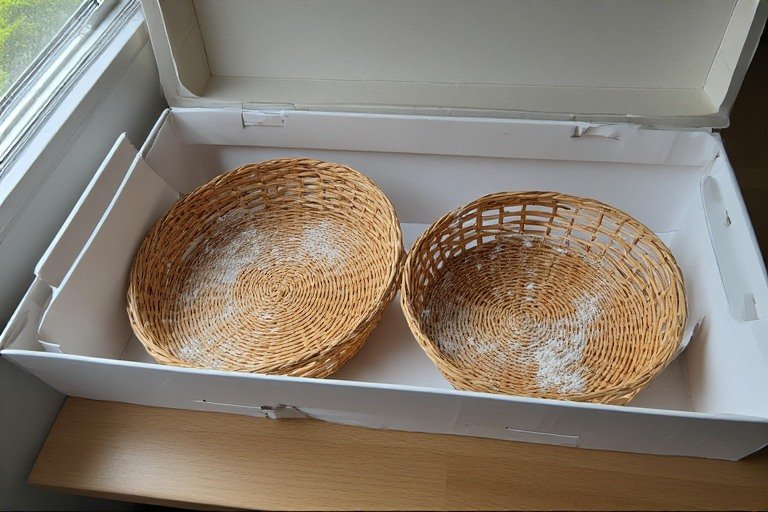
- Two standard 9-inch round bannetons side by side
- Two standard 10-inch oval bannetons side by side
- One large 10-inch round + one 10-inch oval together (tight but workable)
- Four bannetons total when using the optional accessory shelf to add a second layer
The proofer is not designed for 12-inch oval bannetons or jumbo 1.5kg miche forms — those will either not close the lid or will block airflow.
Why Banneton Size Matters More Than You Think
A banneton that is too large for your proofer doesn’t just fail to fit — it disrupts the airflow that keeps temperature even throughout the chamber. The Brod & Taylor heats from the base and relies on passive warm air circulation. If a banneton is resting against the walls or crowding the tray, one side of your dough proofs faster than the other, which undermines the entire point of using a temperature-controlled environment in the first place.
On the dough side, banneton sizing is equally unforgiving. Too small and your dough overflows the basket and loses structure before you even get to baking. Too large and it spreads instead of rising upward, giving you a flat, wide loaf with a dense crumb.
The goal is a banneton that’s roughly ⅔ to ¾ full when the dough is loaded, with room to rise another 20–30% during final proof without cresting the rim.
Banneton Size by Dough Weight: The Numbers
Use this as your baseline before checking fit inside the proofer:
| Dough Weight | Round Banneton | Oval Banneton |
|---|---|---|
| 500–700g | 7–8 inch | 8 inch |
| 750–900g | 8–9 inch | 9–10 inch |
| 900–1,100g | 9–10 inch | 10–11 inch |
| 1,100–1,400g | 10 inch | 11–12 inch |
Most standard sourdough recipes using 450–500g of flour produce a final dough weight of around 900–1,000g. For that range, a 9-inch round or 10-inch oval is the sweet spot — and both fit side by side in the Brod & Taylor without issue.
Round vs. Oval: Which Is Better for the Brod & Taylor?
This question comes up constantly, and the honest answer is that both work — the choice comes down to what shape of bread you prefer and what Dutch oven you’re baking in.
Round banneton (boule):
- Best for bakers using a round Dutch oven (5–6 quart)
- Gives a classic, taller loaf profile
- Two 9-inch rounds sit comfortably side by side in the proofer with airflow on all sides
- Slightly easier for beginners to shape
Oval banneton (batard):
- Best for bakers using an oval Dutch oven or Challenger Bread Pan
- Produces a loaf that slices better for sandwiches and toast
- Two 10-inch ovals fit in the proofer as long as they’re positioned lengthwise, not sideways
- Scores more dramatically — the elongated shape lends itself to a single long slash
The practical note for the Brod & Taylor specifically: oval bannetons longer than 11 inches will touch the side walls of the proofer interior. Two 10-inch ovals is the maximum comfortable fit. If you regularly bake large 1kg+ batards, check the external dimensions of your specific banneton against the 18-inch interior width before purchasing.
Can You Fit Four Bannetons? (The Stacking Shelf)
Yes — but you need the accessory shelf, which is sold separately by Brod & Taylor. The shelf sits above the first layer of bannetons and creates a second proofing level inside the chamber.
With the shelf in place, you can comfortably proof:
- Two 9-inch rounds on the bottom + two 9-inch rounds on top = four at once
- Two 10-inch ovals on the bottom + two 8-inch rounds on top = mixed batch
A few things to keep in mind when stacking:
Temperature consistency: The shelf position means the top layer is slightly closer to the lid and the bottom layer is closer to the heating base. In a well-preheated proofer, the difference is small (usually 1–2°F), but worth knowing. For most bulk fermentation, this variation is irrelevant. For final proof — where timing precision matters more — check your dough on both levels for doneness independently rather than assuming they’ll finish at the same time.
Height clearance: Standard 9-inch round bannetons are typically 3.5–4 inches tall. Two layers of bannetons plus the shelf adds up to roughly 8–9 inches, which is right at the 10-inch interior height limit. Deep bannetons (some 9-inch rounds run 4.5 inches deep) will not stack without touching the lid. Measure your specific banneton depth before assuming the two-layer setup will work.
Do Banneton Liners Change the Fit?
Barely. A standard linen liner adds maybe 2–3mm to the diameter of your banneton. This is not a meaningful difference for fitting inside the proofer.
However, liners do change how your dough behaves during the proof:
- With a liner: Smooth crust, no spiral pattern imprinted, better for very wet doughs that stick to bare rattan
- Without a liner: The classic spiral ring pattern on the crust, requires dusting with rice flour to prevent sticking
Neither choice affects the temperature dynamics inside the proofer. Both are fine.
Specific Bannetons Known to Fit (and Not Fit)
Confirmed to fit two side-by-side:
- Brod & Taylor 9-inch Round Boule Banneton
- Brod & Taylor 10-inch Oval Batard Banneton
- Standard 9-inch rattan rounds from most major brands (Breadtopia, SUGUS HOUSE, etc.)
- 10-inch oval wood pulp bannetons
Confirmed as a tight fit / single only:
- 10-inch round bannetons — one fits easily, two is very tight and restricts airflow
- 11-inch oval bannetons — one fits widthwise, two will not
Will not fit:
- 12-inch oval bannetons
- Jumbo miche forms (1.5kg+)
- Full half-sheet proofing trays
Pro Tips for Using Bannetons in the Brod & Taylor
Preheat before loading. Always let the proofer reach your target temperature for 10–15 minutes before placing bannetons inside. Cold dough dropped into a warming proofer starts at a disadvantage — the first 30–45 minutes are spent chasing temperature instead of fermenting.
Check your dough, not just the clock. The proofer gives you consistent temperature, but the dough still tells you when it’s ready. See our sourdough proofing time chart for benchmarks at common temperatures, and use the poke test as your final confirmation.
Use rice flour for bare rattan. The slightly humid environment inside the proofer (if you’re using the water tray) can make dough more prone to sticking to rattan than dry room-air proofing would. Rice flour’s coarser, non-absorbent texture releases cleanly every time.
Give dough that’s covered with a shower cap or plastic more space. A lid or cover on your banneton adds a couple of inches of height. If you’re stacking, factor this into your clearance math.
Set the proofer 2–3°F below your target dough temperature if your banneton is covered. Covered dough retains heat. For uncovered banneton proofing, set it to your exact target. See our best final proof temperature guide for the recommended range by dough type.
The Bottom Line
For most home bakers using the Brod & Taylor Folding Proofer, the 9-inch round or 10-inch oval is the right banneton size. Two of either fit side by side comfortably, airflow is preserved, and you’re in the ideal dough weight range for standard sourdough recipes.
If you bake larger loaves (1,100g+), plan around one banneton per bake, or consider the stacking shelf to run two smaller loaves on separate levels rather than crowding one.
And if you’re still deciding whether the proofer is the right purchase for your kitchen, our full Brod & Taylor Folding Proofer review covers everything from temperature accuracy to real owner experiences after years of use.
FAQ
Can I use a 10-inch round banneton in the Brod & Taylor? One 10-inch round fits easily. Two is a very tight squeeze and will limit airflow between them. For running two at a time, 9-inch rounds are the better choice.
Does the Brod & Taylor proofer work for final proof or just bulk fermentation? Both. The same temperature control that makes bulk fermentation consistent works just as well for the final proof. Many bakers use it for the full process: bulk in the proofer, shape, then final proof in the proofer before cold retarding overnight.
Can I cold proof in the Brod & Taylor? No. The Brod & Taylor only heats — it cannot cool below room temperature. For overnight cold retarding, move shaped dough in its banneton to the refrigerator as normal. If you need the ability to both warm and cool your fermentation, the Brod & Taylor Sourdough Home is the unit designed for that.
What’s the best banneton material to use in a proofer? Rattan is the traditional and most commonly used material. It wicks light moisture from the dough surface and performs well in the slightly humid proofer environment. Wood pulp bannetons also work well. Silicone bannetons are less recommended — they don’t breathe, so moisture can pool between the dough and the surface in a humid proofer.
Do I need special bannetons made by Brod & Taylor? No. Brod & Taylor sells their own branded bannetons, but any standard banneton that fits within the interior dimensions will work. The proofer is not a proprietary system — it’s just a controlled-temperature enclosure.