Many bakers confuse bulk fermentation and final proofing, thinking they’re the same thing. They’re not. Bulk fermentation is the first long rest where dough develops gluten and flavor (usually 4–6 hours). Final proofing is the second, shorter rest after shaping (usually 2–4 hours or overnight cold). Each stage serves a different purpose. Skipping or rushing either one causes flat, dense bread. Understanding when and why each happens is the foundation of consistent sourdough.
In this guide, you’ll learn exactly what happens during each stage, how to recognize when they’re complete, and why rushing either one derails your entire bake. This is the knowledge that separates bakers who get lucky from bakers who get consistent results.
Bulk Fermentation vs. Final Proofing: Side-by-Side
Let’s start with the simplest definition:
Bulk fermentation is the long, initial fermentation where your mixed dough develops gluten structure, flavor, and gas. It happens in one big mass (or “bulk”) before shaping. Final proofing (or “final proof”) is the second fermentation after you’ve shaped the dough, where it gets its last rise before entering the oven.
To understand the Overproofed vs Underproofed Sourdough Guide, you first need to know which stage is happening. Are you overproofing during bulk fermentation, or during final proof? The fix is different for each.
Bulk Fermentation FAQ
What Should Dough Look Like After Bulk Fermentation?
After bulk fermentation, sourdough dough should look slightly domed, airy, and noticeably expanded, usually about 30–50% larger than when mixing began. The surface will show small bubbles and the dough will feel lighter and more elastic when gently lifted.
If the dough still feels dense or stiff, fermentation likely needs more time. Learning to recognize these visual cues is one of the most important sourdough skills. A deeper walkthrough of the signals can be found in the guide on how to know when bulk fermentation is done and the troubleshooting article on bulk fermentation 101: stop overproofing.
Do I Have to Bulk Ferment and Cold Proof?
No, but most sourdough recipes use both steps because they serve different purposes.
Bulk fermentation develops the dough’s structure, gluten strength, and fermentation activity. Cold proofing slows fermentation and improves flavor while making dough easier to score and bake.
Many bakers bulk ferment at room temperature and then refrigerate overnight. If you want to learn the full timing strategy, see the guide on how long to cold proof sourdough.
Is 4 Hours Long Enough to Bulk Ferment Sourdough?
Sometimes. At 75–80°F, four hours can be enough for bulk fermentation. However, the correct timing depends on several factors:
- Dough temperature
- Starter strength
- Hydration level
- Room temperature
Instead of watching the clock, watch the dough. If fermentation is too short, the loaf may bake dense. If it goes too long, it may collapse. For a deeper explanation of fermentation timing, read best bulk fermentation temperature for sourdough and how dough temperature affects fermentation.
Do I Cover My Dough During Bulk Fermentation?
Yes. Dough should always be covered during bulk fermentation to prevent the surface from drying out.
You can cover the bowl with:
- Plastic wrap
- A damp towel
- A lid or reusable bowl cover
Keeping the dough covered maintains moisture and allows fermentation gases to develop properly. If your dough dries out during fermentation, the crust can interfere with shaping and oven spring.
Can I Leave My Dough in the Fridge for Bulk Fermentation?
Yes, this is called cold bulk fermentation, though it is less common than room-temperature bulk.
Placing dough in the refrigerator slows fermentation dramatically. This technique can help bakers control timing, especially when baking schedules are tight. A full breakdown of this method can be found in cold ferment sourdough.
Should Dough Be Sticky During Bulk Fermentation?
Yes. Sourdough dough is naturally sticky, especially during early fermentation stages. Higher hydration doughs will feel particularly tacky.
Stickiness usually decreases as gluten develops through stretch-and-folds. If dough becomes extremely wet or unmanageable, hydration may be too high. For practical solutions, see how to fix sticky dough and sourdough hydration explained.
How Long Can I Let My Dough Bulk Ferment?
Most sourdough bulk fermentation periods fall between 3 and 8 hours, depending on temperature and starter strength.
Typical timing:
- 80°F → 3–4 hours
- 75°F → 4–6 hours
- 70°F → 6–8 hours
Longer fermentation improves flavor but increases the risk of overproofing. If the dough rises too much and loses strength, you may need recovery techniques such as those explained in how to save overproofed sourdough.
Is 85°F Too Hot for Bulk Fermentation?
Yes, 85°F is generally too warm for controlled sourdough fermentation. At this temperature, fermentation can accelerate so quickly that gluten structure weakens before proper development.
Most experienced bakers aim for 74–78°F dough temperature during bulk fermentation. If your kitchen runs warm, you may need cooling strategies or shorter fermentation times. For temperature control methods, read sourdough proofing temperature and how to control dough temperature.
For more sourdough techniques, troubleshooting guides, and beginner recipes, browse the full sourdough library.
Here’s a side-by-side comparison:
| Stage | Bulk Fermentation | Final Proofing |
| When | After mixing, before shaping | After shaping, before baking |
| Duration | 4–6 hours at room temp | 2–4 hours room temp or 12–16 hours cold |
| Purpose | Build flavor, develop gluten, create gas | Final rise before baking |
| Readiness Check | Aliquot jar should show 50–75% rise | Poke test: indent springs back slowly |
Bulk Fermentation: The Foundation Stage
Bulk fermentation is where the magic happens—and where many bakers go wrong by rushing.
What happens during bulk fermentation:
- Gluten develops: The network of gluten proteins strengthens through time and hydration, making the dough stretchy and elastic
- Flavor builds: Wild yeast and lactic acid bacteria produce organic acids that create the tangy, complex sourdough flavor
- Gas is created: Yeast and bacteria consume sugars and produce CO2, filling the dough with tiny bubbles
- Dough rises: As gas accumulates, the dough visibly rises and becomes puffy
During bulk fermentation, you’ll also perform stretch and folds (usually every 30 minutes for the first 2 hours). These folds add structure and redistribute nutrients for the yeast.
How to know when bulk fermentation is done:
- Use an aliquot jar (a small jar of dough next to your bulk container that shows rise visually)
- The dough should rise 50–75% from its starting height, not double or more
- Surface bubbles should be visible but not bursting
- The dough should feel airy when you gently press it
Pro-Tip (The Missed Detail): Most beginner guides say “bulk ferment until doubled,” but overproofing often starts during bulk fermentation, not final proof. A dough that rises 100% during bulk fermentation is already overproofed before final proofing even starts. Many bakers don’t catch this because they’re watching the clock, not the dough. Use the aliquot jar—it’s the game-changer.
See our complete bulk fermentation guide for deeper timing strategies.
Final Proofing: The Last Rise Before Baking
After bulk fermentation is complete, you shape your dough and move into final proofing. This is the second and final fermentation stage.
What happens during final proofing:
- Continued fermentation: Yeast and bacteria keep working, but more slowly since the dough is shaped and confined
- Dough relaxes: Shaping tightens the gluten, and proofing allows it to relax back to a workable elasticity
- Final gas development: The shaped dough rises slightly, filling its banneton or bowl
- Oven spring potential: A properly proofed dough has the right balance of fermentation activity to give strong oven spring
Final proofing can happen two ways:
Room temperature (2–4 hours): Fast and predictable if your kitchen is warm. Use the poke test every 30 minutes to check readiness.
Cold fermentation (12–16 hours in the fridge): Slower but more forgiving. Cold dough stays “proofed” longer, giving you flexibility with timing. See our cold fermentation guide for details.
How to know when final proofing is done:
- Press your floured finger gently into the dough about half an inch
- The indent should spring back slowly over 2–3 seconds
- If it springs back quickly, the dough needs more time
- If it doesn’t spring back at all, you’ve overproofed during final proof

Why Understanding Both Stages Prevents Disaster
Confusing these two stages leads to common mistakes:
Mistake #1: Rushing bulk fermentation
- You skip bulk fermentation because you’re impatient or your kitchen is cold
- The dough hasn’t developed enough flavor or gluten structure
- Result: Flat, dense bread that doesn’t rise in the oven, even if final proof is perfect
Mistake #2: Overproofing during bulk fermentation
- You let bulk fermentation go too long (waiting for the dough to “double” as many guides suggest)
- The dough is already exhausted before final proofing starts
- Result: Flat bread with poor oven spring, even though final proof looked right
Mistake #3: Overproofing during final proof
- You bulk ferment perfectly but forget about the dough during final proof
- The shaped dough sits too long and loses structure
- Result: A “pancake” loaf that spreads flat in the oven
Understanding the difference between overproofed and underproofed dough means knowing which stage went wrong—and how to fix it next time.
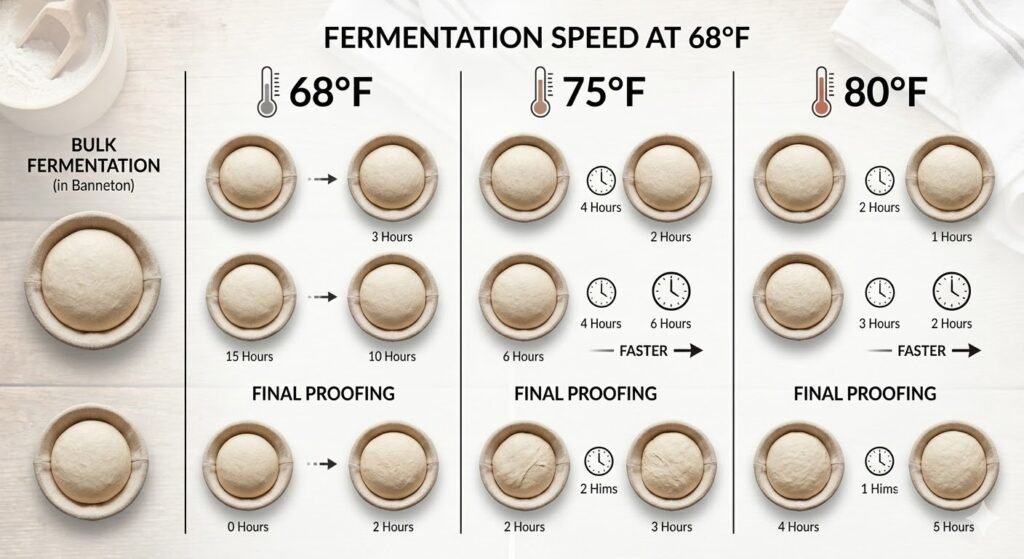
Temperature Controls Both Fermentation & Proofing Speed
Here’s a critical detail: temperature affects both stages differently.
At 68°F: Bulk fermentation might take 7–8 hours, and final proofing might take 4–5 hours at room temperature.
At 75°F: Bulk fermentation might be done in 4–5 hours, and final proofing in 2–3 hours.
At 80°F: Both stages speed up dramatically. Bulk might be 3–4 hours, final proof 1.5–2 hours.
This is why a proofing time chart is essential—clock times are just guidelines. Your dough cares about temperature, not minutes.
[Image: Simple chart showing fermentation speed at 68°F, 75°F, and 80°F—visual representation showing bulk fermentation and final proofing durations side by side at each temperature]
Master Both Stages, Master Sourdough
Bulk fermentation and final proofing are not the same. Bulk fermentation builds your foundation—flavor, gluten, and gas. Final proofing delivers the last rise before baking.
When you understand what each stage does and how to recognize when it’s complete, you’ll stop guessing and start baking consistently perfect loaves. Use the aliquot jar during bulk fermentation. Use the poke test during final proof. Check your dough, not the clock.
Your bread will thank you.