Most “pumpernickel” recipes you’ll find today aren’t actually pumpernickel — they’re a wheat-flour-majority loaf with coffee, cocoa, and molasses added for color, built to look and taste dark without the technique or rye percentage that traditionally earned that name. This recipe splits the difference deliberately: rye-forward enough to be genuinely dark rye bread, using the classic color-and-flavor-building ingredients honestly rather than as a substitute for actual rye content.
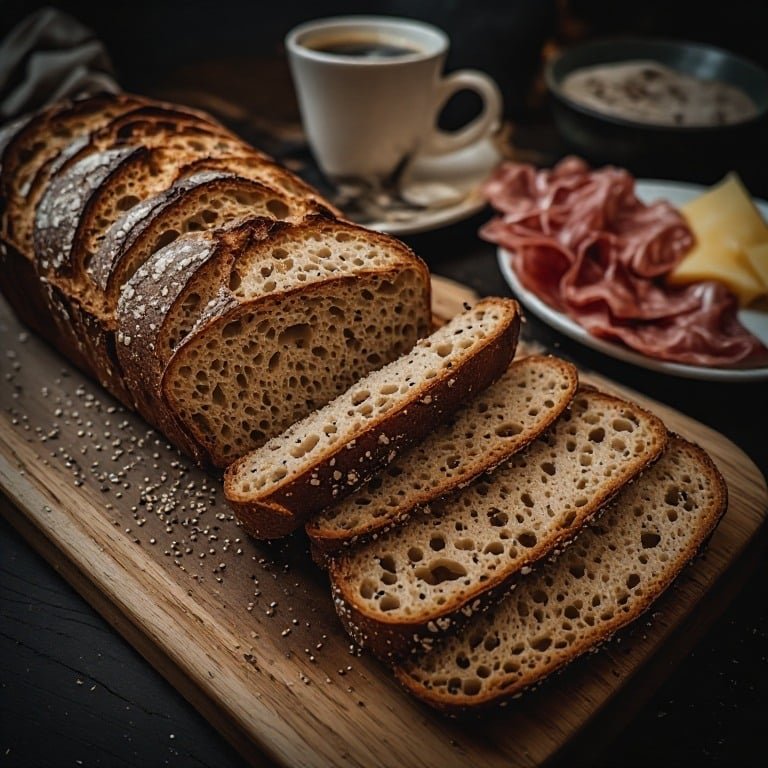
This is one guide in our full rye sourdough bread recipe collection. If you want the maximalist version of this style with zero wheat flour at all, see our 100% rye sourdough bread guide instead.
Dark Rye vs. “Pumpernickel-Style” — What’s Actually Different
True traditional pumpernickel is a specific German bread: 100% coarse whole rye (often cracked rye berries or meal, not fine flour), baked at low temperature for 16–24 hours, which drives deep Maillard browning entirely through time and heat rather than added color ingredients. Almost nobody bakes that version at home — it requires equipment and a time commitment most kitchens can’t manage.
What most people mean by “pumpernickel-style” today, and what this recipe delivers, is a dark, rye-forward loaf that gets its color and some of its depth from coffee, cocoa, and molasses rather than a 24-hour bake — a legitimate, long-standing shortcut, not a fake version, as long as the rye content itself stays high. The problem with most modern recipes isn’t using these shortcut ingredients; it’s using them to compensate for a loaf that’s mostly wheat flour, which produces something closer to a dark wheat bread than an actual dark rye.
Why Coffee, Cocoa, and Molasses Actually Work
These aren’t arbitrary flavor additions — each one does a specific job:
- Coffee deepens color without adding sweetness, and its acidity plays well with the tang already present in a sourdough rye. It also masks some of whole rye’s natural bitterness, which is part of why traditional long-baked pumpernickel doesn’t taste bitter despite its intensity — the coffee approach gets you partway there in a fraction of the time.
- Cocoa powder is used here for color and a very subtle bitterness that balances rye’s earthiness, not for chocolate flavor — the amount used is too small to taste as chocolate, but it noticeably darkens the crumb.
- Molasses (or barley malt syrup) adds both color and a small amount of fermentable sugar that supports the crust’s browning through the Maillard reaction, along with a mild sweetness that rounds out rye’s sourness without making the bread taste sweet.
Used together in modest amounts, these three ingredients get you most of the way to traditional pumpernickel’s color and depth in a bake that takes hours, not a full day.
The Recipe: Dark Rye Sourdough (Pumpernickel-Style)
Ingredients (Baker’s Percentages)
| Ingredient | Weight | Baker’s % |
|---|---|---|
| Dark rye flour | 400g | 80% |
| Bread flour | 100g | 20% |
| Strong brewed coffee, cooled to room temperature | 280g | 56% |
| Water | 100g | 20% |
| Active sourdough starter | 100g | 20% |
| Molasses or barley malt syrup | 40g | 8% |
| Unsweetened cocoa powder | 15g | 3% |
| Fine sea salt | 11g | 2.2% |
| Caraway seeds (optional, traditional) | 10g | 2% |
This sits at 80% rye — dark and authentic-leaning, while the 20% bread flour keeps it slightly more manageable to shape than a pure rye dough. If you want to push this all the way to 100% rye with the same flavor profile, use the ratios and technique from our 100% rye sourdough bread recipe and add the coffee, cocoa, and molasses proportionally.

Dark Rye Sourdough Bread (Pumpernickel-Style)
Equipment
- 1 Kitchen scale
- 1 9×5-inch loaf pan
- 1 Wet Spatula
- 1 Instant-read thermometer
- 1 Mixing bowl
Ingredients
- 400 grams dark rye flour
- 100 grams bread flour
- 280 grams strong brewed coffee cooled
- 100 grams water
- 100 grams active sourdough starter
- 40 grams molasses or barley malt syrup
- 15 grams unsweetened cocoa powder
- 11 grams fine sea salt
- 10 grams caraway seeds optional
Instructions
- Feed your starter: Feed your starter 4–8 hours ahead so it's active near peak.
- Combine wet ingredients: In a large bowl, whisk together 280 grams strong brewed coffee (cooled), 100 grams water, 40 grams molasses or barley malt syrup, and 15 grams unsweetened cocoa powder until the cocoa is fully dissolved with no lumps.
- Mix the dough: Add 400 grams dark rye flour and 100 grams bread flour to the wet mixture, stirring by hand until no dry flour remains. The dough will be thick, sticky, and dark—that’s expected at 80% rye.
- Add starter and salt: Dimple 100 grams active sourdough starter into the dough, sprinkle 11 grams fine sea salt over the top, and fold in until fully incorporated. Add 10 grams caraway seeds (optional) now if using.
- Bulk ferment: Bulk ferment at 76–78°F. Check at the low end of the window—rye ferments faster than wheat. Look for a 40–50% rise, not doubling.
- Load the pan: Grease a 9×5-inch loaf pan well. Scrape the dough in with a wet spatula and smooth the top with wet hands.
- Proof: Proof at room temperature, or cold-retard in the fridge for up to 60 minutes for deeper flavor.
- Preheat oven: Preheat oven to 450°F.
- Bake: Bake at 450°F for 50 minutes, then reduce to 400°F and bake until the internal temperature reaches at least 205°F. Tent with foil if the crust darkens too quickly—rely on the thermometer, not visual color, since this dough starts dark.
- Cool and rest: Cool in the pan for 240 minutes, turn out onto a rack, then rest at least 4 hours (ideally overnight) before slicing.
Notes
The result of skipping the wood-fired-oven marathon isn’t a lesser bread — it’s a different, faster way of getting to a genuinely similar place: dark, dense, rye-forward, and built for keeping quality rather than same-day eating. Understanding that trade-off going in is part of why this recipe leans on real rye content rather than treating coffee and cocoa as a substitute for it.
Where the Name “Pumpernickel” Actually Comes From
The name has a colorful, disputed history — one popular (if likely apocryphal) explanation traces it to German for “devil’s fart” (Pumper + Nickel, referencing the bread’s density and reputation for being difficult to digest in large quantities), though food historians generally treat this as folk etymology rather than confirmed fact. What’s better documented is the bread’s origin in the Westphalia region of Germany, where the local rye-heavy soil and cooler climate made whole rye the dominant grain for centuries, long before wheat became widely available. The traditional 16–24 hour low-temperature bake wasn’t a stylistic choice — it was the most efficient way to fully break down and caramelize dense whole rye grain without the gluten structure wheat bread relies on, using the retained heat of a wood-fired oven overnight after the day’s other baking was done.
Common Mistakes With This Style
- Using a mostly-wheat-flour dough and calling it pumpernickel. As covered above, this is the single most common issue with recipes claiming this name — a loaf that’s 70%+ wheat flour with coffee and cocoa added for color is a dark wheat bread, not dark rye, regardless of what it’s labeled.
- Judging doneness by crust color. Because this dough starts dark before it even goes in the oven, visual browning cues that work for a lighter dough are unreliable here. Always confirm with an internal thermometer rather than trusting how dark the crust looks.
- Skipping the rest period because the loaf “looks done.” The dark color can make an underrested loaf look deceptively finished when the interior is still gummy — the same starch-setting science that applies to any high-rye bread applies here regardless of color.
- Over-salting to compensate for the sweetness of molasses. The salt level in the recipe above already accounts for the molasses; adding extra “to balance the sweetness” typically overshoots and produces a loaf that reads as salty rather than balanced.
- Trying to hand-shape at 80% rye and getting frustrated when it won’t hold a shape — a loaf pan is correct at this percentage, not a sign you did something wrong.
Variations on This Base Recipe
- Extra caraway or fennel — up to 2 tablespoons total, a classic pairing that leans the loaf toward a more traditional Northern/Eastern European flavor profile.
- Toasted breadcrumbs folded in — an old-world technique using stale bread ends to add texture and absorb some liquid, giving the crumb a slightly denser, more rustic character.
- Sunflower or pumpkin seeds — up to 10% of total flour weight, adding crunch and nutrition without significantly changing the hydration math.
- Swapping bread flour for whole wheat — pushes the loaf toward an even more rustic, whole-grain character, though it will also increase stickiness slightly since whole wheat absorbs more water than bread flour.
- All-water version (no coffee) — a lighter-colored, milder-flavored variation for anyone who wants the high rye percentage without the coffee-forward taste; expect a noticeably lighter crumb color as a result.
A Note on Nutrition
At 80% rye with whole grain flour, this loaf carries meaningfully more fiber than a wheat sandwich bread, along with the digestive benefits of a long sourdough fermentation — reduced phytic acid and improved mineral availability compared to a quickly-risen bread from the same flour. The molasses adds a modest amount of iron and other trace minerals compared to plain sugar, though the amount used per loaf is small enough that this is a minor nutritional detail rather than a significant source. As with other high-rye breads, it’s dense and calorically rich per slice, which is exactly why it’s traditionally served in thin portions rather than thick wheat-bread-style slices.
Equipment You’ll Need
Nothing specialized beyond what a standard rye bake requires: a kitchen scale (essential given how much the hydration and coffee substitution affects the dough), a 9×5-inch loaf pan, a wet spatula for handling the sticky dough, and an instant-read thermometer — more important than usual here since the dark color makes visual doneness cues unreliable. A stand mixer isn’t necessary; this dough is stirred by hand, not kneaded.
Getting the Color Right Without Overdoing the Bitterness
The most common mistake with coffee-and-cocoa dark rye is over-correcting for color and ending up with a bitter, overly assertive loaf. A few guardrails: use brewed coffee, not instant espresso powder concentrate, which is far more bitter per gram. Keep cocoa powder under 3–4% of total flour weight — more than that reads as chocolate rather than adding depth. And don’t skip the molasses or malt syrup, since its sweetness is what balances the coffee and cocoa’s bitterness rather than being purely decorative.
Should You Add Vital Wheat Gluten?
Some modern pumpernickel recipes add a tablespoon or two of vital wheat gluten to improve rise and make the loaf easier to slice cleanly. It’s optional, not necessary — this recipe’s 20% bread flour already contributes some real structure — but if you want a noticeably taller, less crumbly loaf while staying at a high rye percentage, adding 1–2 tablespoons of vital wheat gluten to the dry ingredients is a reasonable trade-off. Just know it moves the loaf slightly further from a traditional rye texture toward something more wheat-bread-like in crumb, even though the rye percentage on paper stays the same.
How This Compares to Deli-Style Rye
If you’re picturing the lighter, tangier caraway rye you’d get at a Jewish deli rather than this dense, dark loaf, you’re thinking of a different bread — deli rye typically runs a much lower rye percentage (often 25–40%) with no coffee, cocoa, or molasses at all, aiming for a lighter crumb and a more prominent sour tang rather than deep color and heavy flavor. We cover that lighter style separately in our deli-style rye sourdough (caraway rye) guide, once published, so the two don’t get confused when you’re deciding which one you actually want to bake.
Storage
Like other high-rye loaves, this bread keeps exceptionally well — 7 days or more at room temperature wrapped in cloth, thanks to its acidity and dense, moisture-retentive crumb. It slices best thin, and its bold flavor holds up particularly well to strong toppings: cultured butter, sharp cheese, smoked fish, or as the base for an open-faced sandwich.
Frequently Asked Questions
Why is my dark rye sourdough sticky compared to other rye recipes I’ve tried?
At 80% rye, stickiness in this range is expected, not a sign of a mistake — it’s roughly in line with what you’d see at any 70-90% rye percentage. If it feels excessively stickier than that, check that your coffee was fully cooled before mixing, since warm liquid speeds pentosan hydration and can make the dough feel wetter than intended.
Is pumpernickel bread the same as dark rye bread?
They overlap but aren’t identical — pumpernickel traditionally refers to a specific 100% coarse whole rye bread baked low and slow for 16–24 hours, while “dark rye” more broadly describes any rye-forward bread with a dark color, which today is often achieved with coffee, cocoa, and molasses in a much shorter bake. This recipe is the shortcut, pumpernickel-style version rather than traditional pumpernickel itself.
Can I make this without coffee?
Yes — substitute water for the coffee, though the finished loaf will be noticeably lighter in color and less complex in flavor. If you want to keep the depth without the coffee flavor specifically, a stronger dose of molasses can partially compensate for the color, though not the flavor complexity coffee adds.
Why does my dark rye taste bitter?
Overusing cocoa powder or using instant espresso powder instead of brewed coffee are the two most common causes. Keep cocoa under about 3–4% of total flour weight, use brewed (not concentrated) coffee, and make sure the molasses or malt syrup isn’t accidentally left out, since its sweetness balances the other ingredients’ bitterness.
Do I need a rye starter for this recipe, or will my regular starter work?
A regular wheat or all-purpose starter works fine — the microbes leaven the dough regardless of what flour they were built on. A dedicated rye starter is a nice-to-have for slightly better-adapted fermentation at this rye percentage, not a requirement.
Can I shape this into a free-standing loaf instead of using a pan?
Not reliably at 80% rye — this dough is sticky and slack enough that a loaf pan is the more predictable choice. If you want a free-standing boule or batard shape, drop the rye percentage down closer to 40% using the base recipe in our rye sourdough bread recipe guide instead.
Rye Sourdough — More Guides