Struggling with soft crusts and moldy loaves? Here is the baker’s guide to keeping sourdough fresh when the humidity hits 80% or higher.
If you live in a humid climate—whether it’s a tropical summer or a rainy coastal winter—you know the struggle. You bake a crispy, crackling loaf of sourdough, leave it on the counter, and 12 hours later, the crust is soft, chewy, and worst of all… fuzzy spots of mold appear way too fast.
Standard storage advice (like “just put it in a bread box”) often fails in high humidity. The moisture in the air combines with the moisture in the bread to create the perfect breeding ground for mold.
Here is exactly how to store your sourdough to fight the humidity.
Quick Answer: Storing Sourdough in High Humidity
- Avoid Plastic: Never use plastic bags; they trap moisture and accelerate mold.
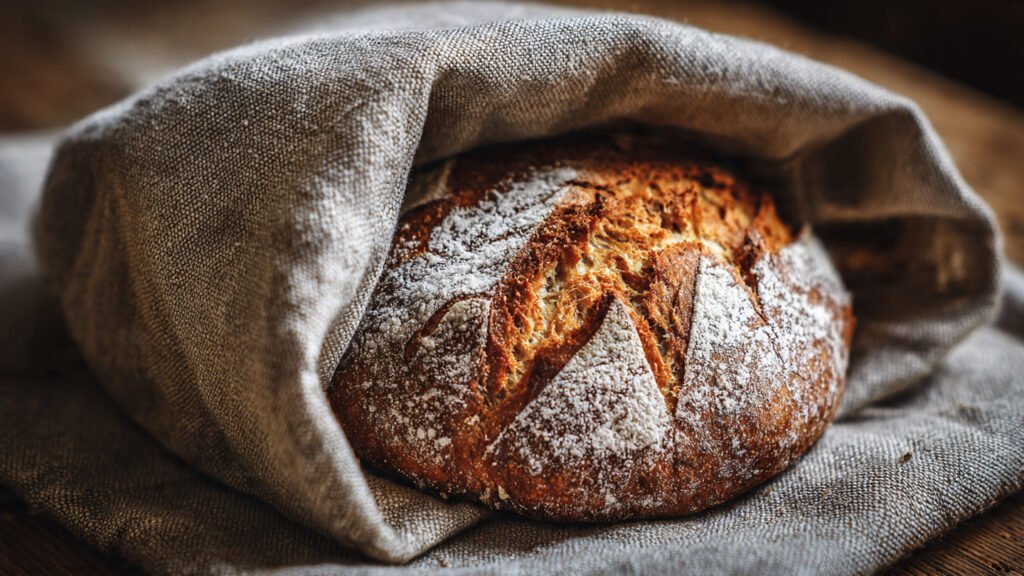
- Use Breathable Materials: Wrap the loaf in a linen bag or tea towel to allow airflow.
- The “Cut Side Down” Method: Leave the loaf unwrapped with the cut side pressing against a wooden board.
- The 24-Hour Rule: If you can’t eat it within 24 hours, freeze it.
Which Method Should You Use?
Not all “humid” days are created equal. Before you choose a storage method, check your home’s humidity level (using a hygrometer or your thermostat) to see which “Zone” you are in:
- 🟢 The Safe Zone (Under 55% Humidity):
- Risk: Low. Sourdough dries out faster than it molds.
- Method: Linen bag, paper bag, or bread box.
- 🟡 The Caution Zone (55% – 75% Humidity):
- Risk: Moderate. Crusts will go soft/leathery within 12 hours. Mold risk starts after Day 3.
- Method: Cut-side down on a board or beeswax wraps. Avoid plastic bags on the counter.
- 🔴 The Danger Zone (Over 75% Humidity):
- Risk: High. Mold spores thrive here. Bread can mold in as little as 24–48 hours.
- Method: Do not store on the counter. Freeze sliced bread immediately, or use the refrigerator method described below (to buy yourself 2-3 extra days).
The Enemy: Why Humidity Ruins Bread
Sourdough bread is unique because it has a high moisture content. In dry climates, the bread releases moisture into the air, causing it to go stale (hard).
In humid climates, the opposite happens. The bread cannot release its moisture because the air is already saturated. Instead, the crust absorbs moisture from the air, turning it leathery or soft. This damp environment is exactly what mold spores need to thrive.
Method 1: The Linen Bag (Best for 1-2 Days)
In humid weather, airflow is your best friend.
- The Method: Place your loaf in a 100% linen or cotton bread bag.
- Why it works: Linen is breathable. It protects the bread from drafts and pests but allows excess moisture to escape, preventing that “sweaty” environment that plastic creates.
- The Downside: The bread will dry out faster than in plastic, but this is a worthy trade-off to prevent mold.
Method 2: Cut Side Down (Best for the First 24 Hours)
If you just baked the loaf and plan to eat it throughout the day:
- Do not cover the loaf.
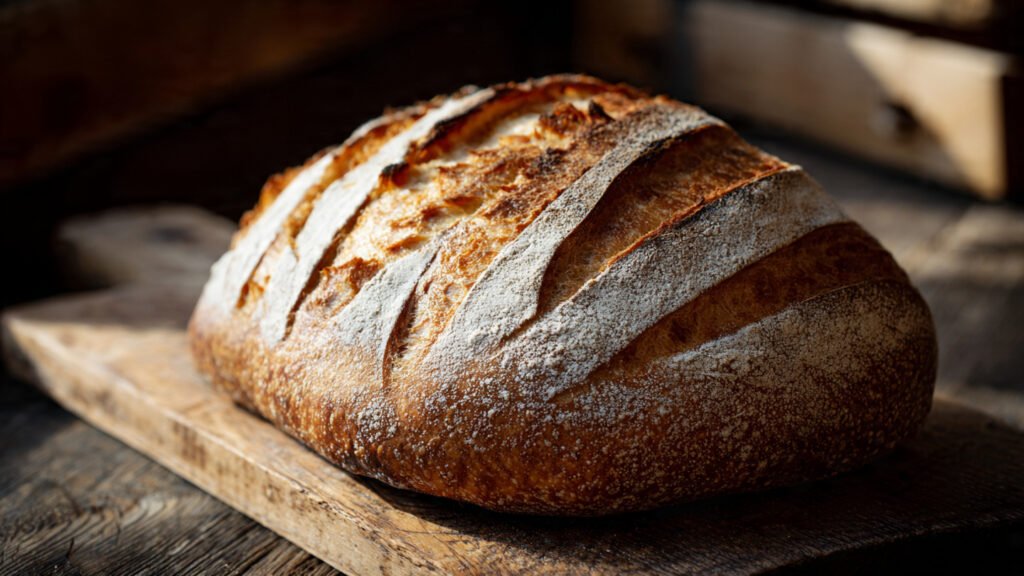
- Stand it up on a wooden cutting board with the cut side facing down.
- The crust protects the rest of the loaf, and the board seals the open face.
The “Forbidden” Method: The Refrigerator
You will often hear bakers scream, “Never put bread in the fridge!” They are right—usually. The refrigerator accelerates retrogradation, which makes the crumb go stale and hard very quickly.
However, in high humidity, the rules change.
If your house is 80°F (26°C) with 90% humidity, your counter is a mold factory. The fridge is a dry, cool environment.
- When to use it: If you absolutely need the bread to last 3-4 days without freezing.
- The Hack: You must toast the bread before eating. Toasting reverses the staling process and makes the bread delicious again.
The Ultimate Solution: Freezing (Best for Zero Waste)
If you live in a tropical climate, the freezer is actually your best storage unit. It is the only method that guarantees zero mold and 100% freshness retention.
Instead of fighting the humidity, simply slice your loaf as soon as it cools and freeze the slices. When you toast a frozen slice, the heat dries out the excess moisture, giving you the perfect crunch—even if it’s raining outside.
Read the Full Guide: [How to Freeze Sourdough Bread Slices (So They Don’t Stick)]
FAQ: Fighting the Fuzz
Why does my sourdough mold so fast in summer?
Mold spores are everywhere, but they need moisture and warmth to grow. High humidity provides the moisture, and summer heat provides the warmth. Sourdough, which contains no artificial preservatives, is defenseless against this combination.
Can I use a beeswax wrap?
In moderate humidity, yes. In very high humidity, be careful. Beeswax wraps seal in moisture very well—sometimes too well. If you notice your crust getting slimy, switch to a linen bag.
How do I fix a soft, leathery crust?
If humidity has made your crust chewy:
- Preheat your oven to 350°F (175°C).
- Run the whole loaf (or slice) quickly under the tap (yes, get the crust wet!).
- Bake for 5-10 minutes. The water evaporates, creating steam that re-crisps the crust beautifully.
Don’t let the weather ruin your hard work. In humid climates, ditch the plastic, embrace linen, and don’t be afraid to use your freezer.
Ready to preserve your loaf for months? Learn the step-by-step method in our guide on How to Freeze Sourdough Bread Slices.