You’ve spent all week nurturing your starter, only to realize you have a jar full of “waste” and a massive craving for homemade pizza. You’re standing at the counter wondering: Can I just use this discard, or will I regret not waiting for my starter to peak? The truth is, both methods make a phenomenal crust, but they yield completely different results in terms of texture, tang, and timing. If you’re looking for that signature tangy flavor without the 12-hour wait, using a sourdough discard pizza dough recipe is often the smarter, more practical move for a weeknight dinner.
The first time I tried to make a “quick” sourdough pizza, I didn’t understand the science. I used a cold baking stone and an under-proofed dough—it was a disaster. The crust was dense, gummy, and pale. Since then, I’ve spent years in professional kitchens perfecting the balance between fermentation and heat. Here is everything you need to know to avoid my mistakes and choose the right dough for your oven.
Sourdough Discard vs Active Starter: Fermentation and Leavening Power
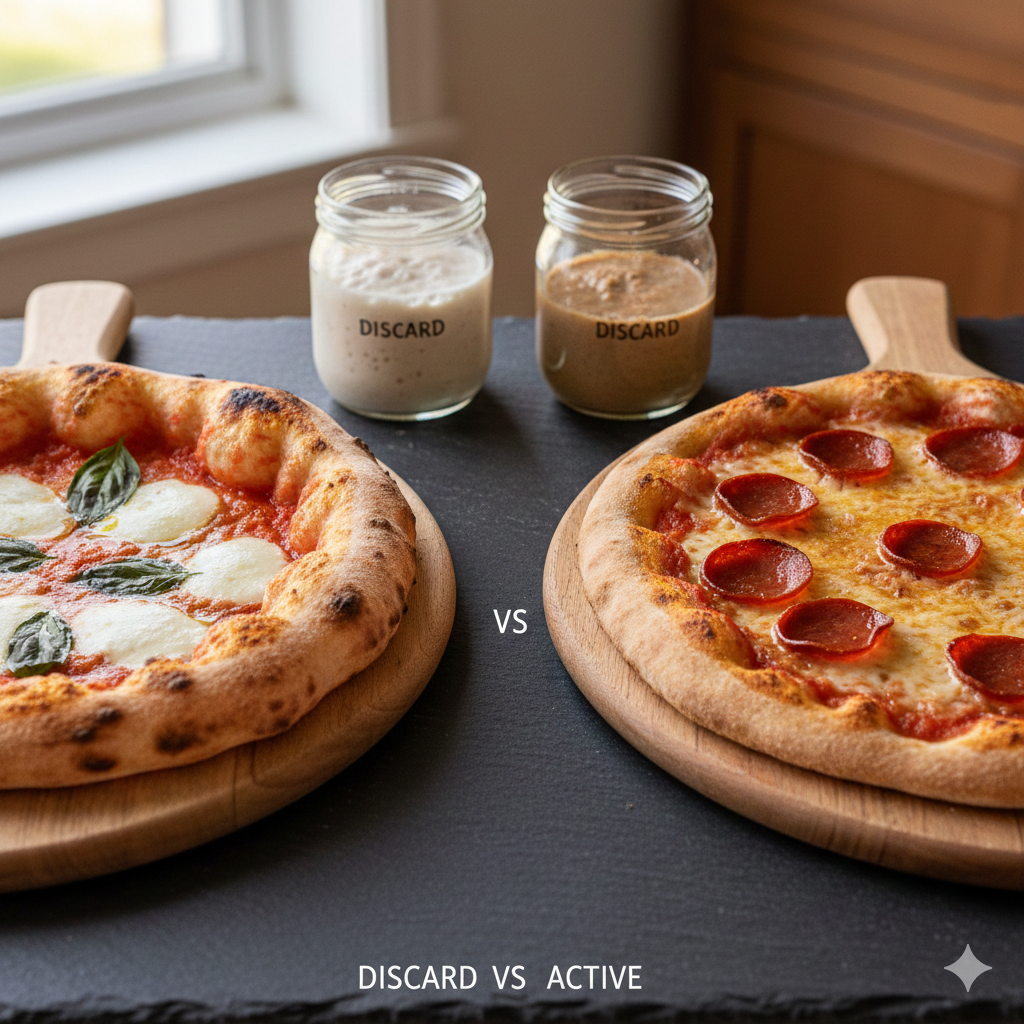
When choosing between discard vs active starter, you are essentially choosing your leavening agent. Understanding how these two states of flour and water interact with your dough is key to mastering the craft.
Active Starter: The Natural Lift
An active starter is at its peak—meaning it has doubled or tripled in size and is teeming with active wild yeast.
- The Process: You rely entirely on natural fermentation to aerate the dough.
- Gluten Development: This method usually requires a longer bulk fermentation with several sets of “stretch and folds” to build strength.
- The Result: An airy, bubbly cornicione (the edge of the crust) with those coveted large air pockets and “leopard spotting” if you have high enough heat.
Sourdough Discard: The Flavor Powerhouse
Discard is starter that has passed its peak and begun to collapse. The wild yeast is dormant, and the acidity is high.
- The Process: Because the yeast is sluggish, most recipes “spike” the dough with a small amount of commercial yeast (around 1–2 grams).
- The Result: A thinner, crispier, New York-style crust that focuses on the complex, lactic acid flavors developed during its time in the fridge.
Professional Baker’s Comparison: Texture and Timing
To get consistent results, I always recommend using a digital scale to measure in grams. Volume measurements like cups are too inconsistent for high-quality baking; a “cup” of flour can vary by as much as 30 grams depending on how it’s packed!
| Feature | Active Starter Pizza | Sourdough Discard Pizza |
| Leavening Agent | Wild Yeast (Natural) | Dormant Yeast + Instant Yeast |
| Hydration Feel | Usually stickier; needs care | Easier to handle; less “slack” |
| Rise Time | 8–12 hours at room temp | 2–4 hours (or 24hr cold proofing) |
| Flavor Profile | Mild, nutty, and sweet | Sharp, tangy, and robust |
Mastering the Cold Proofing Technique
Whether you use active starter or discard, the secret to world-class pizza is cold proofing.
As a professional baker, I recommend a 24 to 48-hour cold ferment in the refrigerator. Cold temperatures slow down the yeast but allow enzymes to break down starches into simpler sugars, which enhances both flavor and digestibility.
- For Active Starter: This develops a complex, sourdough tang that a quick rise simply can’t match.
- For Discard: This further mellows the gluten, making the dough incredibly easy to stretch without it “snapping back” or tearing.
Baker’s Tip: Always bring your dough to room temperature for at least 60–90 minutes before stretching. If the dough is cold, the gluten will be tight, and you’ll end up with a thick, tough crust that refuses to stretch.
Why Discard is the Secret to Better Home Pizza
While “purists” might argue for active starter, many expert bakers actually prefer discard for home ovens for three specific reasons:
- Superior Extensibility: The higher acidity in discard gently breaks down some of the gluten development, making the dough stretch paper-thin without fighting you.
- The Maillard Reaction: The residual sugars in older discard help the crust brown more effectively at the lower temperatures of a home oven (typically 500°F/260°C) compared to a professional 900°F wood-fired oven.
- Efficiency: You can mix a discard dough at 4:00 PM and be eating pizza by 7:00 PM, making it the ultimate weeknight “win.”
Expert Troubleshooting: Temperature Matters
In the world of sourdough, temperature is an ingredient. If your kitchen is cold, your dough will be sluggish.
- Water Temp: Use water at roughly 80°F (27°C) to jumpstart fermentation in discard recipes.
- Ambient Temp: If your kitchen is below 70°F (21°C), your active starter dough will take significantly longer to rise. Use your oven with the light turned on (but the heat off!) to create a makeshift proofing box.
Final Pro Tip: The “Poke Test”
Regardless of which method you choose, use the poke test to see if your dough is ready for the oven. Gently press the dough with a floured finger. If it springs back immediately, the gluten is still too tight—give it more time. If it springs back slowly and leaves a slight indentation, it’s perfectly proofed and ready to stretch!
The Final Verdict: Which One Should You Bake?
After years of professional baking, here is my honest take:
- Choose Active Starter if it’s a slow Sunday and you want to practice your dough-shaping and fermentation skills for a classic Neapolitan pie.
- Choose Sourdough Discard if you want a reliable, tangy, New York-style crust that works perfectly in a standard home oven.
Ready to bake? Grab your jar of starter and head over to my Sourdough Discard Pizza Dough Recipe to get your dough started for tonight’s dinner!