The Short Answer
Does sourdough bread cause constipation? It depends on the type.Whole grain sourdough with long fermentation (24–48 hours) helps most people poop more regularly. White sourdough with short fermentation can slow things down. The flour and fermentation time matter more than the bread itself.
You switched to sourdough because you heard it was better for digestion. So when constipation shows up instead, it feels confusing. You’re not imagining it — and you’re not alone.
The truth is that sourdough isn’t automatically good or bad for constipation. It can either support regular bowel movements or slow things down depending on the flour used, how long it was fermented, and how well your overall diet supports gut motility.
Before blaming the bread, it helps to understand how fermentation actually interacts with your digestive system — and how sourdough supports gut health more broadly.
Sourdough vs. Whole Wheat for Constipation — Which Is Better?
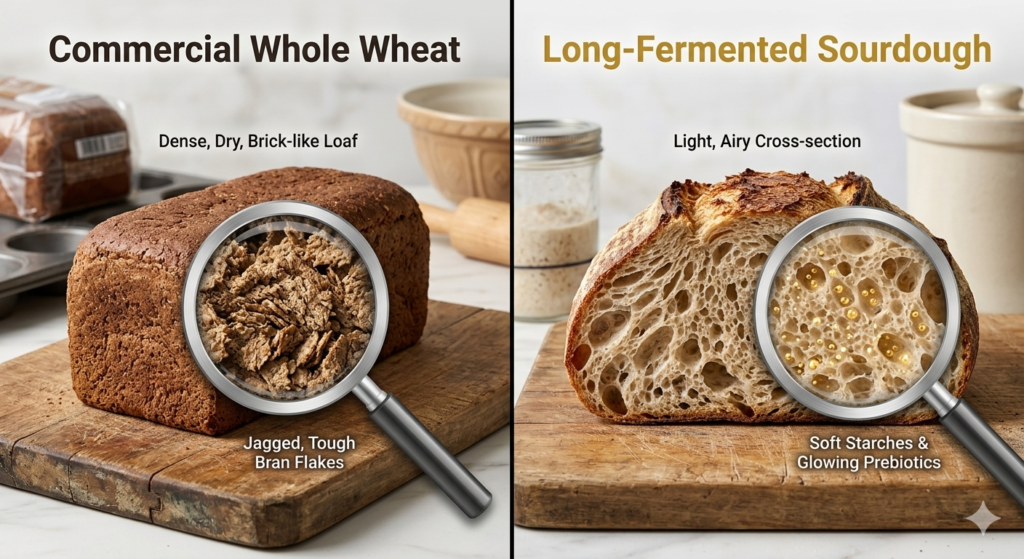
Most people assume more fiber automatically means better digestion. But the type of fiber and how digestible it is matters just as much as the amount.
| Feature | Commercial Whole Wheat | Authentic Sourdough |
|---|---|---|
| Primary Fiber Type | Insoluble bran (tough, hard to digest) | Pre-digested starches and softer fiber |
| Fermentation Time | Less than 2 hours | 24–48 hours |
| Phytic Acid | High — can slow digestion | Neutralized by fermentation |
| Prebiotic Content | Low | High — feeds good gut bacteria |
| Digestive Impact | Can create a “fiber block” if not hydrated | Promotes motility and gut movement |
Why Whole Wheat Can Make Constipation Worse
If you’ve been told to eat more whole wheat for constipation and felt worse, there’s a scientific reason for it.
Commercial whole wheat bread is made rapidly — usually in under two hours. The bran is tough and insoluble. When you eat a large amount of this unfermented fiber without drinking enough water, it doesn’t move things along. Instead, it can form a dense, dry mass in the digestive tract that actually increases blockage — sometimes called the “fiber brick” effect.
Whole grains are also naturally high in phytic acid, an anti-nutrient that binds to minerals like magnesium. Magnesium is essential for relaxing the intestinal muscles that keep digestion moving. In commercial bread, phytic acid is never broken down — so those minerals stay locked up and unavailable.
Why Long-Fermented Sourdough Is Often the Better Choice
Long fermentation transforms whole grain into something your gut can actually handle. Here’s how:
Pre-digestion of fiber. The wild yeast and lactic acid bacteria in a sourdough starter produce enzymes that begin breaking down tough starches and bran before you ever take a bite. This makes the fiber softer and much easier for your system to pass without straining.
Powerful prebiotics. Sourdough fermentation creates resistant starch — a carbohydrate that resists digestion in the small intestine and travels to the colon, where it feeds your good gut bacteria. When those bacteria are well-fed, they produce short-chain fatty acids like butyrate, which directly stimulate the intestinal muscles to contract and move waste along.
Neutralized anti-nutrients. As lactic acid bacteria ferment the dough, they lower the pH and activate an enzyme called phytase. Phytase breaks down phytic acid, unlocking magnesium and other minerals your body needs to keep digestion regular.
When Sourdough Might Cause Constipation
Sourdough isn’t automatically helpful. There are specific situations where it can slow things down instead.
Low-Fiber White Sourdough
If your bread is made with refined white flour, most of the fiber-rich bran has been removed. Without enough insoluble fiber to add bulk to stool, digestion can slow — especially if the rest of your diet is also low in vegetables or whole grains.
Not Drinking Enough Water
Fiber needs water to function. Without adequate hydration, fiber absorbs moisture from your digestive tract and can harden, making stools harder to pass. Even healthy sourdough can contribute to constipation if you’re not drinking enough alongside it.
Sudden Dietary Shift
If you recently switched from a high-fiber diet to white sourdough, or increased your bread intake significantly, your gut may need time to adjust. Rapid changes in fiber type can temporarily disrupt regularity.
Under-Fermented Bread
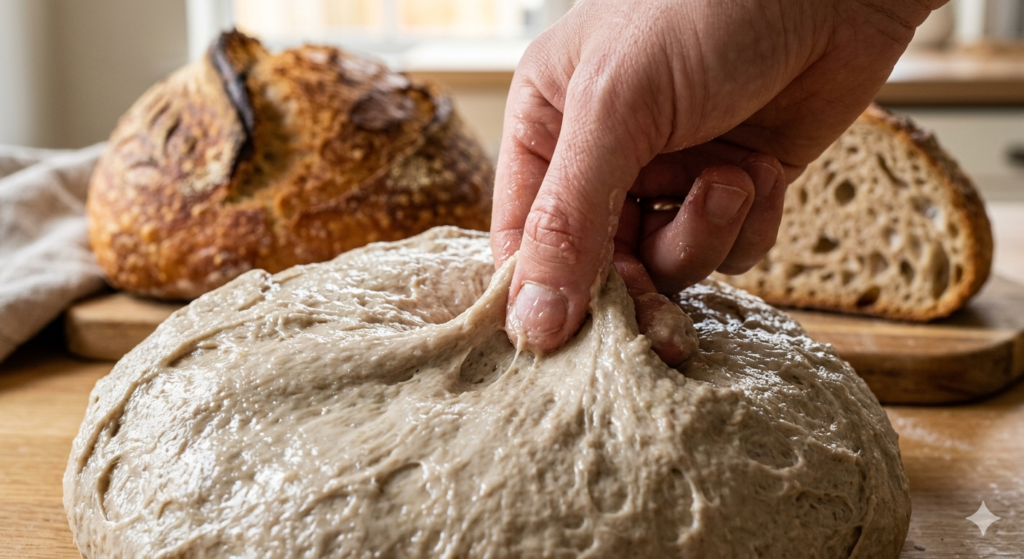
If the dough was underproofed or over-fermented, the gluten and starches may not be fully broken down. This creates a dense, gummy loaf that is harder to digest and may contribute to bloating or sluggish bowel movements.
IBS-C or Slow Motility Disorders
People with IBS-C or other motility issues may react differently to fermented foods. While some improve, others may need a more carefully structured fiber approach rather than relying on bread alone. Always consult your doctor if constipation is chronic.
The Science: How Sourdough Interacts with Your Gut

It’s a Prebiotic, Not a Probiotic
There’s a common misconception that sourdough is full of probiotics. While the raw starter is teeming with live bacteria, the heat of baking kills them. However, authentic sourdough remains a powerful prebiotic. The long fermentation creates unique fibers and starches that survive digestion in the small intestine. When these reach your colon, they fuel your beneficial gut bacteria, which produce Short-Chain Fatty Acids (SCFAs) — critical for keeping your gut lining healthy and waste moving. This is one of the core reasons sourdough is considered good for you beyond just taste.
The Breakdown of Phytic Acid
The lactic acid bacteria in sourdough produce an enzyme called phytase, which breaks down phytic acid and unlocks minerals like magnesium. Magnesium is essential for relaxing the muscles in your intestines and keeping things moving — something standard yeast bread simply cannot offer.
Pre-Digestion via Fermentation
Think of the 24+ hour fermentation process as an external stomach. Wild yeast and bacteria break down complex starches and gluten proteins before the bread ever reaches you. For many people, this lighter digestive load reduces inflammation and bloating, allowing for smoother gut motility. This same mechanism is also why many people find sourdough easier to tolerate for blood sugar management.
Does Sourdough Bread Make You Poop?
Yes — sourdough can help you poop more regularly, but not in the way most bread does. While most breads rely solely on fiber, sourdough also produces organic acids during fermentation that act as a gentle pro-kinetic, helping move waste through your system more efficiently.
The key mechanism is its effect on the Migrating Motor Complex (MMC) — the rhythmic waves that physically sweep waste through your intestines between meals. Standard white bread can stall these waves. Long-fermented sourdough, because it reduces the digestive load, allows the MMC to trigger more easily.
It’s not a laxative. But for many people, properly fermented sourdough reduces digestive resistance rather than adding to it. If you’re also dealing with gas alongside constipation, read our guide on sourdough, digestion, and bloating.
Which Sourdough Is Best for Constipation?
| Bread Type | Helps Constipation? | Why |
|---|---|---|
| White bread (commercial) | Rarely | Very low fiber, no fermentation |
| Commercial whole wheat | Sometimes — but can backfire | High fiber but tough bran and unbroken phytic acid |
| White sourdough | Often | Fermentation improves digestibility, but fiber is low |
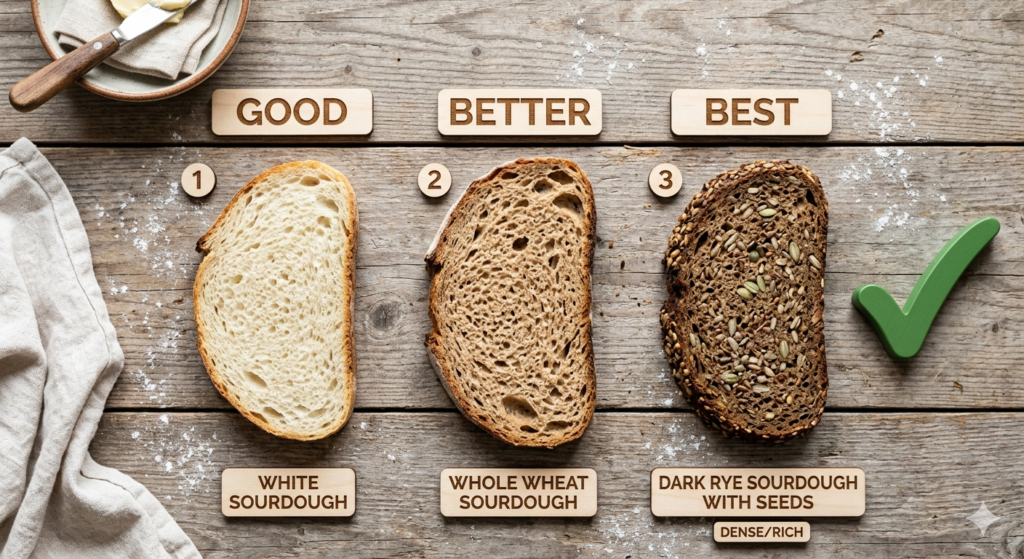
| Whole grain sourdough | Very likely | Fiber + fermentation together support gut motility |
| Rye sourdough | Most effective | High arabinoxylan fiber + long fermentation |
The gold standard is 100% whole wheat or rye sourdough with a long fermentation time (24–48 hours). You get the high fiber content of whole grain plus the pre-digestion benefits of fermentation — the best of both worlds.
Not sure if your starter is active enough for a long fermentation? Check our guide on how to feed and maintain your sourdough starter to make sure it’s performing at its best.
3 Practical Tips for Better Digestion

1. The Hydration Rule
Sourdough fiber works like a sponge — it needs water to move smoothly through your system. If you eat high-fiber bread but are dehydrated, that sponge hardens and can cause blockage. A simple rule: for every slice of sourdough, drink a large glass of water alongside it.
2. Add Rye or Seeds to Your Dough
You don’t have to switch to 100% whole wheat overnight. Start by swapping 10–20% of your white flour for rye flour, or add soaked flaxseeds or chia seeds during your stretch-and-fold phase. These additions dramatically increase the prebiotic fiber content without changing your basic process.
3. Pair Prebiotics with Probiotics
Your sourdough is a prebiotic (food for bacteria). To get the maximum benefit, eat it with a probiotic (live bacteria) — a combination called synbiotic eating. Good pairings include sourdough toast with cultured cottage cheese, a sandwich with fermented sauerkraut, or dipping your crust in a kefir-based dressing.
Frequently Asked Questions
Yes, in some people. Constipation may occur if the bread is made with low-fiber white flour, if overall fiber intake is low, or if hydration is insufficient. Switching from a high-fiber diet to white sourdough is the most common cause.
Sourdough does not act as a laxative, but whole-grain sourdough can support regular bowel movements through its fiber content and fermentation byproducts. Individual response varies depending on diet and gut health.
For many people, yes — especially when both are made from similar flours. The fermentation process neutralizes phytic acid, improves mineral absorption, and softens fiber in a way that commercial whole wheat cannot. The best option is whole wheat sourdough, which combines both benefits.
Yes. A 100% whole wheat sourdough gives you high fiber content plus the pre-digestion benefits of long fermentation. Rye sourdough is the only type that may be even more effective due to its high arabinoxylan fiber content.
Absolutely. If your dough is underproofed, the starches and gluten aren’t fully broken down. Eating dense, gummy bread can cause significant bloating, gas, and digestive stagnation. Always ensure your loaf is fully fermented before baking.
Hydration is essential for any fiber to work. Aim to drink plenty of water throughout the day — not just with meals. Sourdough helps fiber do its job, but water is the vehicle that keeps everything moving.
In sensitive individuals, rapid dietary changes or a highly acidic starter can cause loose stools. This is less common than constipation-related complaints, but worth being aware of when first introducing sourdough to your diet.
It can be, but results vary. Some people with IBS-C find that long-fermented whole grain sourdough supports regularity better than commercial bread. Others are more sensitive to fermented foods and need to introduce it gradually. Always work with your doctor or dietitian for IBS management.
Final Thoughts
Sourdough isn’t a magic pill, but it is a powerful tool for gut health when used correctly. If you’re struggling with constipation, don’t blame the bread immediately — look at the type of flour you’re using and your hydration levels first.
By choosing a whole-grain or rye sourdough with a proper long fermentation and pairing it with plenty of water, you can turn your daily slice from a digestive roadblock into genuine nourishment for your microbiome.
Want to dig deeper into the health side? Read our full guide on the gut health benefits of sourdough.
Medical disclaimer: I am a baker discussing the science of food fermentation. Chronic constipation can be a symptom of underlying medical conditions. Always consult your doctor or gastroenterologist for medical advice.
For a comprehensive guide covering all sourdough digestive concerns including gas, bloating, and acid reflux—check out our complete sourdough troubleshooting guide.
2 Responses
I changed to sourdough as a result of watching YouTube describing what the bread industry is using to call their product “bread”? It was a horror story and to what levels the government and manufacturers stoop to. I am 86 and have l lived through true wartime austerity to date and all the changes and processes that are now invasive and yet LEGALLY allowed, the greed of the hand in glove manufacturers and our “protective?” governmental watchdogs are a a joke. God help us! Finally, your excellent and revealing description on the funamentals of bread was quite fascinating and rewarding.
Many thanks.
Douglas.
Douglas, thank you for sharing such a profound perspective and for your incredibly kind words about my breakdown of bread fundamentals.
You are absolutely right—when you uncover what goes into mass-produced commercial ‘bread’ today, it truly is a wake-up call. Coming from a generation that understands true austerity and honest food, your insight holds an immense amount of weight. It is frustrating to see how the shift toward industrial manufacturing has prioritized profit and shortcuts over genuine nutrition and quality.
That realization is exactly why returning to the pure craft of sourdough is so vital. Stripping the process back to nothing but flour, water, salt, and the science of proper fermentation is what real bread is all about.
I am truly honored that my content resonated with you and brought some clarity to the subject. Welcome to the sourdough community, Douglas. Wishing you many rewarding bakes ahead!