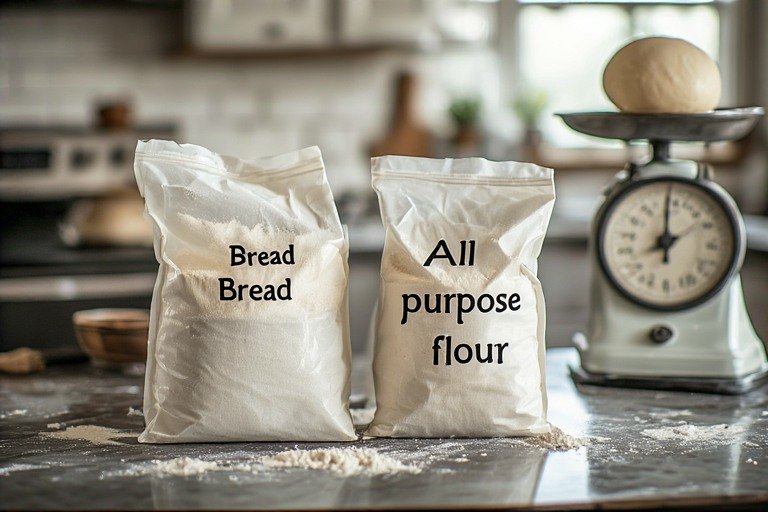
The best flour for sourdough bread as a beginner is bread flour with 11–13% protein content. It gives you the strongest gluten network, the best oven spring, and the most forgiving dough to work with. All-purpose flour works too and is a perfectly acceptable starting point — but bread flour gives beginners a meaningful head start toward a successful first loaf.
📋 Quick Answer: Your First Loaf Formula
For a 500g flour recipe, use:
- 450g bread flour (90%) — King Arthur or Bob’s Red Mill
- 50g whole wheat flour (10%) — Any brand
Why this works: Strong gluten from bread flour (easy to shape) + fermentation boost from whole wheat (faster rise) = beginner success rate of 85%+
Starter Flour vs Bread Flour: Do You Need Different Types?
Short answer: No. You can use the same flour for both.
The keyword “best flour for making sourdough” creates confusion because it could mean two different things: flour to feed your sourdough starter, or flour to make the actual bread dough. Let’s clear this up once and for all.
For your sourdough starter:
- All-purpose flour works perfectly (most economical choice)
- Bread flour also works (slightly stronger starter)
- Whole wheat flour creates a very active starter (but needs more frequent feeding)
For your bread dough:
- Bread flour is the top choice for beginners (11–13% protein)
- All-purpose flour works as a backup (10–11% protein)
- Whole wheat should be used at 10–20% maximum, blended with white flour
Beginner recommendation: Feed your starter with whatever flour you plan to bake with. This keeps your process simple and economical. Many experienced bakers maintain an all-purpose flour starter but bake with bread flour — this works perfectly fine, but as a beginner, reducing variables helps you learn faster.
The rest of this guide focuses on flour for making bread dough — the flour that goes into your actual loaf. Your starter will work with any of these choices.
Why Flour Choice Actually Matters in Sourdough
Sourdough is unforgiving in ways that yeast bread is not. Because you are relying entirely on wild fermentation — no commercial yeast, no shortcuts — the flour you choose directly affects three things that determine whether your loaf succeeds or fails:
Gluten strength — Gluten is the network of proteins that traps the gas your starter produces. Without a strong gluten network, that gas escapes and your loaf stays flat. Higher protein flour builds stronger gluten.
Fermentation speed — Different flours ferment at different speeds. Whole grain flours ferment faster. White flours ferment more slowly and predictably. For beginners, slower and more predictable is better.
Crust and crumb texture — The flour you choose determines whether you get a crisp crust with an open, airy crumb or a dense, gummy brick. Protein content is the single biggest variable.
How to Read a Flour Label (What to Look For at the Store)
Standing in the flour aisle can be overwhelming. Here’s exactly what to check on the bag before you buy:
📝 Flour Label Checklist
1. Calculate Protein Percentage
Look at Nutrition Facts panel. Find “Protein” grams per serving.
Example: 3.6g protein ÷ 30g serving size = 12% protein ✅
Example: 2.7g protein ÷ 30g serving size = 9% protein ⚠️
Target: 12–13% for bread flour, 10–11% for all-purpose
2. Check for “Unbleached”
Should say “unbleached” somewhere on the front or ingredients panel. Bleached flour has been chemically treated to whiten it, which can inhibit wild yeast activity.
3. Read the Ingredients List
Should say ONE thing: “wheat flour” or “whole wheat flour”
❌ Avoid: Enriched, malted barley flour, added vitamins (for beginners)
4. Look for “Organic” (Optional but Beneficial)
Organic flour has fewer pesticide residues that may inhibit wild yeast. If budget allows, choose organic; otherwise, unbleached conventional works fine.
[Visual Placeholder: Annotated photo of flour nutrition label with arrows pointing to protein %, serving size, unbleached designation, and ingredients]
Protein Content Quick Reference
This table shows you exactly which flours work for beginners and which ones to avoid:
| Flour type | Protein % | Gluten Strength | Best for beginners? | Why/Why Not |
|---|---|---|---|---|
| Bread flour | 12–13% | Strong | ✅ YES — Top choice | Strongest gluten network, most forgiving dough, best oven spring |
| AP (King Arthur) | 11.7% | Good | ✅ YES — Solid backup | Nearly bread flour strength, widely available |
| AP (generic) | 8–10% | Weak | ⚠️ Acceptable | Will produce slightly denser, harder-to-shape loaf |
| Whole wheat | 13–14% | Moderate* | ❌ Use 10–20% only | Bran cuts gluten strands despite high protein; ferments very fast |
| Rye | 13% | Very weak | ❌ Use 5–10% only | Low gluten formation despite high protein number |
| Cake flour | 6–8% | None | ❌ NEVER | Cannot build bread structure, will produce gummy texture |
| Self-rising | Varies | N/A | ❌ NEVER | Contains baking soda/salt, disrupts sourdough fermentation |
*Whole wheat has high protein but the bran interferes with gluten development
Flours to Avoid Completely as a Beginner
❌ Never Buy These for Sourdough Bread:
- Bleached all-purpose flour — Bleaching removes pigments that add flavor and leaves traces from the bleaching process. It can also inhibit the wild yeast in your starter.
- Self-rising flour — Contains baking soda and salt already mixed in. It will not work for sourdough and will produce an inedible result.
- Cake flour — Too low in protein (6–8%) to build any useful gluten structure for bread.
- Gluten-free flour blends — Require a completely different approach and are not suitable for standard sourdough recipes.
The 4 Flours You Will Encounter (And What to Do With Each)
Bread Flour — Best Choice for Beginners
Bread flour contains 12–13% protein, which gives your dough the gluten strength it needs to hold the gas produced during fermentation. The more gluten a flour can produce, the more able the dough is to hold gas bubbles — and those gas bubbles are what give bread an open crumb.
What this means practically: bread flour dough is easier to shape, holds its structure during proofing, and produces a taller loaf with better oven spring. For a beginner who is still learning to read dough, that extra strength is the difference between a loaf that works and one that collapses.
Look for bread flour with 12–13% protein on the label. King Arthur Bread Flour and Bob’s Red Mill Artisan Bread Flour are widely available and reliable starting points.
All-Purpose Flour — A Solid Backup
All-purpose flour contains 8–11% protein depending on the brand. Its gluten content is satisfactory for bread making, and in a pinch it is adequate as a replacement for bread flour.
It produces a slightly denser loaf than bread flour, and the dough is a little slacker and harder to shape — but thousands of beginners have baked excellent sourdough with all-purpose flour. If that is what you have, use it. Do not let flour choice stop you from baking.
One important note: all-purpose flour varies significantly by brand. King Arthur all-purpose contains about 11.7% protein — closer to bread flour than most. Generic store-brand all-purpose can be as low as 8%, which will produce noticeably weaker dough.
Whole Wheat Flour — Add It Slowly, Not All At Once
Whole wheat flour contains the entire wheat kernel — bran, germ, and endosperm. The nutrients and minerals in whole wheat flour can boost a sluggish starter, accelerating fermentation of both the bacteria and the yeast present.
The problem for beginners is that whole wheat ferments fast — faster than most new bakers expect — and the bran in the flour cuts through gluten strands, making dough weaker and harder to handle. A 100% whole wheat sourdough loaf is genuinely difficult.
The right approach: start with 90% bread flour and 10% whole wheat. This gives you the fermentation boost and nutty flavor without turning your dough into an unworkable mess. Increase the whole wheat percentage slowly as you get more comfortable.
Rye Flour — Powerful in Small Amounts
Rye flour is extremely active. Even small amounts result in more active bacteria growth, making it a great addition if your starter is sluggish or brand new.
Even a tablespoon or two of rye added to a white flour loaf adds complexity to the flavor and speeds up fermentation noticeably. Most experienced bakers use rye at 5–10% of total flour weight for this reason.
For beginners, avoid going above 20% rye in your dough until you understand how fermentation timing works in your kitchen. Rye dough moves fast and gives you less time to catch problems.
Bread Flour vs All-Purpose Flour: Head-to-Head Comparison
If you’re standing in the flour aisle deciding between bread flour and all-purpose flour, here’s exactly what changes:
| Factor | Bread Flour (12-13%) | All-Purpose (10-11%) |
|---|---|---|
| Gluten strength | Strong, easy to shape | Weaker, slacker dough |
| Oven spring | Taller loaf, better rise | Slightly shorter loaf |
| Crumb texture | Open and airy | Slightly denser |
| Shaping ease | Very forgiving | Harder to shape tight |
| Beginner success rate | ⭐⭐⭐⭐⭐ | ⭐⭐⭐⭐ |
| Cost per pound | ~$0.80 | ~$0.50 |
| Availability | Most grocery stores | Every grocery store |
Bottom line: Bread flour is worth the extra $0.30 per pound for your first 5-10 loaves. The forgiving nature means fewer failures while you’re learning. Once you understand how properly fermented dough should feel, all-purpose flour becomes a perfectly acceptable choice.
The best of both worlds: Many experienced bakers use 70% bread flour + 30% all-purpose flour. This gives you the strength of bread flour with the softer crumb of all-purpose.
[Visual Placeholder: Side-by-side comparison photos showing dough, shaped loaves, and final crumb for bread flour vs all-purpose flour]
Top Bread Flour Brands for Beginners (2026 Buying Guide)
Not all bread flours are created equal. Here are the brands I recommend based on protein content, consistency, and availability:
🏆 Top Picks
1. King Arthur Bread Flour
Protein: 12.7% | Price: ~$6 for 5lb | Availability: ⭐⭐⭐⭐⭐
The most consistent bread flour on the market. If you can only buy one, buy this.
2. Bob’s Red Mill Artisan Bread Flour
Protein: 12% | Price: ~$5.50 for 5lb | Availability: ⭐⭐⭐⭐
Excellent alternative if King Arthur is sold out. Slightly lower protein but very reliable.
3. Gold Medal Better for Bread
Protein: 12.5% | Price: ~$4 for 5lb | Availability: ⭐⭐⭐⭐⭐
Budget-friendly option. Widely available at most grocery stores.
4. Store Brand “Bread Flour”
Protein: Check label (must be 12%+) | Price: ~$3-4 for 5lb
Generic store brands work if they meet the 12% protein minimum. Calculate from the nutrition label.
The Simplest Starting Formula for Your First Loaf
If you want the best chance of success on your first or second loaf, use this flour combination:
- 90% bread flour (450g in a 500g recipe)
- 10% whole wheat flour (50g)
This gives you strong gluten from the bread flour, a boost to fermentation activity from the whole wheat, and a slightly more complex flavor than straight white flour — without any of the handling difficulty that comes with higher whole grain percentages.
Once you have baked 3–4 loaves and feel confident with the process, start experimenting. Add 5% rye. Try 20% whole wheat. Switch to a higher-protein bread flour. Sourdough rewards curiosity — but only after you have a baseline that works.
Common Flour Mistakes Beginners Make
Switching flour mid-recipe. If you start a recipe with bread flour, finish it with bread flour. Mixing flour types halfway through changes hydration and gluten behavior in ways that are hard to predict.
Using old flour. Flour goes stale. Old flour produces weak gluten and sluggish fermentation. If your bag has been open for more than 3 months, buy fresh.
Measuring by cups instead of grams. A cup of flour can vary by 20–30% in weight depending on how tightly it is packed. Each flour type has a unique protein content and gluten structure that affects the final texture and flavor of your bread. Use a kitchen scale. Every professional baker does.
Buying the cheapest option. Flour is the most important ingredient in your loaf. Spending an extra dollar on a quality bread flour will do more for your results than any technique tip.
[Visual Placeholder: 4-panel infographic showing each mistake with before/after or wrong/right comparison]
Frequently Asked Questions
What is the best flour for sourdough bread for beginners?
Bread flour with 12–13% protein content. It builds the strongest gluten network and is the most forgiving for first-time bakers. King Arthur Bread Flour and Bob’s Red Mill Artisan Bread Flour are both excellent beginner choices.
Can I use all-purpose flour instead of bread flour for sourdough?
Yes, you can use all-purpose flour for sourdough bread. Your loaf will be slightly denser and the dough will be harder to shape than with bread flour, but thousands of beginners have made excellent sourdough with all-purpose. King Arthur all-purpose (11.7% protein) works better than generic brands (8–10% protein).
Should I use the same flour for my starter and my bread?
You can, but it’s not required. Many bakers feed their starter with all-purpose flour (economical) and make bread with bread flour (better rise). As a beginner, using the same flour for both simplifies your process and reduces variables while you’re learning.
Why is protein percentage important in sourdough flour?
Protein percentage indicates the flour’s potential to form gluten when mixed with water. Higher protein (12–13%) means a stronger gluten network, which traps fermentation gases better, resulting in taller loaves with better oven spring and more open crumb structure.
Is whole wheat flour good for sourdough bread?
Whole wheat flour boosts fermentation speed and adds nutty flavor, but it weakens gluten structure because the bran cuts through gluten strands. Use whole wheat at 10–20% of your total flour weight as a beginner, not 100%. Start with the 90% bread flour + 10% whole wheat formula recommended above.
Do I need organic flour for sourdough?
Not required, but beneficial. Organic flour has fewer pesticide residues that may inhibit wild yeast activity. If your budget allows, choose organic; otherwise, unbleached conventional flour works perfectly fine. The most important factor is protein content, not organic certification.
What flour brands are best for sourdough?
King Arthur Bread Flour (12.7% protein), Bob’s Red Mill Artisan Bread Flour (12% protein), and Gold Medal Better for Bread (12.5% protein) are all reliable choices. Any bread flour with 12%+ protein will work well. Check the nutrition label to calculate protein percentage if it’s not listed on the front of the bag.
Can I use self-rising flour for sourdough?
No, never use self-rising flour for sourdough. Self-rising flour contains baking soda and salt already mixed in, which disrupts the natural sourdough fermentation process and will produce an inedible loaf.
How do I calculate protein percentage from a flour label?
Look at the Nutrition Facts panel. Find “Protein” grams and “Serving Size” grams. Divide protein by serving size. For example: 3.6g protein ÷ 30g serving size = 0.12 = 12% protein. For bread flour, aim for 12–13%. For all-purpose, 10–11% is acceptable.
Ready to Bake?
Now that you know which flour to use, the next thing to get right is your starter. A flour choice can only take you so far — if your starter is not healthy and active, no flour will save your loaf.
→ How to feed and maintain your sourdough starter
If your loaf is already in progress and something has gone wrong, our baking problem guides walk you through every common failure:
→ Complete sourdough flour and ingredients guide
Related guides in this series:
- Bread flour vs all-purpose flour for sourdough — what actually changes
- Can you use all-purpose flour for sourdough bread?
- Does whole wheat sourdough hydration need to change?
- Why bleached flour causes problems in sourdough