👈 Back to Complete Malt Guide — All malt types, uses, and baking benefits explained
Explore other malt guides: Diastatic Malt Powder • Non-Diastatic Malt Powder • Malt Syrup • Malted Barley Flour • Malted Barley • What Is Malting? • DIY Malting • High-Rise Recipe
Malted flour is bread flour that already contains malt (either malt powder or ground malted grain) blended in by the miller—saving you the step of adding malt yourself.
Malted flour is wheat flour that has been milled with malted barley flour or malt powder added at the mill, typically at 0.5–1% of the flour weight. It’s essentially a convenience product: you buy one bag instead of buying bread flour and malt separately and blending them yourself.
In this guide, you’ll learn what malted flour is, how it differs from regular bread flour, when to use it, and when you’re better off buying plain flour and adding malt yourself.
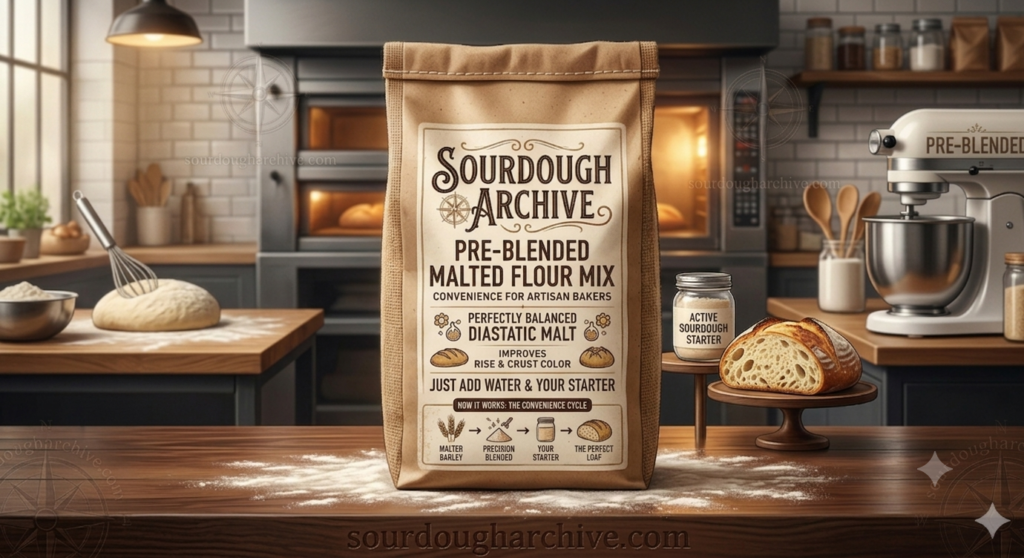
From the Pillar: The Pre-Blended Malt Form
This spoke covers malted flour as a ready-made, convenience product, part of the complete what is malt guide. If you’re new to malt, understand the foundational pillar post first. This spoke focuses on the commercial convenience form.
Malted flour is fundamentally straightforward: it’s flour with malt already mixed in by the miller. No special technique needed—you just use it like regular flour.
What Is Malted Flour?
Malted flour is regular wheat flour with a small amount of malted barley flour or malt powder added at the mill, usually under 1%. It is not the same as malted barley flour, which is made entirely from sprouted, dried barley. Malted flour is mostly wheat, so it behaves like bread flour with a little extra enzyme help for fermentation and crust color.
Malted Flour vs. Regular Bread Flour: The Only Difference
Regular bread flour: 100% wheat flour, milled from grain kernels.
Malted flour: 99–99.5% wheat flour + 0.5–1% malt (usually malted barley flour or occasionally malt powder).
That’s the only difference. Malted flour is bread flour with a small pre-measured amount of malt already blended in at the mill.
What Type of Malt Is In Malted Flour?
Most commercial malted flour contains one of the following:
Diastatic Malted Barley Flour (Enzyme-Active)
Low-temperature malted barley ground into flour. Contains active enzymes. This is the most common type in commercial malted flour. The enzymes continue working during fermentation, accelerating rise and improving oven spring. (For more detail, see what is diastatic malt powder.)
If a bag of malted flour doesn’t specify “non-diastatic,” assume it’s diastatic.
Non-Diastatic Malt (Less Common)
High-temperature malted barley or malt powder with enzymes deactivated. Used purely for flavor and color. Rarer in commercial blends; mostly you’ll find this labeled specifically as “non-diastatic malted flour.” (See what is non-diastatic malt powder for full details.)
Malt Powder vs. Ground Malted Barley
Some millers use pure malt powder (extracted and dried); others use ground whole malted barley. The result is nearly identical, though ground malted barley contains slightly more fiber and whole-grain character. The label usually doesn’t specify, but it doesn’t matter for practical baking purposes—both work the same way.
Malt Content: How Much Is In There?
Commercial malted flour contains approximately 0.5–1% malt by weight. This is the industry standard—enough to improve fermentation, color, and flavor without creating fermentation instability.
What this means for you: If you use malted flour, you’re getting a pre-dosed amount of malt already included. You don’t need (and shouldn’t) add more malt on top of malted flour, as you’ll exceed the safe dosage.
Why Use Malted Flour? The Convenience Argument
Pros:
- One bag instead of two (no need to buy separate malt)
- Pre-measured—no guessing at dosage
- Guaranteed blend consistency from the mill
- Convenient for quick baking without extra ingredients
- Widely available in the UK; in the US, check the ingredient label on your bread flour
Cons:
- You’re committed to whatever malt type the mill chose (usually diastatic)
- Slightly more expensive per pound than plain flour
- Less control—if you want to dial malt up or down, you can’t
- Dedicated malted blends are easier to find in the UK than the US
- Can lose freshness a little sooner than plain flour
- Can’t substitute other malt forms like malt syrup for flexible dosing
Using Malted Flour in Sourdough
How to Use It
Use malted flour exactly like you’d use regular bread flour. Just swap it in 1:1 for regular bread flour in your recipe. No adjustments needed.
Example: If a recipe calls for 500g bread flour, use 500g malted flour instead. That’s it.
Fermentation Timing
If the malted flour contains diastatic malt (which is likely), fermentation will proceed slightly faster than with plain flour. Bulk fermentation might compress by 15–30 minutes. Plan accordingly and watch the dough, not the clock.
If you’re used to a specific fermentation schedule with plain flour, expect to shorten it slightly when switching to malted flour.
No Need to Add More Malt
Important: Do not add extra malt powder, syrup, or extract on top of malted flour. You’ll exceed the safe dosage and risk gummy crumb or over-fermentation. The malt is already there—you’re covered.
Blending with Other Flours
If you use malted flour in a blend (e.g., 70% malted flour, 30% whole wheat), the malt amount is reduced proportionally. But the effect is still there—you’ll notice slightly faster fermentation compared to using plain bread flour as your base.
Where to Buy Malted Flour
UK & Europe: Widely available. Look for “malted bread flour,” “Granary flour” (Hovis brand), “Malthouse flour,” or mill-specific blends (Cotswold Flour, etc.). Most grocery stores and baking suppliers stock it.
US: Products sold as “malted flour” are less common, but many US bread flours and all-purpose flours already list malted barley flour in the ingredients, so check the label on the flour you already buy. For a stronger malted blend, specialty suppliers (King Arthur, Breadtopia, Giusto’s) stock it online.
Where to search:
- Specialty baking suppliers (online)
- Craft flour mills (online)
- Whole Foods or natural food stores (sometimes)
- British/European import shops
- Homebrew suppliers (occasionally)
Cost: Usually a little more than plain bread flour. Prices vary by brand and region.
Malted Flour Applications: What It’s Best For
Malthouse Bread (Classic)
Traditional British/European loaves made from 50–100% malted flour plus regular bread flour. The result is a nutty, slightly sweet, golden-brown loaf that’s softer than whole wheat but deeper in flavor than white bread.
Quick Fermentation Schedules
If you’re in a hurry and want faster fermentation without adding diastatic malt powder yourself, malted flour does it automatically. The pre-blended malt accelerates the process reliably.
Bread Rolls & Quick Breads
Malted flour is excellent for rolls, enriched doughs, and quick breads where you want consistent rise without worrying about dosing malt separately.
Malted Flour vs. Buying Plain Flour + Adding Malt Yourself
Use malted flour if:
- You want convenient, pre-dosed malt blending
- You’re in the UK or Europe (easily available)
- You want consistency loaf-to-loaf
- You don’t need to adjust malt type or amount
Buy plain flour + add malt yourself if:
- You want control over malt type (diastatic vs. non-diastatic)
- You want to adjust malt dosage based on conditions
- You can’t find a dedicated malted blend where you live
- You want to save a few cents per pound
- You want flexibility to use the same flour for multiple styles of bread
For most home sourdough bakers, especially in the US, buying plain bread flour and adding your own diastatic malt powder gives you more control and is more economical. Malted flour shines if you’re in a region where it’s abundant and you want pure convenience.
Storage & Shelf Life
Malted flour should be stored the same as regular flour: cool, dry, sealed container, 6–12 months. Use it within a year if possible, especially if stored at room temperature.
Check the bag’s packaging date if available. Fresher is better.
Malted Flour FAQ
Is malted flour the same as malted barley flour?
No. Malted flour is wheat flour with a little malt blended in. Malted barley flour is made entirely from sprouted, dried barley and is usually added to recipes in small amounts.
Is all-purpose or bread flour malted?
Often, yes. Many bread and all-purpose flours list malted barley flour in the ingredients. Check the label, and skip extra malt if it is already there.
Is malted flour diastatic?
Usually, yes. Unless the bag says non-diastatic, assume the enzymes are active.
Can I use malted flour in sourdough?
Yes. Swap it 1:1 for bread flour and watch your dough, since fermentation may run a little faster.
The Bottom Line on Malted Flour
Malted flour is a convenience product: bread flour with malt already mixed in. It’s not better or worse than using plain flour + adding malt yourself—it’s just a different approach.
Best for bakers who: Want simplicity, live where malted flour is readily available, and don’t need to adjust malt type or amount.
Not ideal for bakers who: Want control over malt dosage, need to adjust based on conditions, or live in regions where malted flour is hard to find.
For sourdough specifically, malted flour works beautifully—it’s a straightforward swap for regular bread flour with the fermentation benefits of malt already built in. Just remember: watch your fermentation timing (it’ll be slightly faster) and don’t add more malt on top of it.