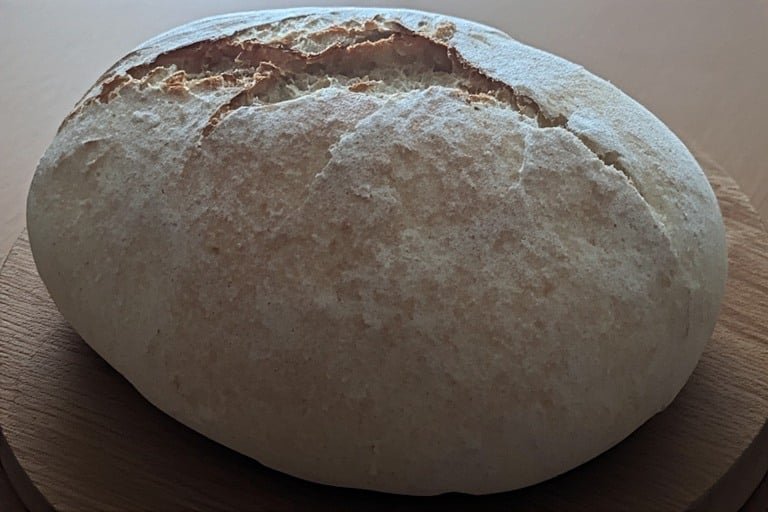
A sourdough crust that comes out of the oven crisp and then turns soft as it cools is one of the most common baking frustrations — and it is almost always caused by trapped moisture. The fix is usually simple: bake longer, cool correctly, or adjust how you handle the loaf right after baking. Most bakers solve this problem in one bake once they know what to look for.
Why Your Sourdough Crust Goes Soft
The crust on a sourdough loaf forms through a combination of heat and moisture evaporation. As the loaf bakes, water escapes from the dough and the surface dries and hardens into a crust. When that process does not go far enough — because the bake was cut short, the oven was too cool, or the loaf was covered too soon after baking — moisture remains trapped inside the bread. As the loaf cools, that internal moisture migrates outward and softens the crust from the inside.
A soft crust is not always a sign that something went seriously wrong. It usually means one step in the bake or cool-down was slightly off. Work through the fixes below in order — most bakers find the culprit by fix two or three.
6 Fixes for a Soft Sourdough Crust
Fix 1: Bake Uncovered for Longer
The most common cause of a soft crust is pulling the lid off the Dutch oven too early — or putting the loaf in a cooler oven than the recipe requires. The uncovered phase of the bake is when the crust dries out and sets. If you only bake uncovered for 15 minutes, the crust will not have enough time to fully dry and harden.
Extend your uncovered bake time to 25–30 minutes. The crust should be a deep golden brown before you pull it — not pale gold. If it looks pale when you take it out, give it five more minutes.
Fix 2: Leave the Loaf in the Turned-Off Oven
One of the most effective tricks for a crisper crust costs nothing and takes no extra effort. When your bake time is done, turn the oven off, remove the Dutch oven lid, and leave the loaf sitting on the oven rack with the oven door slightly open. Leave it there until the oven is completely cool — usually 45 minutes to an hour. The residual heat continues to dry the crust gently without burning it, and the open door lets steam escape instead of settling back onto the loaf.
Fix 3: Cool on a Wire Rack — Not a Solid Surface
Where you cool your loaf matters. Placing a hot loaf directly on a chopping board or solid countertop traps steam underneath and softens the bottom crust. The moisture has nowhere to go and works its way back up through the loaf. Always cool on a wire rack so air can circulate underneath and around the whole loaf.
Fix 4: Never Cover a Warm Loaf
Covering a loaf — with a towel, a bag, or plastic wrap — while it is still warm traps steam and softens the crust within minutes. This is intentional if you want a soft sandwich-style crust, but if you want crunch, leave the loaf completely uncovered on a wire rack until it has fully cooled to room temperature. That takes at least one to two hours for a standard loaf.
Fix 5: Check Your Oven Temperature
Many home ovens run 15–20°C cooler than the dial suggests. If your oven is set to 230°C but actually running at 210°C, the loaf will bake at a lower temperature throughout, resulting in less crust development and more moisture retained. An oven thermometer costs very little and will immediately tell you if your oven is running cool. If it is, raise your dial temperature to compensate.
Fix 6: Check Your Dough Hydration
Higher hydration doughs contain more water, which means more moisture needs to bake out before the crust can fully set. If you are baking an 80% or higher hydration recipe and consistently getting a soft crust, try dropping hydration by 5% on your next bake and see if the crust holds up better. Lower hydration doughs form a firmer crust more reliably.
Quick Fix Table
| Symptom | Most Likely Cause | Fix |
|---|---|---|
| Crust perfect out of oven, soft after cooling | Moisture migrating from crumb | Turn-off oven rest with door ajar |
| Crust pale and soft from the start | Oven too cool or uncovered phase too short | Extend uncovered bake 5–10 min, check oven temp |
| Soft bottom crust only | Cooling on solid surface | Switch to wire rack |
| Soft all over within minutes of cooling | Covered too soon | Never cover a warm loaf |
| Always soft no matter what | High hydration dough | Reduce hydration by 5% |
| Crust softens overnight | Normal moisture redistribution | Store in paper bag, not plastic |
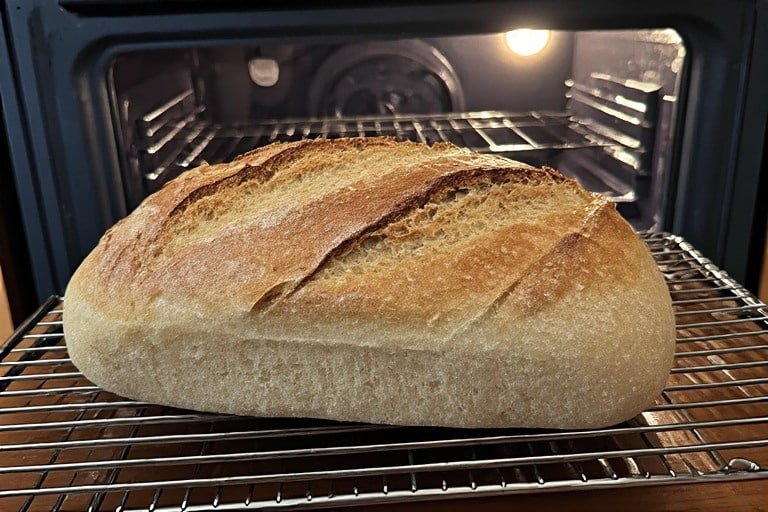
How to Store Sourdough So the Crust Stays Crisp
Even a perfectly baked crust will soften somewhat overnight — this is normal. The crumb releases moisture gradually as the bread cools and settles. You can slow this down with the right storage method.
Keep your sourdough in a paper bag or wrapped loosely in a clean cotton cloth. Paper and cotton allow some air circulation and let excess moisture escape rather than trapping it against the crust. Avoid plastic bags and sealed containers unless you specifically want a soft crust — plastic traps all moisture and will soften even the crispest crust within hours.
By the next day, even a well-baked sourdough crust will be noticeably less crunchy than it was fresh from the oven. This is normal and does not mean anything went wrong. If you want to revive the crust, place the loaf in a 180°C oven for 8–10 minutes uncovered and it will crisp back up.
What to Do Next
A crisp, well-set crust comes down to heat, time, and how you handle the loaf after baking. Work through the fixes above one at a time and you will find the culprit quickly.
→ Sourdough Baking Problems — Every Fix in One Place — all troubleshooting guides in one hub
→ Why Is My Sourdough Burnt on the Bottom? — crust going too far the other way
→ How to Get Better Oven Spring in Sourdough — if your loaf is also not rising well