Sourdough’s reputation for being “healthier than regular bread” comes from real nutritional advantages—but what exactly makes it different? And more importantly: will it help you lose weight, improve digestion, or manage your blood sugar?
This guide consolidates sourdough nutrition across four key topics: fiber content, macronutrient breakdown, weight loss potential, and digestive impact. We’ll link you to detailed deep dives on each topic so you can explore exactly what you need to know.
Quick Sourdough Nutrition Overview
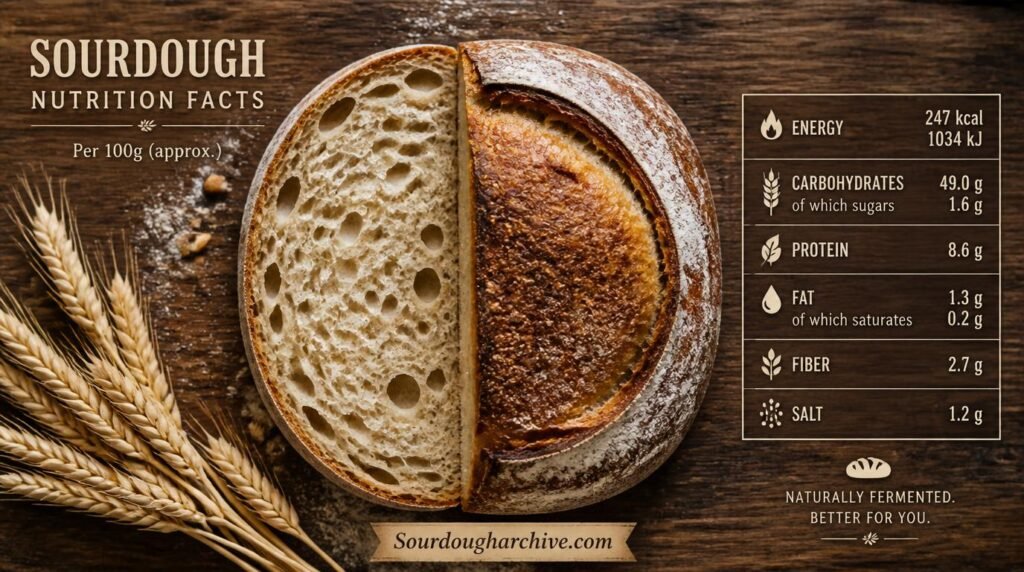
Before diving into specifics, here’s what a typical slice of sourdough (40g) contains:
- Calories: 80–120
- Protein: 3–4g
- Carbs: 14–16g
- Fiber: 0.7–1.2g (varies by flour type)
- Fat: 0.5–1g
- Glycemic Index: ~53 (lower than white bread, comparable to whole wheat)
Sourdough’s real advantage isn’t in the raw numbers—it’s in how your body processes them thanks to fermentation. We’ll explain that below.
1. Does Sourdough Have Fiber? Complete Fiber Breakdown
The question: Is sourdough a good source of fiber?
The short answer: Sourdough contains moderate fiber (0.7–1.2g per slice), less than whole wheat but more than regular white bread. However, sourdough’s fermentation makes the fiber more bioavailable—meaning your gut actually absorbs it better.
What varies the fiber content:
- White sourdough: 0.7g fiber per slice (refined flour)
- Whole grain sourdough: 1.5–2g fiber per slice
- Mixed grain sourdough: 2–3g fiber per slice
For a complete breakdown of fiber content by flour type, digestibility, and how it compares to other breads, see our detailed fiber guide →
2. Sourdough Macros: Calories, Protein & Carbs Explained
The question: What are the exact macros in sourdough?
The short answer: Sourdough macros are typical for bread—moderate calories, decent protein, and carbs that break down slowly due to fermentation. One slice fits easily into most diets when portioned correctly.
Why fermentation matters for macros: Sourdough’s wild yeast and bacteria break down ~20% of carbohydrates during fermentation, reducing the “digestible carb” content compared to regular bread. This is why it has a lower glycemic index (GI ~53) than expected for a grain-based food.
For detailed macro comparisons (protein, fat ratios, how sourdough stacks up against whole wheat and white bread), and macro calculations for different loaf sizes, see our complete macros guide →
3. Sourdough & Weight Loss: Will It Help You Lose Fat?
The question: Does sourdough actually help with weight loss, or is it just hype?
The short answer: Sourdough isn’t a weight-loss miracle food, but it’s genuinely better than regular bread for fat loss. Its lower glycemic index, better nutrient absorption, and higher satiety make it a smart choice when eaten in moderate portions (1–2 slices per meal).
Key weight-loss advantages:
- Lower blood sugar spikes: Slower glucose absorption = fewer cravings and more stable energy
- Better nutrient absorption: Fermentation reduces antinutrients, so you absorb minerals efficiently = fewer deficiency-driven cravings
- Improved satiety: When paired with protein and fat, sourdough keeps you fuller longer than white bread
For a detailed comparison with whole wheat (which is higher), specific weight-loss strategies, and how sourdough compares to other bread types for fat loss, see our sourdough vs whole wheat weight loss guide →
4. Is Sourdough Fattening? Calories, Portions & Weight Gain Truth
The question: Can you gain weight from eating sourdough?
The short answer: Sourdough itself isn’t fattening—it’s roughly the same calories as whole wheat (80–120 per slice). But like any food, overeating it contributes to weight gain. The key is portion control and pairing it with protein + fat.
Why sourdough is less likely to cause overeating:
- Fermentation creates compounds that trigger satiety signals faster
- The slower digestion rate (lower GI) means you stay satisfied longer
- Better nutrient absorption reduces cravings-from-deficiency
For the calorie science, healthy portion sizes, paired-meal strategies, and honest truth about whether sourdough fits weight-gain or weight-loss goals, see our is sourdough fattening guide →
Sourdough’s Hidden Nutrition Advantage: Fermentation
Here’s the thing most nutrition labels won’t tell you: sourdough’s fermentation process changes how your body processes it.
During fermentation:
- Gluten partially breaks down: ~20% of gluten proteins are hydrolyzed, making sourdough easier to digest than regular wheat bread (though it’s still NOT gluten-free)
- Phytic acid drops ~73%: This compound normally blocks mineral absorption. Less phytic acid = your body absorbs magnesium, iron, zinc, and other minerals better
- Lactic acid increases: This aids digestion and feeds beneficial gut bacteria
- Carbs partially break down: Natural fermentation reduces digestible carbs, lowering the glycemic impact
Translation: Sourdough’s numbers might look similar to regular bread, but your body processes it more efficiently. You get better nutrient extraction, steadier energy, and improved digestion.
How Much Sourdough Should You Eat Per Day?
The healthy amount depends on your goals:
- Weight loss: 1–2 slices total per day, paired with protein + fat
- Maintenance: 2–3 slices per day (adjust to your energy needs)
- Athletic/active: 2–4 slices per day (fuel for workouts)
- Blood sugar management: 1 slice per meal, always paired with protein + healthy fat
Pro tip: Pair sourdough with protein and fat (eggs, cheese, avocado, butter) to slow digestion further and maximize satiety.
Sourdough & Health Conditions: Key Considerations
For Diabetics
Sourdough’s lower glycemic index (GI ~53) is genuinely helpful for blood sugar management. However, portion control still matters. Stick to 1 slice per meal, always paired with protein + fat.
For People with Gluten Sensitivity
Sourdough reduces gluten content by ~20% through fermentation, making it more tolerable than regular bread—but it’s NOT gluten-free. People with celiac disease should avoid it.
For Digestive Issues
Sourdough’s reduced phytic acid and increased lactic acid typically improve digestion and reduce bloating compared to regular bread. Many people report better tolerance and fewer gas issues.
Sourdough by Flour Type: Nutrition Comparison
| Flour Type | Calories/Slice | Fiber | Best For |
|---|---|---|---|
| White Sourdough | 80–100 | 0.7g | Mild digestion, flavor |
| Whole Wheat Sourdough | 90–120 | 1.5–2g | Weight loss, satiety |
| Mixed Grain | 100–130 | 2–3g | Maximum nutrition |
| Ancient Grain (Spelt, Einkorn) | 85–110 | 1.2g | Nutrient density, ease of digestion |
Sourdough Nutrition FAQs
Does sourdough have probiotics?
Active probiotics are killed during baking, so no. However, sourdough still feeds beneficial gut bacteria (through lactic acid and prebiotic compounds), which is arguably more useful than dead probiotics.
Is sourdough better than whole wheat for weight loss?
Whole wheat has more fiber (better satiety), but sourdough has a lower glycemic index (better blood sugar). The best choice depends on whether you prioritize volume-satiety (whole wheat) or steady energy (sourdough). Many people use both.
Can I eat sourdough on keto?
No. One slice contains 14–16g carbs, exceeding most keto macros (20–50g carbs/day). Skip it on strict keto.
How long does sourdough stay fresh?
3–4 days at room temperature, 7–10 days in a paper bag, up to 3 months frozen. Store in paper (not plastic) to keep the crust crisp.
Explore Specific Topics
Want deeper dives? Choose a topic that matches your question:
- → Does Sourdough Have Fiber? — Fiber content by flour type, digestibility, and comparison to whole wheat
- → Sourdough Macros Breakdown — Complete protein, carb, fat, and calorie details
- → Sourdough vs Whole Wheat for Weight Loss — Head-to-head comparison with science
- → Is Sourdough Fattening? — Calorie truth, portion control, and weight-gain strategies
- → Why Sourdough Doesn’t Upset Your Stomach — Digestion science and gut health benefits
The Bottom Line
Sourdough isn’t a weight-loss miracle or a superfood—but it IS a genuinely better version of regular bread. Fermentation improves digestibility, lowers glycemic impact, and enhances nutrient absorption.
For weight loss: Stick to 1–2 slices per meal, pair with protein + fat, and choose whole grain varieties when possible.
For digestion: Most people tolerate sourdough better than regular bread due to reduced gluten and phytic acid.
For blood sugar: The lower GI (~53) makes it suitable for diabetes and metabolic health when portioned correctly.
Pick the deep-dive guide above that answers your specific question, and dig in.