📚 Part of our Sourdough Nutrition Guide: Curious about fiber, macros, or weight loss? See the complete nutrition overview →
Last updated: May 2026 | 15 min read
Quick Answer: Is Sourdough Bread Fattening?
NO — real, long-fermented sourdough is not fattening. Thanks to higher dough hydration (more water weight) and lower glycemic impact, it is naturally less calorie-dense than standard bread when eaten in reasonable portions.
BUT three conditions determine whether YOUR sourdough causes weight gain:
- ✓ Is it real sourdough? (Not store-bought with yeast + vinegar)
- ✓ Are your slices reasonable? (50-65g, not 80-100g)
- ✓ What are you putting on top? (Butter, jam, and cream cheese add 100-300+ calories)
Get all three right → sourdough is one of the smartest bread choices you can make.
Get them wrong → you’ll blame the bread for a problem it didn’t cause.
⚠️ Before You Read: The #1 Mistake People Make
The portion trap catches nearly every home baker.
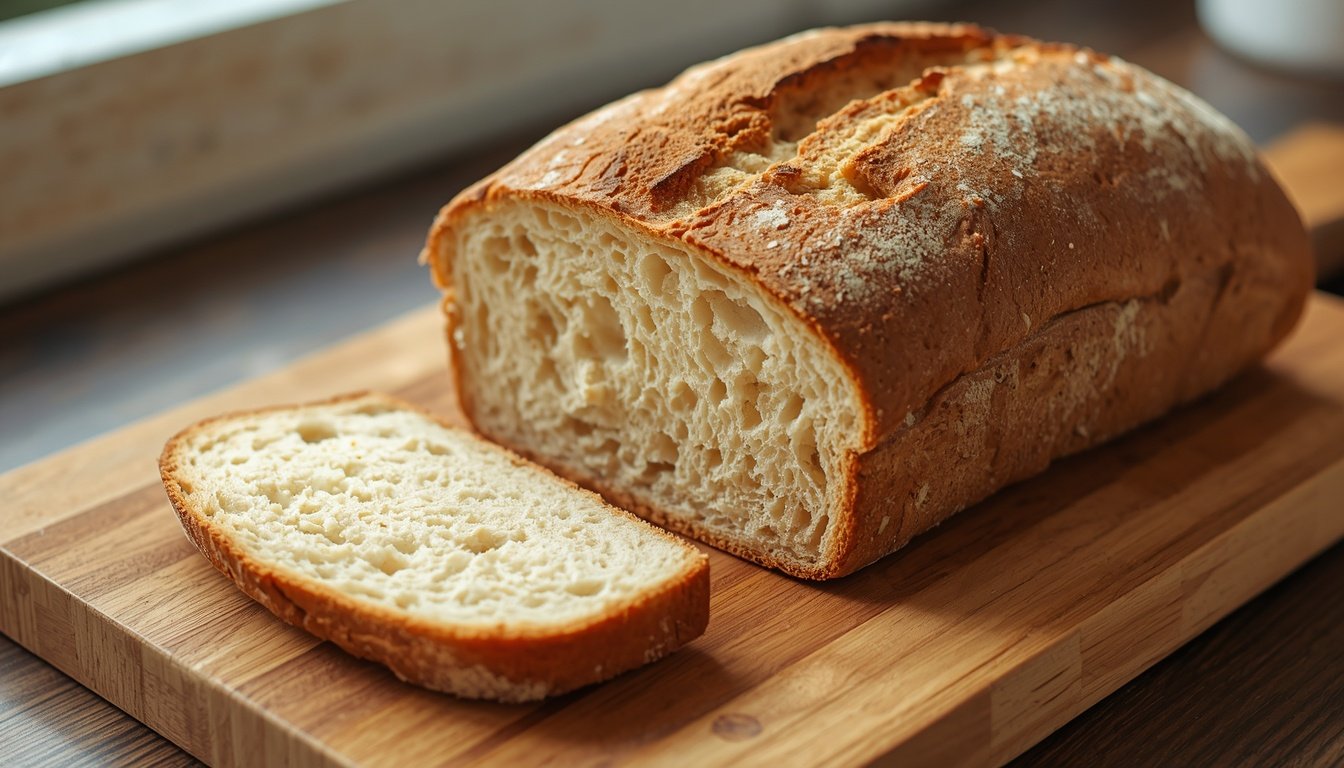
When you bake your own sourdough and cut it yourself, a “normal” slice is 80–100g. Nutrition labels are based on 50g slices. That’s nearly double the calories — 190-240 cal vs 120 cal per slice.
Two slices of homemade toast = 400+ calories before toppings. Most people blame the bread. The slice size is the problem.
If you’ve been eating sourdough and quietly wondering whether it’s making you gain weight — you’re not alone. It’s one of the most searched questions in the sourdough world, and almost every answer you’ll find online is written by a nutritionist who has never once fed a starter, scored a loaf, or waited 36 hours for a cold proof.
Before we can answer whether sourdough is fattening, we need to understand what you’re actually eating. The macronutrient breakdown of sourdough — its calories, carbs, protein, and fat content — forms the foundation of this discussion. A typical slice contains 130-140 calories and 25-27g of carbohydrates, but those numbers alone dont tell you whether sourdough will cause weight gain.
When comparing bread calories, sourdough vs naan shows a stark difference: sourdough has half the calories (120-140 vs 260-300), half the carbs (24-26g vs 45-50g), and a 30% lower glycemic index. Naan’s added butter, yogurt, and oils make it significantly more calorie-dense—fine for occasional meals, but sourdough is the smarter daily choice for weight management.
The fermentation process fundamentally changes how your body processes those macros, creating resistant starch and lowering the glycemic response in ways that standard nutrition labels don’t capture. For a complete breakdown of sourdough’s nutritional profile and how each macronutrient behaves in your body, see our detailed guide: Sourdough Bread Macros: Complete Nutrition Breakdown.
Here’s the baker’s honest answer: sourdough bread is not inherently fattening. But that answer comes with conditions that most articles skip entirely — and those conditions are the difference between sourdough that works for your weight and sourdough that quietly works against it.
The three things that determine whether your sourdough is fattening: whether it’s real sourdough, how large your slices are, and what you’re putting on top. Get those three things right and sourdough is one of the smartest bread choices you can make. Get them wrong and you’ll blame the bread for a problem it didn’t cause.
In this post we’re going to cover all of it — the science, the calories, the comparisons, the honest caveats, and the practical baker’s framework for eating sourdough without gaining weight.
- The Direct Answer: Is Sourdough Fattening?
- Real Sourdough vs. Store-Bought: They Are Not the Same
- How Fermentation Changes the Calories Equation
- Sourdough Calorie Breakdown: What a Slice Actually Contains
- Sourdough vs. White Bread vs. Whole Wheat: Full Comparison
- Sourdough, Insulin, and Fat Storage: The Real Mechanism
- 3 Real Reasons Sourdough CAN Lead to Weight Gain
- Who Should Actually Be Careful With Sourdough
- The Baker’s Framework: How to Eat Sourdough Without Gaining Weight
- Explore More: Your Sourdough Health Resource Hub
- Frequently Asked Questions
The Direct Answer: Is Sourdough Bread Fattening?
No — true, long-fermented sourdough bread is not fattening when eaten in reasonable portions as part of a balanced diet. This isn’t just a feel-good nutrition claim. There is a specific biological mechanism behind it, and it comes directly from the fermentation process.
For maximum health benefits, sprouted sourdough takes fermentation advantages to the next level. Combining germination with fermentation reduces phytic acid by over 90%, lowers glycemic index to 45-50 (vs 54 for regular sourdough), and dramatically improves mineral absorption—making it the top choice for anyone eating bread daily for health reasons.
Sourdough has a glycemic index (GI) of around 54. Standard white bread sits at 71. That 17-point difference matters more than most people realise. A lower GI means your blood sugar rises more slowly after eating — which means a smaller insulin response, less fat-storage signalling, and no sharp energy crash that sends you raiding the kitchen an hour later.
For people with diabetes or blood sugar concerns, sourdough bread is better for diabetics than regular bread. Research shows sourdough produces a 25-36% lower blood glucose response due to fermentation-created organic acids. Rye sourdough has the lowest GI (41-48), followed by whole wheat sourdough (48-54)—both significantly better than regular white bread (70-80). Portion control still matters, but sourdough’s slower glucose release makes it the smartest bread choice for blood sugar management.
A 2024 meta-analysis published in Critical Reviews in Food Science and Nutrition confirmed this: people who ate sourdough bread had measurably lower blood glucose levels within an hour of eating compared to those who ate commercially prepared bread. That’s not a marginal difference. That’s the difference between a bread that promotes fat storage and one that doesn’t.
Weight gain is not caused by sourdough specifically. It’s caused by a sustained calorie surplus — consistently consuming more energy than your body burns. Sourdough, eaten sensibly, doesn’t push most people into that surplus. The problem is almost always the portion size, the topping, or the bread itself not being real sourdough.
Real Sourdough vs. Store-Bought: They Are Not the Same
✓ Real Sourdough
Ingredients:
- Flour
- Water
- Live starter culture
- That’s it.
Fermentation: 12–48+ hours
GI: 54 (lower blood sugar spike)
Result: Not fattening
✗ Fake “Sourdough”
Ingredients:
- Enriched flour
- Commercial yeast
- Vinegar/citric acid (fake tang)
- Dough conditioners
- Preservatives
Fermentation: 2–4 hours
GI: ~71 (same as white bread)
Result: CAN contribute to weight gain
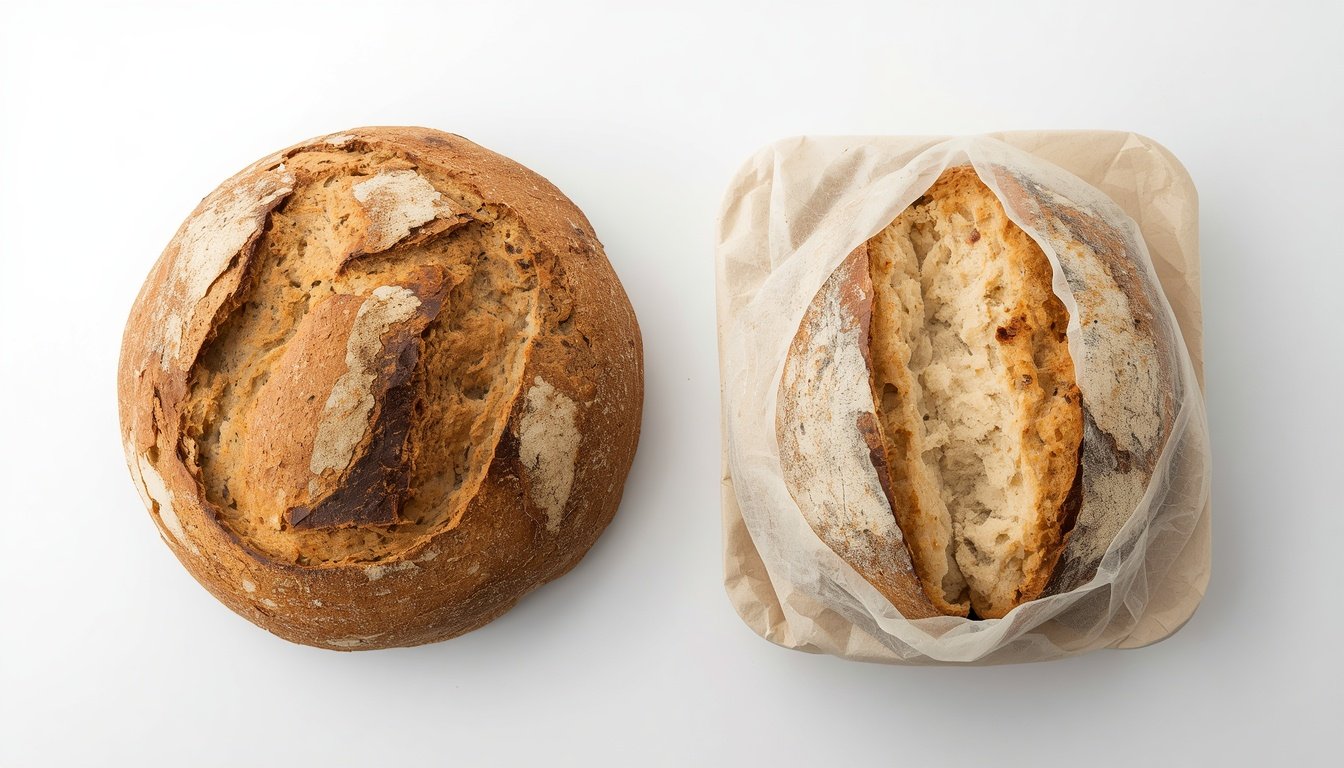
This is the single most important distinction in this entire conversation — and it’s the one that almost every mainstream nutrition article completely ignores.
Walk into any grocery store and pick up a bag labelled “sourdough.” Flip it over and read the ingredient list. You’ll typically find: enriched flour, water, yeast, vinegar or citric acid (to fake the sour flavour), dough conditioners, and preservatives. That is not sourdough. That is commercially yeasted bread wearing a sourdough costume.
Real sourdough has three ingredients: flour, water, and a live starter culture. That’s it. It ferments slowly — anywhere from 12 to 48 hours or longer. The extended fermentation is where every metabolic benefit comes from. Without it, you’re eating regular bread with a flavour additive and none of the health properties that make sourdough worth talking about.
The reason this matters for the “is sourdough fattening” question is simple: when studies show sourdough has a GI of 54, they’re measuring real sourdough. Commercial fake sourdough behaves metabolically much closer to white bread — higher GI, faster blood sugar spike, less satiety, more cravings. If that’s what you’re eating, you’re not getting the benefits, and the bread isn’t the problem you think it is.
How to Spot Real Sourdough
- Ingredient list says “sourdough starter” or “sourdough culture” — not just “yeast” plus “vinegar”
- No dough conditioners, emulsifiers, or preservatives
- Irregular crumb structure — uneven holes, not a uniform sandwich-bread texture
- Naturally tangy flavour from lactic acid, not added acidity
- Shorter shelf life — real sourdough goes stale or mouldy faster because it has no preservatives
- Comes from an artisan baker or your own oven
The surest way to guarantee real sourdough is to bake it yourself. If you’re new to that, our beginner sourdough recipe and sourdough starter guide will get you there.
How Fermentation Changes the Calories Equation
This is where the baker’s perspective really separates from the generic nutrition blog. The fermentation process itself changes how your body processes the calories in sourdough. Not by magic — by very specific biochemistry.
During a long, slow fermentation, the wild yeast and lactic acid bacteria in your starter consume starches and sugars in the flour. They break down complex carbohydrates. They reduce phytic acid — a compound that normally blocks your body from absorbing minerals. They lower the FODMAP content, which is why sourdough is easier on the gut than most breads. And critically, they increase the proportion of resistant starch in the finished loaf.
What Is Resistant Starch and Why Does It Matter?
Resistant starch is starch that your small intestine cannot fully digest. Instead of being broken down into glucose and absorbed as calories, it passes through to the large intestine where it feeds your beneficial gut bacteria. This means two things for weight:
- Fewer calories absorbed. Some of the carbohydrates that are technically “in” the bread never make it into your bloodstream as glucose. The bacteria get them instead.
- Longer satiety. Resistant starch slows gastric emptying — meaning you feel full for longer after eating sourdough than you would after eating the same calories from white bread.
The longer the fermentation, the more pronounced these effects. A 4-hour room temperature bulk ferment produces a different bread metabolically than a 24-hour cold proof followed by a 12-hour retard in the fridge. Furthermore, artisan fermentation requires a much higher hydration environment (often 75-85% water compared to 60% in commercial dough). Because water has zero calories, pushing your dough’s hydration higher naturally reduces the total calorie and carbohydrate density per gram of baked bread. This is why understanding bulk fermentation time and hydration matters beyond just flavour — they directly engineer a leaner nutritional profile for your loaf.
Toasting your sourdough also increases resistant starch further — when starch is gelatinised by baking and then cooled or reheated, it partially retrograded into resistant starch. We’ve covered exactly what this means for calorie absorption in our post on toasted sourdough calories and resistant starch.
This fermentation process also connects directly to sourdough’s wider gut health benefits — better digestion, reduced bloating, and improved microbiome diversity — all of which have downstream effects on metabolism and weight regulation.
The relationship between sourdough bread, gut health, and weight loss reveals why fermentation matters so much. Sourdough reduces FODMAPs by 50-90% (eliminating bloating), feeds beneficial gut bacteria with organic acids, and lowers GI to 54—creating a healthier gut environment that naturally regulates hunger hormones, reduces inflammation, and supports sustainable fat loss better than any other bread type.
Sourdough Calorie Breakdown: What a Slice Actually Contains
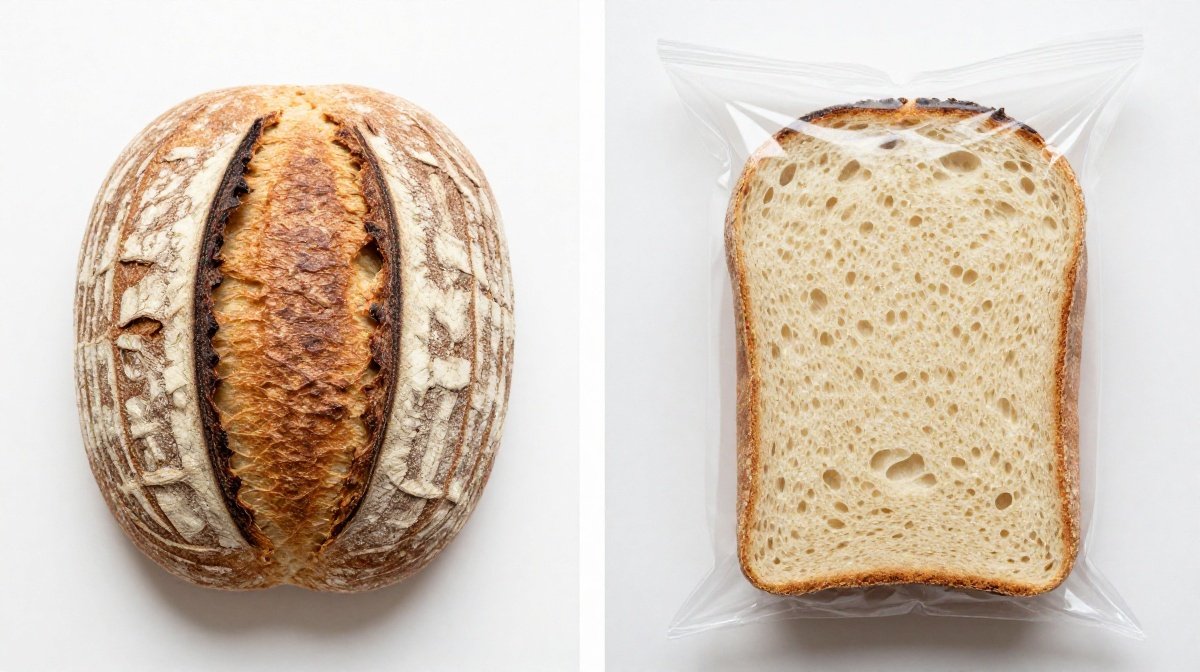
Let’s talk numbers — and let’s be honest about the portion trap that catches nearly every home baker.
According to USDA data, a standard slice of sourdough contains approximately:
| Nutrient | Per 50g slice (standard) | Per 80g slice (typical homemade) |
|---|---|---|
| Calories | 120 kcal | 192 kcal |
| Carbohydrates | 23g | 37g |
| Protein | 4g | 6.4g |
| Fat | 0.8g | 1.3g |
| Fiber | 1g | 1.6g |
| Glycemic Index | ~54 | ~54 |
Here is the baker’s math that generic nutrition sites miss entirely: water has zero calories. The 50g standard slice on a nutrition label is based on a commercial sandwich loaf made with a stiff 60% hydration dough. Because artisan sourdough is pushed to a much higher hydration, a 50g slice of true sourdough contains significantly more water weight and less flour. You are inherently eating fewer calories per gram.
But here is the trap: the 50g standard slice is tiny. When you bake your own sourdough boule or batard and cut it yourself, a “normal” slice easily runs 80–100g. Even with the hydration advantage, that bumps the total calorie count to 190–240 calories per slice — nearly double what most people assume they’re eating.
The practical fix: use a kitchen scale. A 50–60g slice is a reasonable, satisfying portion. Most people find that once they start weighing, they naturally cut thinner and eat more mindfully without feeling deprived.
2 Responses
I love how you clarified the difference between real sourdough and store-bought. It really explains why some people blame sourdough for weight gain when it’s often more about slice size and toppings. Makes me rethink how I approach bread in general!
Thank you this was really helpful, also fun fact the crust has almost double the calories as the inner dough so you can practically half the amount of calorie consumption if you cut the edges off