When it comes to bread comparisons, sourdough and naan are two popular choices that often appear on the same table — but they differ significantly in calories, carbs, and nutritional value. Sourdough generally has fewer calories and carbs per serving than traditional naan bread. A typical slice of sourdough (about 50g) contains roughly 120–140 calories and 24–26g of carbohydrates, while a standard piece of naan (about 90g) can contain 260–300 calories and 45–50g of carbs. If you’re watching your intake, sourdough is the leaner option by a clear margin.
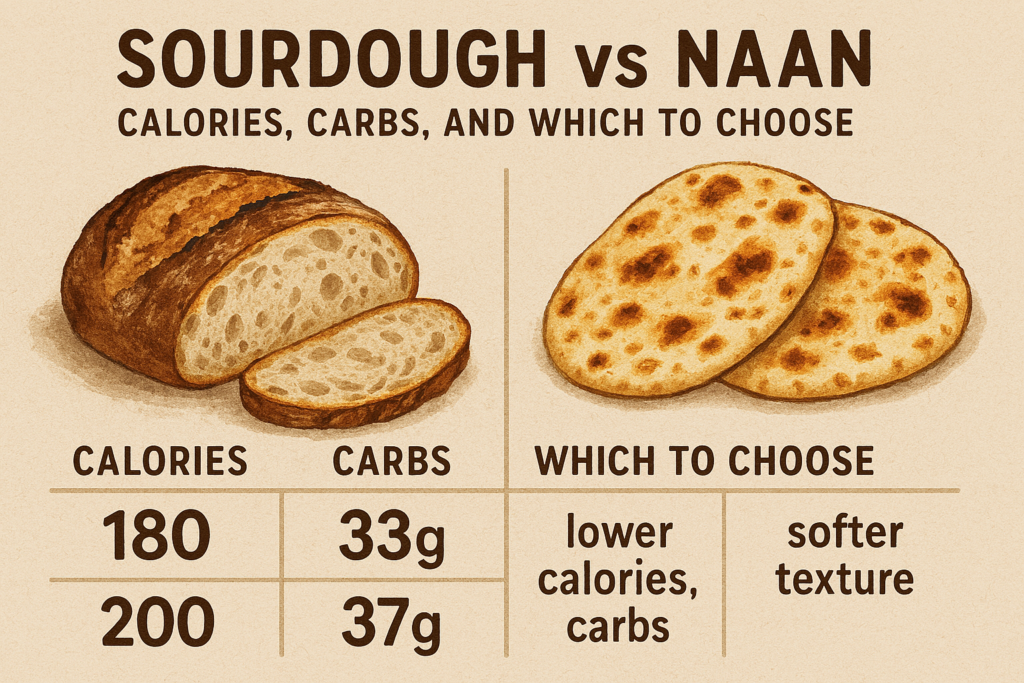
Sourdough vs Naan: The Basic Nutritional Breakdown
Before diving deep into these bread comparisons, it helps to understand what each bread is made of. Sourdough is traditionally made from flour, water, and salt, fermented with wild yeast and bacteria. Naan is an Indian flatbread typically made with refined white flour, yogurt, milk, eggs, butter or oil, and yeast — which naturally drives up its calorie and fat content.
The fermentation process in sourdough also changes how your body processes the carbohydrates, potentially lowering the glycemic index compared to naan. If you’re focused on sourdough for weight loss, understanding these differences matters more than just looking at raw calorie counts.
Beyond naan, other bread comparisons can help refine your choices. Compare ciabatta vs sourdough or pita bread vs sourdough for similar Mediterranean/Middle Eastern alternatives. For gluten-free dieters, explore gluten-free sourdough for weight loss, or if you want maximum nutrition, see whether sprouted sourdough is healthier than standard varieties.
Calorie Comparison: Sourdough vs Naan
Let’s get specific. Calorie counts vary depending on brand, size, and preparation method, but the general numbers look like this:
| Bread Type | Serving Size | Calories | Carbohydrates | Protein | Fat | Fiber |
|---|---|---|---|---|---|---|
| Sourdough (white) | 1 slice (50g) | 120–140 kcal | 24–26g | 4–5g | 0.5–1g | 1–2g |
| Sourdough (whole wheat) | 1 slice (50g) | 115–130 kcal | 22–24g | 5–6g | 1g | 3–4g |
| Plain Naan | 1 piece (90g) | 260–300 kcal | 45–50g | 8–9g | 5–7g | 2g |
| Butter Naan | 1 piece (100g) | 320–370 kcal | 48–52g | 8–10g | 9–12g | 2g |
| Garlic Naan | 1 piece (100g) | 300–340 kcal | 47–52g | 8–9g | 7–10g | 2g |
One important thing to note: portion sizes are different. A single naan piece is typically almost double the weight of a slice of sourdough. When you compare them by weight (gram for gram), sourdough still comes out ahead, but the gap narrows slightly. Naan still has more fat due to its ingredients.
Carbs in Sourdough vs Naan: What the Numbers Mean
Carbohydrate content is often the primary concern for people tracking their intake. Sourdough sits at around 24–26g of carbs per slice, while naan can hit 45–50g per piece. That’s a significant difference, especially if you’re eating multiple servings.
However, it’s not just the total carbs that matter — it’s how those carbs behave in your body. Sourdough’s fermentation process breaks down some of the starches, which may result in a lower glycemic response. This is one of the reasons sourdough compares favorably to other breads for weight management, including whole wheat. Naan, made with refined flour and added fats, tends to cause faster blood sugar spikes.
If you’re following a low-carb or keto approach, neither sourdough nor naan is ideal. But sourdough is clearly the closer option. You can read more about sourdough as a low-carb hack if you’re trying to reduce carbs without eliminating bread entirely.
Fat Content: Where Naan Falls Short
One of the biggest nutritional differences in this bread comparison is fat. Sourdough bread is essentially fat-free in its traditional form, containing less than 1g of fat per slice. Naan, on the other hand, is made with butter, ghee, or oil — and sometimes yogurt and eggs — meaning it regularly contains 5–12g of fat per serving, depending on the variety.
Butter naan is the most calorie-dense option. A single buttered naan can approach 370 calories, with up to 12g of fat. That’s closer to a small meal than a bread side. If you’re making bread choices based on overall caloric density and fat intake, sourdough wins this comparison easily.
Fiber Content: Sourdough vs Naan
Fiber is where things get more nuanced. Plain white sourdough and plain naan both contain modest amounts of fiber — roughly 1–2g per serving. However, whole wheat sourdough significantly raises that number to 3–4g per slice, giving it a clear advantage.
Fiber matters because it slows digestion, keeps you fuller longer, and supports gut health. If fiber is a priority for you, whole wheat sourdough is the better choice. You can explore exactly how much fiber sourdough bread contains and why it matters for your diet. Naan typically doesn’t offer whole-grain varieties at the same quality or availability as sourdough, making sourdough the stronger choice for fiber-conscious eaters.
Glycemic Index: Sourdough vs Naan
The glycemic index (GI) measures how quickly a food raises blood sugar. This is particularly relevant when comparing sourdough and naan because their fermentation processes (or lack thereof) play a big role.
If you’re managing diabetes alongside weight loss, glycemic control becomes even more critical. See our detailed guide on sourdough bread for diabetics and blood sugar to understand how fermentation impacts glucose response.
- Sourdough (white): GI of approximately 54 (medium)
- Sourdough (whole wheat): GI of approximately 48 (low to medium)
- Plain Naan: GI of approximately 71 (high)
Sourdough’s lower GI is largely due to lactic acid produced during fermentation, which slows the absorption of carbohydrates. Naan, made with refined flour without fermentation, typically has a high GI, meaning your blood sugar rises faster after eating it. For anyone managing blood sugar, insulin response, or simply trying to avoid energy crashes, sourdough is the superior option.
Bread Comparisons for Weight Loss: Which Should You Choose?
In the context of weight loss, sourdough is the better bread. It has fewer calories, significantly less fat, a lower glycemic index, and can offer more fiber when made with whole wheat flour. Naan, while delicious, is more calorie-dense and contains added fats that make it harder to fit into a calorie-controlled diet.
That said, enjoying naan occasionally won’t derail your progress — it’s about consistency and portion awareness. But if you’re making a daily bread choice, sourdough is the smarter pick. For a deeper look at how sourdough fits into a healthy eating plan, see whether sourdough bread is actually healthy.
Protein Content: A Closer Look
Protein content is relatively close between the two breads. Sourdough provides around 4–6g of protein per slice, and naan offers 8–10g per piece. However, naan’s larger serving size accounts for much of that difference. Gram for gram, protein content is comparable.
Neither bread is a significant protein source on its own. Both are primarily carbohydrate-based foods. If protein is your primary concern, toppings and fillings matter far more than your bread choice between sourdough and naan.
Sodium Content: Worth Noting
Both sourdough and naan can be relatively high in sodium. Sourdough typically contains 200–300mg of sodium per slice, which comes from the salt added during production. Naan can be slightly higher, at 300–400mg per piece, especially in restaurant versions where additional butter and salt are added during cooking.
If you’re monitoring sodium intake, be aware that both breads contribute meaningfully to your daily total, and restaurant or takeaway naan can be significantly saltier than store-bought versions.
Which Bread Is Better for Everyday Eating?
For everyday consumption, sourdough is the more nutritionally balanced choice. Here’s a quick summary of why:
- Lower calories: Sourdough has roughly half the calories of naan per serving
- Less fat: Sourdough contains minimal fat; naan can have up to 12g per piece
- Lower GI: Sourdough causes a slower, more manageable blood sugar response
- More fiber (whole wheat): Whole wheat sourdough offers 3–4g of fiber per slice
- Simpler ingredients: Traditional sourdough contains just flour, water, and salt
Naan is a cultural staple and a delicious accompaniment to curries, dips, and grilled dishes. It’s not a bad food — it’s simply more indulgent. As a daily bread choice, sourdough is more practical for calorie-conscious eaters.
Frequently Asked Questions
Is sourdough lower in calories than naan?
Yes. A standard slice of sourdough contains roughly 120–140 calories, while a single piece of naan contains 260–300 calories. Even accounting for the size difference, sourdough is the lower-calorie option per gram of bread.
Sourdough and naan have similar calorie counts per gram. However, the quality of those calories differs significantly. Sourdough’s lower glycemic index, higher fiber, and fermentation process mean your body processes its calories more efficiently, resulting in better blood sugar control and more sustained energy compared to naan. Learn more about the best time to eat sourdough for weight loss to maximize these metabolic benefits. For other bread comparisons, check sourdough vs whole wheat.
Does naan have more carbs than sourdough?
Yes. Naan typically contains 45–50g of carbohydrates per piece, compared to sourdough’s 24–26g per slice. Sourdough also has a lower glycemic index, meaning the carbs it contains are absorbed more slowly by the body.
Is sourdough better than naan for weight loss?
Sourdough is generally better for weight loss due to its lower calorie count, lower fat content, lower glycemic index, and higher fiber content (especially in whole wheat varieties). It’s a more diet-friendly bread for everyday use compared to naan.
Why does naan have more calories than sourdough?
Naan is made with added ingredients like butter, ghee, yogurt, milk, and sometimes eggs. These ingredients significantly increase its calorie and fat content compared to sourdough, which is traditionally made with just flour, water, and salt.
Can I eat naan on a calorie-controlled diet?
Yes, but portion control is key. A full piece of naan can use up a significant portion of your daily calorie budget. Opting for a half portion, or substituting naan with sourdough in meals where it’s appropriate, can help you stay within your goals without completely eliminating bread you enjoy.