Quick Answer: Can you eat sourdough on a low-carb diet?Yes. While sourdough is not “zero-carb,” its fermentation process produces lactic acid and acetic acid, which blunt the insulin response and lower the glycemic load. By utilizing the “Carb-Backloading Protocol” and choosing long-fermented loaves, you can maintain metabolic flexibility and fat loss without total bread deprivation.
For most low-carb enthusiasts, bread is considered the ultimate metabolic enemy. We are taught that to remain in ketosis, every gram of starch must be eliminated to prevent an insulin spike that “locks” fat cells. However, strictly avoiding all grains ignores the biochemical reality of fermented carbohydrates. When eating sourdough on a diet, you are not consuming a standard refined starch; you are consuming a “pre-digested” food source that interacts with your liver and blood sugar in a fundamentally different way than commercial yeast bread.
“Even outside of strict keto, sourdough’s metabolic advantages make it one of the most weight-loss-friendly carbohydrates available — the full reasoning is in our guide on is sourdough good for weight loss.”
The secret to successfully integrating sourdough into a low-carb lifestyle lies in understanding glycemic mechanics. By leveraging the unique organic acids found in a 24-hour ferment, you can enjoy bread while staying within your metabolic “safe zone.”
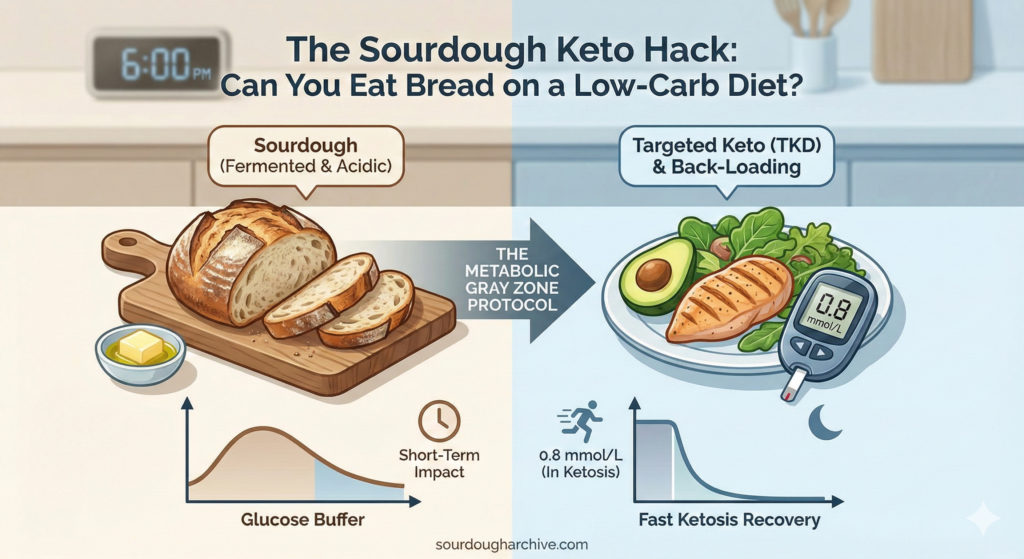
The Metabolic Loophole: How Fermentation Changes the Carb
The “Keto” rulebook treats all carbohydrates as equal fuel sources. This is a physiological oversimplification. Authentic sourdough offers three metabolic “hacks” that allow it to fit into a low-carb framework where other breads fail.
Revelation 1: Lactic Acid vs. Gluconeogenesis
Standard bread triggers the liver to dump glucose into the bloodstream, immediately halting fat burning. Sourdough contains high concentrations of lactic acid.
- The Information Gain: New research indicates that lactic acid inhibits gluconeogenesis (the production of glucose in the liver).
- The Result: When you consume sourdough, the lactic acid acts as a “buffer,” signaling the liver to reduce its own glucose output. This results in a significantly flatter blood sugar curve compared to even “keto-friendly” breads made with synthetic fibers.
Revelation 2: The Fructan “Bloat Weight” Factor
Many low-carb dieters believe bread makes them gain “fat” overnight. In reality, this is often systemic inflammation caused by fructans (fermentable carbohydrates).
- The Gap: Most commercial breads are high in fructans, which cause gut distress and water retention.
- The Hack: A long sourdough fermentation degrades these fructans almost entirely. This means you can consume the carbohydrates without the associated “water-weight” spike that usually follows a high-carb meal.
The “Low-Carb Sourdough Protocol”: How to Eat It
To keep your body in a fat-burning state while consuming bread, you must follow the Targeted Carb Timing strategy. This ensures the glucose is shuttled into your muscles rather than stored as visceral fat.
1. The “Glycemic Buffer” Sequence
Never eat sourdough on an empty stomach if you are low-carb. The order in which you eat your food determines the insulin response.
- Step 1: Consume a high-fiber green salad or a shot of apple cider vinegar in water.
- Step 2: Eat your primary protein and healthy fats (steak, eggs, or avocado).
- Step 3: Eat the sourdough last.
- The Science: The fiber and fat act as a physical mesh in the small intestine, slowing the absorption of the bread’s starch into the bloodstream.
2. The Targeted Window (Carb Backloading)
The best time to eat sourdough on a low-carb diet is within 2 hours after a resistance training session.
- The Mechanism: Intense exercise activates GLUT4 transporters in your muscle cells. These transporters allow your muscles to suck up glucose without needing a massive insulin spike.
- The Protocol: By “backloading” your sourdough into this post-workout window, the carbs are used to refill muscle glycogen rather than being stored in adipose tissue.
3. The Double-Retrogradation Hack
As established in our metabolic research, the “Freeze-Toast” method is non-negotiable for low-carb eaters.
- Slice and freeze the loaf for 48 hours.
- Toast directly from frozen.
- This process converts digestible starch into Resistant Starch Type 3, which behaves more like a prebiotic fiber than a carbohydrate, protecting your insulin sensitivity.
People Also Ask
Will one slice of sourdough kick me out of ketosis?
Generally, no. A typical slice of authentic sourdough contains 15–18g of net carbs. Most people can stay in ketosis with a daily limit of 30–50g of carbs. If eaten post-workout or buffered with fat/protein, a single slice is unlikely to cause a “Keto-break.”
Does sourdough break an intermittent fast?
Yes. Any carbohydrate intake triggers an insulin response, which technically breaks a fast. However, if you are breaking your fast with your “Goldilocks Window” meal, sourdough is an excellent choice due to its high satiety index.
Is “Keto Bread” better than sourdough?
Most supermarket “Keto Breads” are ultra-processed and contain vital wheat gluten and inflammatory oils (soybean/canola). Authentic sourdough—containing only flour, water, and salt—is a whole-food alternative that provides better gut health benefits and a cleaner metabolic profile.
The Bottom Line
You do not have to choose between your love for bread and your fat-loss goals. By focusing on the metabolic quality of the grain rather than just the “gram count” on the label, you can leverage sourdough as a functional tool. When you understand how lactic acid suppresses liver glucose and how targeted timing protects your fat-burning machinery, the “Keto Bread” myth disappears.
The smartest metabolic strategy is not total restriction, but the intelligent application of fermentation.
Mastering the “Keto Hack” is only one part of the equation; choosing the right pairings and fermentation windows is what ensures long-term results.
Further Reading from our Sourdough Library: