Bread is usually the first casualty of a fat-loss diet. We are told to eliminate carbohydrates or swap fluffy white loaves for dense, sprouted alternatives like Ezekiel 4:9 bread. While Ezekiel is undeniably nutrient-dense, it is not the only option — and metabolic research suggests the fermentation process makes artisan sourdough a superior lever for controlling insulin.
“Before comparing specific breads, it helps to understand why sourdough has a metabolic advantage over most options — our guide on is sourdough good for weight loss covers the full science.”
Understanding the glycemic mechanics below is critical before you buy your next loaf. The “healthiest” bread on paper is not always the best bread for your waistline. For a broader overview of sourdough’s health properties, see our guide on whether sourdough bread is healthy for you.
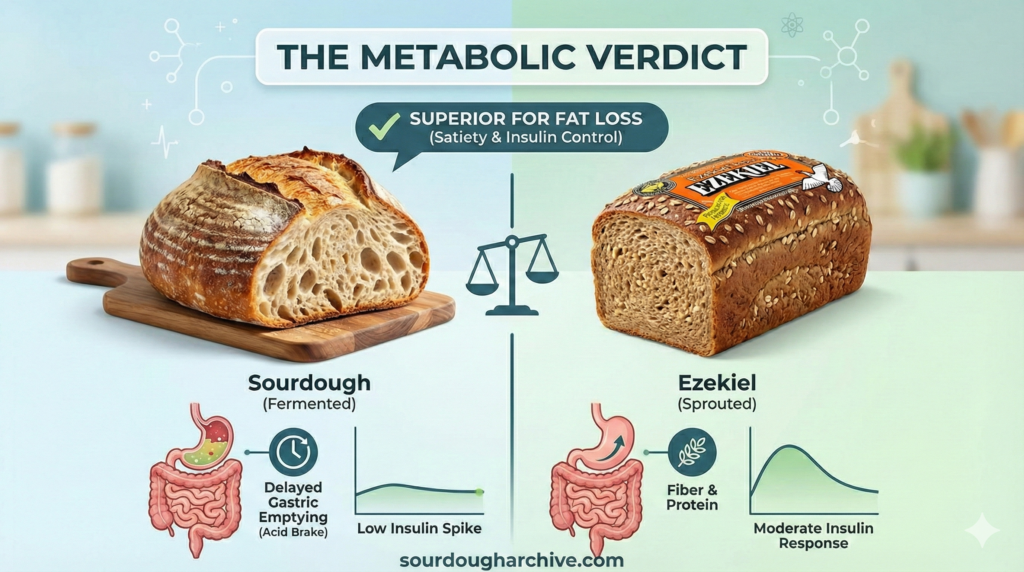
The Metabolic Mechanism: Why Acidity Trumps Fiber
Most dietitians recommend Ezekiel bread based on a single metric: fiber content. The logic is linear — fiber slows digestion, leading to a smaller blood sugar spike. However, this ignores a more potent biological mechanism that sourdough leverages: acidity. For the complete breakdown of how sourdough handles blood sugar, see our guide on does sourdough bread spike blood sugar.
The Organic Acid Brake (Why You Stay Full)
During sourdough’s long fermentation window (24+ hours), wild lactobacillus bacteria consume the sugars in the flour, converting them into acetic acid and propionic acid. These acids do not just add flavor — they fundamentally alter your physiology by delaying gastric emptying.
- Ezekiel Bread: Passes through the stomach at a standard rate, relying solely on sprouted fiber to modulate sugar release in the intestine.
- Sourdough Bread: The acetic acid signals the stomach to hold the food longer, meaning glucose trickles into your system slowly rather than flooding it.
This Acid Brake blunts the insulin spike more effectively than fiber alone. Since insulin inhibits lipolysis (fat burning), keeping insulin low is the prerequisite for weight loss. This is the same fermentation mechanism behind why sourdough doesn’t cause bloating and why sourdough supports gut health far better than conventional bread.
The Particle Size Paradox
Ezekiel bread is made from sprouted grains mashed into a dough. While nutritious, this mashing process destroys the structural integrity of the grain, creating a dense block with a massive surface area. Once chewed, salivary enzymes can attack the exposed starch granules immediately, converting them to sugar rapidly.
Authentic sourdough acts differently due to its complex gluten-starch matrix. Because sourdough is fermented and baked at high temperatures to create an open crumb, the starch granules are often encapsulated within a protein network that is physically difficult for digestive enzymes to penetrate. A percentage of the starch passes through the system undigested, acting as prebiotic fuel rather than glucose — the same resistant starch effect you get from toasting sourdough from frozen.
Head-to-Head: Sourdough vs. Ezekiel for Fat Loss
| Feature | Real Sourdough | Ezekiel (Sprouted) | Fat Loss Winner |
|---|---|---|---|
| Glycemic Control | High (Acid-mediated) | Moderate (Fiber-mediated) | Sourdough |
| Insulin Response | Blunted (Delayed Emptying) | Standard | Sourdough |
| Digestibility | Gluten partially degraded | Contains lectins/gluten | Sourdough |
| Nutrient Density | Moderate | High (More Protein) | Ezekiel |
| Satiety Duration | 4+ Hours | 2–3 Hours | Sourdough |
The Sourdough for Fat Loss Protocol
1. The Freezer Retrogradation Hack
You can chemically alter the structure of sourdough bread to make it less caloric. When starch is cooked then cooled (frozen) and reheated (toasted), the amylose chains recrystallize into Resistant Starch Type 3 — indigestible to humans but feeding gut bacteria that produce butyrate, a short-chain fatty acid that triggers the satiety hormone GLP-1. Protocol: slice your loaf immediately, freeze for at least 12 hours, and toast directly from frozen. This can reduce the absorbable glucose load by up to 30%. See the full science in our guide on toasted sourdough calories and resistant starch.
2. The Squeeze Test (Avoiding Fake Sourdough)
Most “sourdough” found in supermarkets is simply white bread with vinegar and flavoring — it offers zero metabolic benefits because it lacks the long fermentation required to produce organic acids. The test: squeeze the loaf hard. Fake: feels like soft foam that bounces back instantly. Real: thick, sturdy crust with significant resistance. Label check: if you see “Yeast,” “Sugar,” or “Vinegar” in the ingredients, put it back. The most reliable way to get genuinely fermented sourdough is to bake your own — start with our sourdough starter recipe and our beginner sourdough recipe.
Frequently Asked Questions
For fat loss specifically, sourdough is the superior choice due to its lower insulin response, longer satiety window, and the Organic Acid Brake effect that keeps you in a fat-burning state longer. Ezekiel wins on raw nutrient density and protein content. If you can find whole wheat sourdough, it combines the best of both — see our guide on sourdough vs whole wheat for weight loss.
Yes — specifically because it helps lower systemic inflammation and insulin resistance, which are the two primary hormonal drivers of visceral (belly) fat storage. Sourdough’s fermentation process degrades antinutrients like phytic acid and reduces gut inflammation. Combined with its low-glycemic profile, it addresses belly fat at the hormonal root cause better than commercial yeast breads. For the full gut health picture, see our guide on sourdough gut health benefits.
Technically yes — the gross calorie count on the package stays the same, but the net calories your body absorbs decrease because you cannot digest resistant starch. Through the Freeze-Thaw protocol, toasting converts digestible starch into resistant starch, reducing absorbable calories by up to 30%. See our full guide on toasted sourdough and resistant starch.
In moderation. A single slice of authentic sourdough contains roughly 15–20g of carbohydrates. Because the glycemic load is low due to acidity, many people on low-carb (not strict keto) protocols find they can consume it without exiting a fat-burning state — particularly if eaten after protein and vegetables to further buffer the glucose response. See our guide on sourdough and low-carb eating.
No — they use completely different leavening and preparation methods. Ezekiel bread is made from sprouted grains and typically uses commercial yeast. Sourdough is leavened entirely by wild yeast and lactic acid bacteria through long fermentation. The fermentation process is what gives sourdough its metabolic fat-loss advantages that Ezekiel lacks. For a full explanation of what makes sourdough different, see our guide on is sourdough bread yeast free.
The Bottom Line
If your goal is purely maximizing micronutrients and protein, Ezekiel bread is a valid choice. But if your goal is fat loss, insulin control, and satiety, authentic sourdough is the superior metabolic tool. The combination of organic acids, resistant starch, and delayed gastric emptying allows you to eat bread while maintaining a hormonal environment conducive to burning fat.
For the complete fat-loss system — including exact portion sizes, timing windows, and the Freeze-Thaw method — see our guides on sourdough for weight loss, the daily sourdough protocol, and the best time to eat sourdough for weight loss.
If you’re not seeing the digestive or weight-loss benefits you expected from sourdough, our troubleshooting guide helps identify and solve common issues.
Disclaimer: The information provided in this article is for educational purposes only and is not intended as medical advice. Always consult with a healthcare professional or registered dietitian before making significant dietary changes, especially if you are managing conditions like diabetes or celiac disease.