Choosing between ciabatta and sourdough for your diet? The answer might surprise you—despite ciabatta’s reputation as a “lighter” bread, it’s actually worse for weight loss than sourdough.
Is Ciabatta Bread Healthy? The Direct Answer
On its own — without comparing it to anything — ciabatta bread is moderately healthy. It’s low in fat, contains no artificial preservatives in traditional recipes, and delivers a reasonable amount of protein and carbohydrates for energy. Where it falls short is fiber and blood sugar impact: a standard 60g serving has only 1–1.5g of fiber and a glycemic index of 70–75, which is considered high.
So is ciabatta bread healthy or unhealthy? It’s neither extreme. Think of it as a “neutral” bread — better than heavily processed sandwich bread, but behind fermented options like sourdough on nearly every measurable metric. Here’s the quick breakdown:
| Health Factor | Ciabatta Rating |
|---|---|
| Ingredient simplicity | Good (flour, water, salt, yeast, olive oil) |
| Fiber content | Poor (1–1.5g per serving) |
| Blood sugar impact | Poor (high GI, 70–75) |
| Digestibility | Fair (no fermentation to pre-break down gluten) |
| Calorie density | Moderate (160–175 kcal per 60g) |
The bottom line: ciabatta bread is fine as an occasional bread, but it’s not a standout health food. If you’re specifically weighing it against a fermented alternative, that’s where the gap widens significantly — which is exactly what we break down next.
When it comes to bread comparisons for dieting, ciabatta vs sourdough is one of the most common debates. If you’re choosing between the two for weight loss or general health, sourdough is the better option. Sourdough’s fermentation process lowers its glycemic index, improves digestibility, and offers more nutritional value than ciabatta.
Blood sugar control isn’t just about weight—it’s critical for metabolic health. If you have diabetes or prediabetes, learn how sourdough affects blood sugar in diabetics and why fermentation makes such a difference.
Ciabatta is a light, airy Italian bread made with commercial yeast and olive oil, offering little in the way of fiber or gut health benefits. For anyone focused on body composition or overall wellness, sourdough consistently outperforms ciabatta in nearly every meaningful dietary category.
Beyond ciabatta, other bread comparisons matter too. See how pita bread vs sourdough compares for weight loss, or explore gluten-free sourdough options if you’re avoiding gluten. For maximum nutrient density, check whether sprouted sourdough is healthier than standard varieties.
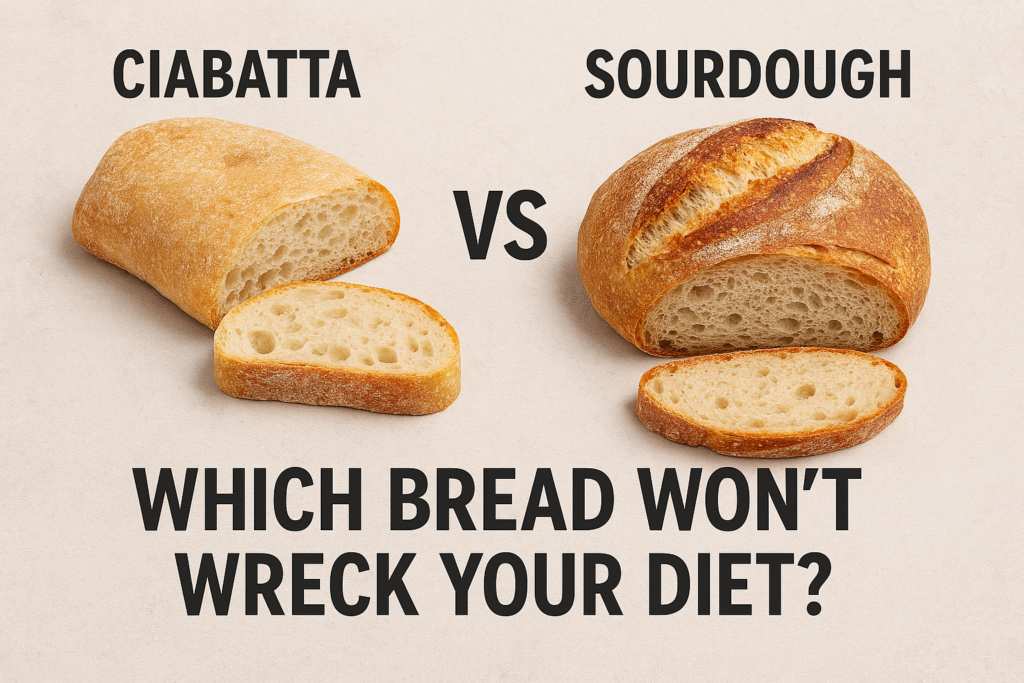
While ciabatta and sourdough have distinct differences, many wonder is sourdough bread fattening in general. The truth is that portion size, fermentation quality, and what you pair it with matter more than the bread type alone—but starting with a lower-GI option like sourdough gives you a metabolic advantage.
Ciabatta vs Sourdough: What’s the Real Difference?
Ciabatta is a white Italian bread known for its open, chewy crumb and crispy crust. It’s made using commercial yeast, white flour, water, olive oil, and salt. The result is a bread that tastes delicious but offers minimal nutritional complexity. Its high-starch, low-fiber composition causes a rapid spike in blood sugar, which can promote fat storage and increase hunger shortly after eating.
Sourdough, on the other hand, is fermented using wild yeast and lactic acid bacteria. This fermentation process partially breaks down gluten and starches, making sourdough easier to digest and slower to raise blood sugar. The difference in how each bread behaves inside your body is significant when you’re watching your weight or managing metabolic health. For a deeper dive into how sourdough stacks up nutritionally, read our full guide on is sourdough bread healthy.
Bread Comparisons: Ciabatta vs Sourdough Nutrition Facts
Let’s look at what you’re actually getting in each type of bread per standard serving (roughly 2 slices or 60g):
| Nutrient | Ciabatta (60g) | Sourdough (60g) |
|---|---|---|
| Calories | 160–175 kcal | 150–165 kcal |
| Carbohydrates | 32–34g | 30–33g |
| Fiber | 1–1.5g | 1.5–3g |
| Protein | 5–6g | 6–7g |
| Fat | 2–3g | 0.5–1g |
| Glycemic Index | ~70–75 (high) | ~50–54 (low-medium) |
| Blood Sugar Impact | Rapid spike, insulin surge | Gradual rise, stable energy |
| Fermented | No | Yes |
| Gut Health Benefit | Minimal | Significant |
Bottom line: A slice of ciabatta raises blood sugar 40% faster than sourdough and leaves you hungry within 90 minutes. Sourdough keeps you fuller for 3+ hours due to slower starch digestion.
The numbers alone tell a clear story. While the calorie counts are similar, sourdough wins on fiber content, lower glycemic index, and gut health impact — all of which matter enormously for weight management. If you’re curious about sourdough’s nutrition profile more broadly, our article on sourdough nutrition guide breaks it down in comprehensive detail.
Glycemic Index: Why It Matters for Weight Loss
One of the most important factors in any diet-friendly bread comparison is the glycemic index (GI). Ciabatta, made with refined white flour and commercial yeast, has a high GI of around 70–75. This means it digests quickly, spikes blood glucose levels, triggers an insulin response, and leaves you feeling hungry again sooner than you’d like.
Sourdough has a notably lower GI — typically between 50 and 54, even when made with white flour. The organic acids produced during fermentation (primarily lactic and acetic acid) slow the digestion of starch and blunt the blood sugar response. Research published in the European Journal of Clinical Nutrition confirmed that sourdough bread consistently produces a lower postprandial glucose response compared to non-fermented breads like ciabatta.
For weight loss, sustained blood sugar is key. When your blood sugar stays stable, you feel fuller for longer, experience fewer cravings, and are less likely to overeat. This is why sourdough is one of the most recommended breads for anyone following a sourdough for weight loss approach.
Digestibility and Gut Health
Another critical difference between ciabatta and sourdough is digestibility. Sourdough’s long fermentation process breaks down phytic acid, an antinutrient found in wheat that binds to minerals like iron, zinc, and magnesium and reduces their absorption. Ciabatta, made with a quick commercial yeast rise, retains most of its phytic acid, meaning you absorb fewer minerals per slice.
Fermentation also partially pre-digests the gluten in sourdough, making it significantly easier on the gut. Many people who struggle with bloating or discomfort from regular bread find they tolerate sourdough much better. Ciabatta, despite its seemingly simple ingredient list, can be harder for sensitive digestive systems due to its intact gluten structure and lack of beneficial bacteria.
For more on how fermentation affects your digestive system, see our guide on is sourdough hard to digest. Spoiler: it’s one of the easiest breads to digest.
Additionally, the lactic acid bacteria in sourdough contribute positively to the gut microbiome environment. A healthy gut microbiome is directly linked to better weight regulation, improved metabolism, and reduced inflammation — all of which are relevant when evaluating ciabatta vs sourdough diet quality.
Satiety: Which Bread Keeps You Fuller Longer?
Satiety is a major factor in any successful diet. Ciabatta’s airy, open crumb structure means it has a lot of air and not a lot of substance. You often need more of it to feel satisfied. Its low fiber content and high GI make it a poor choice for appetite control.
Sourdough’s denser crumb, higher fiber, and slower digestion combine to produce a better satiety effect. Studies have found that people who eat sourdough bread at breakfast consume fewer calories throughout the rest of the day compared to those who eat breads with a similar calorie count but higher GI. This makes sourdough the smarter choice for anyone trying to manage portions and reduce total daily calorie intake without feeling deprived.
Bread Comparisons in Context: How Do Other Breads Stack Up?
To fully understand where ciabatta and sourdough sit in the bread hierarchy, it helps to compare them against other popular diet-friendly options. Whole wheat bread offers more fiber than ciabatta but doesn’t have the glycemic advantages that fermentation provides. For a head-to-head analysis, check out our comparison of sourdough vs whole wheat for weight loss.
Ezekiel bread, made from sprouted grains, is another strong competitor. It’s rich in protein, fiber, and bioavailable nutrients. However, sourdough holds its own in the metabolic response department thanks to fermentation. If you want to go deeper on that debate, our article on sourdough vs Ezekiel for fat loss covers the full comparison.
Ciabatta, by contrast, falls near the bottom of the spectrum for diet-friendly breads. Its refined flour base, lack of fermentation, and high GI make it a poor daily bread choice if health and weight are priorities. It’s a bread best enjoyed occasionally rather than as a dietary staple.
Calorie Density and Portion Awareness
Both ciabatta and sourdough are relatively similar in raw calorie count. However, the way those calories behave in your body is very different. A 60g serving of ciabatta may technically have a similar calorie count to 60g of sourdough, but ciabatta’s lack of fiber and high GI means those calories are more likely to be stored as fat rather than used for sustained energy.
Ciabatta is also easy to overeat. Its light texture and mild flavor make it simple to consume large amounts without realizing it. A single ciabatta roll at a restaurant can easily clock in at 300–400 calories. Sourdough, with its denser crumb and stronger flavor profile, tends to be more naturally portion-controlled — you feel satisfied with less.
Sodium Content and Hidden Considerations
One area where ciabatta can surprise dieters is sodium. Many commercial and bakery ciabattas contain 400–500mg of sodium per serving. While this doesn’t directly cause fat gain, excess sodium contributes to water retention and bloating, which can be frustrating during a weight loss phase. Sourdough, particularly home-baked or artisan varieties, often has better-controlled sodium levels. Understanding sourdough bread macros helps you track sodium alongside calories and carbs if you’re monitoring multiple nutritional targets.
It’s also worth noting that ciabatta made with olive oil adds a small but notable fat contribution. While olive oil is a healthy fat, the added calories can be significant if you’re eating ciabatta frequently. Sourdough typically has minimal fat content unless enriched with add-ins.
Which Bread Should You Choose for Your Diet?
The answer is clear: for anyone following a structured diet aimed at weight loss or metabolic health, sourdough is the superior choice over ciabatta. The combination of a lower glycemic index, better fiber content, fermentation-driven digestibility, and stronger satiety effect gives sourdough a decisive edge.
Ciabatta isn’t nutritionally dangerous, but it offers little to actively support your health or weight loss goals. If you enjoy the texture and taste of ciabatta, save it for occasional indulgences rather than making it a daily dietary staple.
For your day-to-day bread needs, sourdough — especially whole wheat or whole grain sourdough — offers the best combination of enjoyment and nutritional benefit. Pair it with protein-rich toppings like eggs, legumes, or lean meats to maximize satiety and nutritional value at each meal.
Frequently Asked Questions
Is ciabatta bread healthy?
Ciabatta bread is moderately healthy on its own — low in fat with simple ingredients, but low in fiber (1–1.5g per serving) with a high glycemic index (70–75). It’s a reasonable occasional bread but not a standout choice for blood sugar control or gut health compared to fermented breads like sourdough.
Is ciabatta healthier than sourdough?
No. Sourdough is generally healthier than ciabatta for most dietary goals. Sourdough has a lower glycemic index, more fiber, improved mineral bioavailability due to fermentation, and better gut health properties. Ciabatta is made with refined white flour and commercial yeast, offering minimal nutritional benefits and causing faster blood sugar spikes.
Can I eat ciabatta on a weight loss diet?
Ciabatta can fit into a calorie-controlled diet in moderation, but it’s not the most supportive choice. Its high glycemic index, low fiber, and tendency to encourage overeating make it harder to manage hunger and blood sugar on a restricted diet. Sourdough is a smarter swap if you’re trying to lose weight.
Does sourdough have fewer calories than ciabatta?
Sourdough and ciabatta have similar calorie counts per gram. However, the quality of those calories differs significantly. Sourdough’s lower glycemic index, higher fiber, and fermentation process mean your body processes its calories more efficiently, resulting in better blood sugar control and more sustained energy compared to ciabatta. Learn more about the best time to eat sourdough for weight loss to maximize these metabolic benefits.
Why does sourdough have a lower glycemic index than ciabatta?
The fermentation process in sourdough produces organic acids that slow the digestion of starch and blunt the blood sugar response. Commercial yeast breads like ciabatta lack this fermentation step, so their starches are digested quickly, causing rapid blood sugar spikes. This is one of the primary reasons sourdough is favored in bread comparisons for dieting purposes.
What is the best bread for weight loss between ciabatta, sourdough, and whole wheat?
Whole grain or whole wheat sourdough is generally considered the top choice for weight loss due to its combination of fermentation benefits and higher fiber content. Standard sourdough comes second, followed by whole wheat without fermentation, and then ciabatta at the bottom of the list for diet-friendly options. For a full analysis, see our comparison of sourdough vs whole wheat for weight loss.