When it comes to bread comparisons for weight loss, pita bread and sourdough are two popular choices — but which one actually helps you shed pounds more effectively? The short answer: sourdough generally edges out pita bread for weight loss, thanks to its fermentation process, lower glycemic index, and superior satiety. That said, pita bread has its own merits depending on your dietary goals. In this article, we break down the nutritional differences, metabolic effects, and practical considerations to help you make the best choice for your weight loss journey.
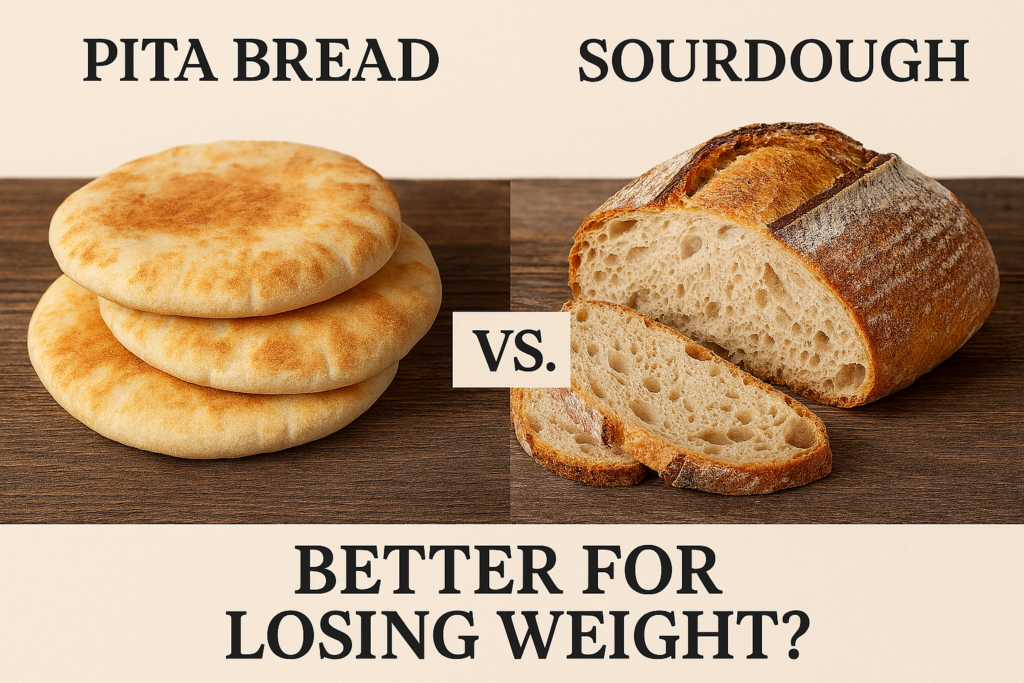
Pita Bread vs Sourdough: Nutritional Overview
Before diving into weight loss specifics, let’s look at how these two breads stack up nutritionally per one standard serving (roughly 60g or one medium piece):
| Nutrient | Pita Bread (60g) | Sourdough Bread (60g) |
|---|---|---|
| Calories | 165 | 160 |
| Carbohydrates | 33g | 32g |
| Protein | 5.5g | 6g |
| Fiber | 1.3g | 1.8g |
| Fat | 0.7g | 0.9g |
| Glycemic Index (GI) | 57–68 | 48–54 |
| Sodium | 322mg | 280mg |
On paper, the numbers look surprisingly similar. But the story goes much deeper than raw calories and macros. The type of carbohydrates, how they’re processed by the body, and how full each bread makes you are what truly determine which is better for weight loss.
Looking at more bread comparisons? Check how ciabatta stacks up against sourdough or compare sourdough vs naan calories for Mediterranean and Middle Eastern alternatives.
Glycemic Index: Why Sourdough Wins This Bread Comparison
One of the most important factors in any bread comparison for weight loss is the glycemic index (GI). A high GI triggers rapid spikes in blood sugar, which leads to insulin surges and, eventually, increased fat storage and hunger. A lower GI means steadier blood sugar, better appetite control, and fewer cravings.
Standard white pita bread has a GI ranging from 57 to 68, placing it in the moderate-to-high range. Sourdough, thanks to its unique fermentation process, typically scores between 48 and 54. The lactic acid produced during fermentation actually slows down starch digestion, which blunts the blood sugar response significantly.
This is a crucial advantage when you’re trying to lose weight. Lower insulin spikes mean your body is less likely to store excess glucose as fat. It also means you’ll feel fuller for longer, reducing the urge to snack between meals. Sourdough’s weight loss benefits are largely driven by this fermentation-induced glycemic advantage.
Fiber Content and Satiety
Fiber is a weight loss superstar. It slows digestion, promotes feelings of fullness, feeds beneficial gut bacteria, and helps regulate blood sugar. When comparing pita bread and sourdough, sourdough generally contains slightly more fiber per serving — but the gap isn’t dramatic in standard white versions of either bread.
However, if you opt for whole wheat sourdough, the fiber content jumps considerably, giving you even more of a satiety edge. Sourdough’s fiber content can vary depending on the flour used, but whole grain sourdough can deliver 3–4g of fiber per slice compared to just 1.3–1.5g in white pita.
Whole wheat pita also improves on its white counterpart’s fiber profile, often reaching 2–3g per serving. So if you’re choosing between whole wheat versions of both, sourdough still leads due to its additional fermentation benefits — but whole wheat pita is a solid runner-up for fiber-focused eaters.
Protein and Muscle Preservation During Weight Loss
Protein plays a critical role in weight loss because it helps preserve lean muscle mass while you’re in a caloric deficit. It’s also the most satiating macronutrient, meaning it keeps you feeling full longer than carbohydrates or fat.
Both pita and sourdough are relatively modest protein sources, but sourdough has a slight edge at about 6g of protein per 60g serving compared to pita’s 5.5g. More importantly, the fermentation in sourdough may improve the bioavailability of certain amino acids, meaning your body can actually use more of the protein it contains.
Neither bread alone is a significant protein source, so you’ll want to pair either option with high-protein toppings like eggs, hummus, legumes, or lean meats to maximize the weight loss benefits of your meal.
Gut Health and Metabolism: Sourdough’s Hidden Advantage
One area where sourdough clearly outperforms pita is gut health. The wild fermentation process in sourdough creates beneficial organic acids and potentially some residual probiotic-like compounds that support a healthy gut microbiome. A healthy gut is increasingly linked to better metabolic function, reduced inflammation, and even healthier weight management.
For even greater gut health and nutrient absorption benefits, explore sprouted sourdough, which combines germination with fermentation. If you need a gluten-free option, see gluten-free sourdough for weight loss.
While pita bread undergoes a simple yeast rise (or no fermentation at all in commercial versions), sourdough’s long fermentation partially breaks down phytic acid — an antinutrient that inhibits mineral absorption. This means sourdough may actually allow your body to absorb more iron, zinc, and magnesium, all of which play roles in metabolism and energy production.
For a deeper dive into sourdough’s overall wellness profile, this overview of sourdough’s health benefits covers the full picture beyond just weight loss.
Bread Comparisons: Pita vs Sourdough vs Other Popular Options
To give you even more context, here’s how pita and sourdough stack up against some other commonly compared breads in the weight loss space:
| Bread Type | GI Range | Fiber (per 60g) | Weight Loss Rating |
|---|---|---|---|
| White Pita | 57–68 | 1.3g | Moderate |
| Sourdough | 48–54 | 1.8g | Good |
| Whole Wheat Bread | 50–58 | 3g | Good |
| Ezekiel Bread | 36–42 | 3g | Excellent |
| Whole Wheat Pita | 50–57 | 2.5g | Good |
As you can see, Ezekiel bread leads in terms of pure weight loss metrics, but sourdough and whole wheat pita are both competitive options. If you’re curious how sourdough stacks up against whole wheat specifically, this sourdough vs whole wheat weight loss comparison digs into that debate in full detail. And for those considering Ezekiel bread, sourdough vs Ezekiel for fat loss is worth a read before making your decision.
Caloric Density and Portion Control
When you’re trying to lose weight, portion control matters enormously. Here’s where pita bread’s physical structure can actually work against you. A single large pita can seem like one portion — but it often packs 160–200 calories depending on its size. Because it’s hollow and light, it can feel less substantial than an equivalent serving of sourdough, potentially leading to overeating.
Sourdough’s denser crumb structure means a smaller slice tends to feel more substantial. The chewiness also slows down eating, giving your body more time to register satiety signals before you reach for a second slice. These behavioral and structural factors may seem minor, but they add up significantly over time when you’re trying to maintain a calorie deficit.
Sodium Content and Water Retention
One often-overlooked factor in bread comparisons is sodium. Excess sodium doesn’t directly cause fat gain, but it does promote water retention, which can mask weight loss progress on the scale and cause bloating. Standard pita bread tends to run slightly higher in sodium than sourdough — roughly 322mg vs 280mg per 60g serving.
If you’re closely monitoring sodium for blood pressure or bloating reasons, sourdough is the modest winner here. However, the difference is small enough that it shouldn’t be a primary deciding factor in your bread choice.
Practical Weight Loss Tips for Both Breads
Regardless of which bread you choose, how you use it matters just as much as the bread itself. Here are some practical tips for integrating either pita or sourdough into a weight-loss-friendly diet:
- Choose whole grain versions: Both whole wheat pita and whole grain sourdough offer significantly more fiber and nutrients than their white counterparts.
- Watch your toppings: Pita and sourdough are both neutral canvases. Loading either with high-fat spreads, cheese, or processed deli meats will quickly overshadow any nutritional advantage.
- Use pita for portion-controlled meals: Pita’s pocket structure makes it naturally suited for controlled-portion wraps and sandwiches when filled with vegetables, lean protein, and legumes.
- Pair sourdough with protein: The slight GI advantage of sourdough is amplified when paired with protein-rich foods like eggs or smoked salmon, further blunting blood sugar spikes.
- Time your carbs wisely: Both breads are best consumed earlier in the day or around physical activity when your body can efficiently use carbohydrates for energy.
Which Bread Is Better for Weight Loss? The Verdict
Based on the full picture — glycemic index, fiber content, gut health benefits, satiety, and sodium levels — sourdough bread has a measurable edge over standard pita bread for weight loss. Its fermentation-driven lower GI, slightly better fiber content, and gut-supportive properties make it the smarter choice when you’re actively trying to lose fat.
Glycemic control isn’t just about weight loss—it’s critical for metabolic health. If you have diabetes or prediabetes, learn how sourdough affects blood sugar in diabetics and why the fermentation advantage matters even more for glucose management.
That said, whole wheat pita is not a bad choice at all, especially if you prefer the taste and convenience of pita for wraps and dipping. The most important variable in any weight loss diet is consistency and overall caloric intake — not the minor differences between two relatively similar bread options.
If sourdough fits into your routine and you enjoy eating it, it’s likely the better long-term choice. But swapping pita for sourdough won’t magically produce weight loss if the rest of your diet isn’t aligned. Think of it as an incremental upgrade rather than a game-changer.
FAQ: Pita Bread vs Sourdough for Weight Loss
Is pita bread or sourdough lower in calories?
They are very similar in calories — pita typically has about 165 calories per 60g serving while sourdough comes in around 160 calories for the same amount. The calorie difference is negligible. What matters more is the glycemic index and fiber content, where sourdough holds a slight advantage.
Can I eat pita bread while trying to lose weight?
Yes, pita bread can absolutely fit into a weight loss diet. Opt for whole wheat pita when possible for more fiber, and fill it with nutritious, high-protein, high-vegetable ingredients. Portion size is key — stick to one medium pita per meal and monitor total daily calories.
Does sourdough bread help with weight loss?
Sourdough can support weight loss due to its lower glycemic index, which promotes more stable blood sugar and reduced hunger. It also offers mild gut health benefits through fermentation. However, it’s not a magic solution — weight loss ultimately depends on overall caloric intake and dietary habits. Learn more about sourdough’s role in weight loss for a comprehensive breakdown.
Is whole wheat pita better than white sourdough for weight loss?
Whole wheat pita and white sourdough are fairly comparable for weight loss. Whole wheat pita offers more fiber (around 2.5g vs 1.8g), while white sourdough has a lower glycemic index. If you can find whole wheat sourdough, that combination delivers both benefits and would be the optimal choice.
How does pita compare to sourdough for belly fat specifically?
Neither bread specifically targets belly fat — spot reduction through diet is a myth. However, sourdough’s lower glycemic index may reduce insulin spikes that contribute to visceral fat accumulation over time. Reducing overall caloric intake, managing stress, and getting adequate sleep are the primary drivers of reducing belly fat, with bread choice being a secondary factor.