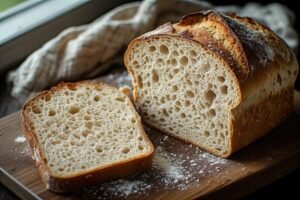
Sourdough Bread Macros: Carbs, Protein, and Fat Breakdown
📚 Part of our Sourdough Nutrition Guide: Looking at fiber, weight loss, or digestion impact? See the complete nutrition overview →
📚 Part of our Sourdough Nutrition Guide: Looking at fiber, weight loss, or digestion impact? See the complete nutrition overview →
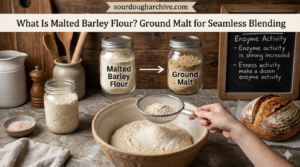
Malted barley flour is malted barley (sprouted and dried grain) that has been ground into a fine powder—the most common and convenient form of malt for home and professional bakers. Malted barley flour is malted barley grain that has been steam-dried,
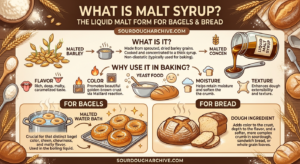
Malt syrup is the liquid, concentrated form of malt—thick like molasses, intensely flavored, and primarily non-diastatic (meaning it won’t accelerate your fermentation). Malt syrup is sprouted, malted barley that has been steeped in water, filtered, and slowly reduced down into a
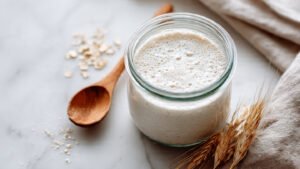
Your sourdough starter smells strange and you’re not sure if it’s dying, dead, or perfectly fine. The short answer: almost every smell a sourdough starter produces is a normal fermentation signal — not a reason to throw it out. The key
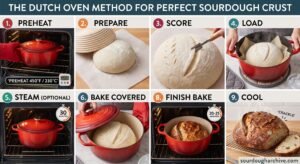
Quick answer: Preheat your Dutch oven to 500°F (260°C) for 45-60 minutes, transfer your scored dough onto parchment paper into the hot pot, cover with the lid, bake 20 minutes at 500°F, remove the lid, lower heat to 450°F (230°C), and

Quick answer: For most home bakers, a 5-6 quart round cast iron or enameled Dutch oven is the best choice for sourdough. The size fits standard dough weights (500-750g), traps steam efficiently for oven spring, and works in most home ovens.
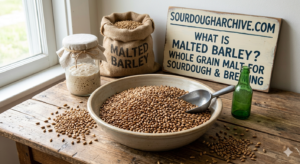
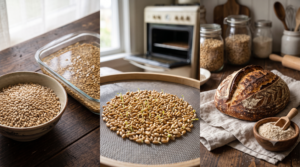
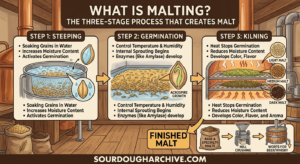
Why Malt Your Own Grain? Most home bakers don’t know that malt powder sits on shelves for months—sometimes a year—before landing in their kitchen. By that time, the enzymes that make malt special have already started breaking down. What you’re paying