The Quick Answer
Yes, you can freeze sourdough bread to extend its shelf life for up to 3 months without losing flavor or texture. The key to preventing freezer burn is maintaining an airtight seal. For daily convenience, slice the loaf before freezing to toast single servings. For a “fresh-baked” experience, freeze the whole loaf and “refresh” it in the oven later.
There is perhaps no kitchen tragedy quite like watching a beautiful loaf of sourdough go to waste. You know the feeling: you spent three days nurturing a starter The Sourdough Command Center, folding dough, and waiting for the perfect rise—or maybe you spent $12 on a stunning artisan boule at the farmer’s market. But by day three, that once-glorious crust is turning chewy, and the crumb is beginning to dry out.
It doesn’t have to end this way. Whether you are a solo baker who can’t finish a whole loaf or a meal-prepper looking to stock up, the freezer is actually your bread’s best friend.
The Science: Why Sourdough Was Made for the Freezer
Many home bakers fear that freezing will ruin the texture of their bread, turning it crumbly or soggy. However, science tells us that bread is actually uniquely suited for freezing—especially sourdough.
Pausing “Starch Retrogradation”
To understand why freezing works, you first have to understand why bread goes stale. Staling isn’t just about drying out; it is a chemical process called Starch Retrogradation. As bread cools and sits, the starch molecules begin to recrystallize and harden, pushing water out of the structure.
This is why the refrigerator is the worst place for bread. The cool temperatures of a fridge actually accelerate retrogradation, making your bread go stale three times faster than on the counter.
The freezer, however, drops the temperature low enough to completely pause this process. It locks the water molecules in place, effectively stopping time for your loaf. When you reheat it correctly, those starches re-absorb the moisture, returning the bread to its soft, fresh state.
The Sourdough Advantage
While all bread can be frozen, sourdough is the superior candidate. Commercial yeast breads often have a fluffy, weak structure that can collapse or become mushy after thawing. Sourdough relies on wild yeast and a long fermentation process, which creates a robust gluten network and a distinct acidity.
This acidity acts as a natural preservative, while the strong gluten structure helps the crumb hold its shape during the freezing and thawing cycle. In short: Sourdough is tough enough to handle the cold and come out tasting exactly like the day it was baked.
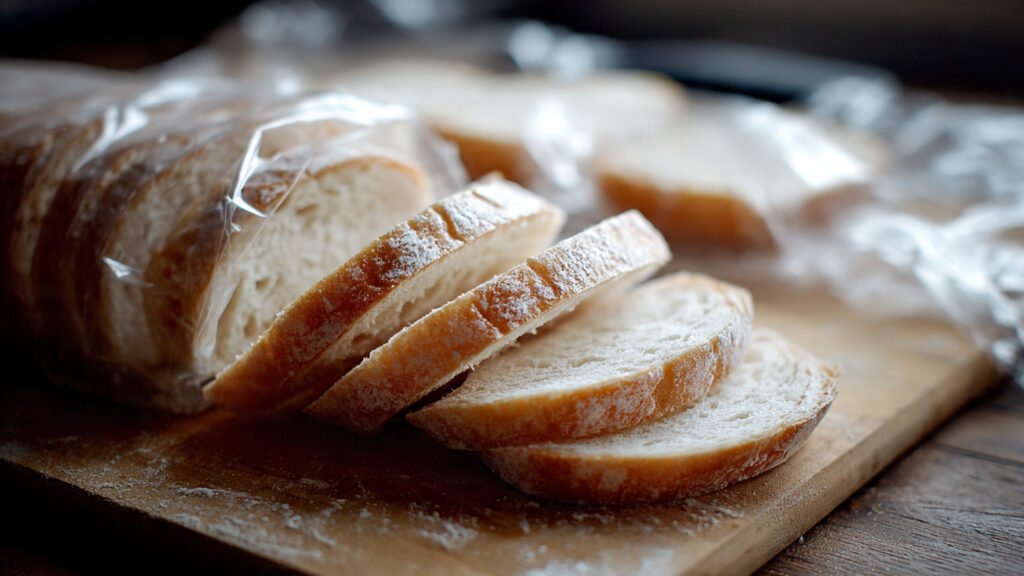
Method 1: The Sliced Freeze (For Daily Convenience)
For most households, the “Sliced Freeze” is the undisputed king of convenience. This method allows you to grab a single slice for your morning avocado toast without having to commit to thawing an entire loaf.
The Strategy: The goal here is to prevent the slices from fusing into a solid brick of ice.
- Cool Completely: Never freeze warm bread. It releases steam, which turns into ice crystals that will ruin the crumb texture.
- Slice Uniformly: Cut your loaf into even slices.
- The Parchment Trick: Place a small square of parchment paper between each slice. This creates a non-stick barrier, ensuring you can easily peel off just one or two slices at a time.
- Bag It: Place the stack into a heavy-duty freezer bag. Squeeze out as much air as possible before sealing to create an airtight seal.
The Payoff: There is no need to thaw these slices. You can pop them straight from the freezer into your toaster. Because slices are thin, they thaw and toast simultaneously, often resulting in a crunchier texture than fresh bread!
Method 2: The Whole Loaf Freeze (For the Artisan Experience)
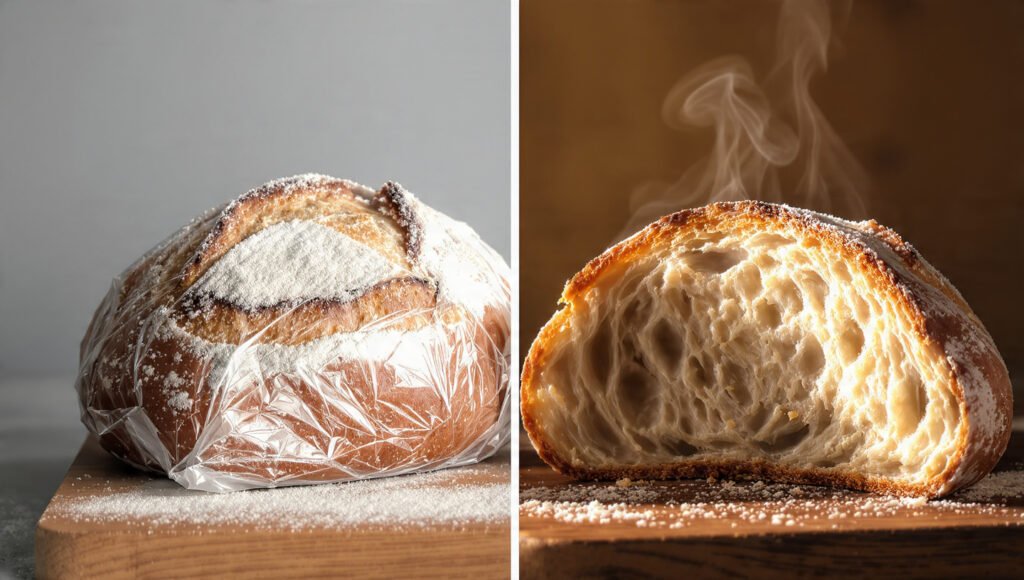
If you want to preserve a loaf for a future dinner party or Sunday brunch, freezing it whole is the way to go. This method protects the inner crumb better than slicing, keeping the inside soft and moist for weeks.
The Strategy: The enemy here is freezer burn—the result of cold air drying out the surface of your crust. To fight it, we use a double-barrier defense.
- The Moisture Barrier: Wrap the cooled loaf tightly in plastic wrap (cling film). This stops moisture from escaping the bread.
- The Armor: Wrap the plastic-covered loaf in a layer of heavy-duty aluminum foil OR place it inside a thick dedicated freezer bag. This protects the bread from absorbing “freezer smells” (like that bag of frozen peas nearby).
- Flash Freezing (Optional): If you are worried about squishing a soft loaf, place it unwrapped in the freezer for 1 hour to harden the crust (this is called Flash Freezing) before wrapping it up.
The Revival Secret: How to Get the Crispy Crust Back
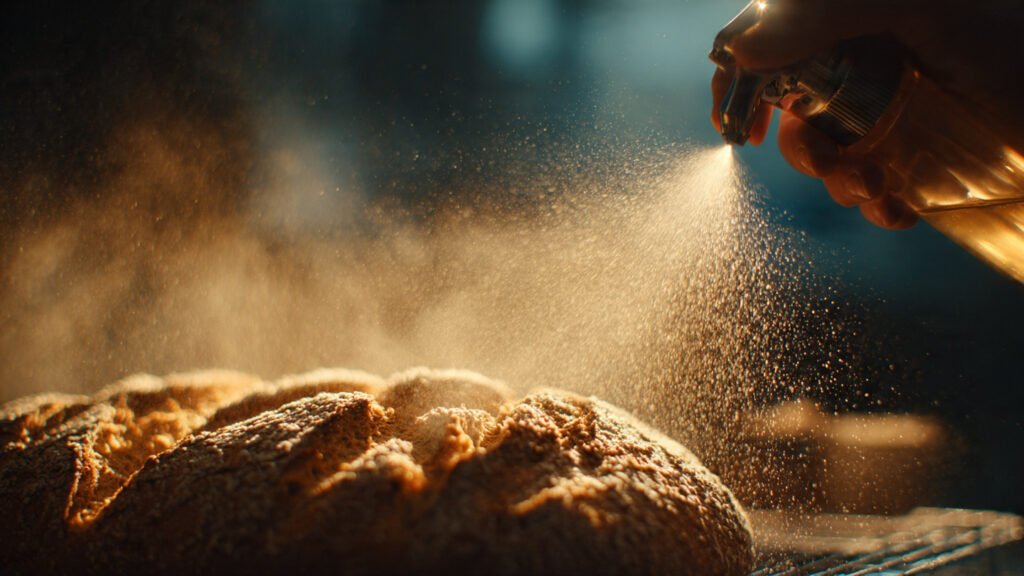
You’ve successfully frozen your sourdough. Now, how do you bring it back to life? If you just let it sit on the counter, the crust will be soft and leathery. To get that shatter-crisp, “fresh out of the oven” texture, you need the Oven Revival method.
The Expert Hack:
- Thaw: Ideally, let the loaf thaw on the counter for a few hours until it reaches room temperature.
- Preheat: Set your oven to 350°F (175°C).
- The Water Trick: This is the most important step. Run your hands under the tap and flick water over the entire crust, or use a clean spray bottle to mist it lightly.
- Bake: Place the loaf directly on the oven rack. Bake for 15–20 minutes.
The water turns into steam, which re-gelatinizes the starches on the surface, making the crust crispy again while the gentle heat refreshes the crumb inside. Your guests won’t believe it came from the freezer!
Frequently Asked Questions
Does freezing sourdough kill the probiotics? Technically, yes and no. The intense heat of the initial bake actually kills the live yeast and bacteria cultures long before the bread reaches the freezer. However, sourdough is still healthier than commercial bread Sourdough & Weight Loss because the fermentation process has already broken down the gluten and phytates. Freezing preserves these prebiotic benefits and the gut-friendly digestibility of the flour.
How do I thaw sourdough without it getting soggy? Sogginess is caused by condensation trapped inside the bag. To avoid this, remove the bread from its plastic wrapping as soon as you take it out of the freezer. Let it thaw on a wire cooling rack. This allows air to circulate around the loaf, preventing moisture from pooling at the bottom.
How long can sourdough stay in the freezer before it loses flavor? For peak quality, try to consume the bread within 1 month. The flavor and texture will remain excellent up to 3 months. Beyond that, the bread is still safe to eat, but it may suffer from freezer burn or a drier texture—perfect for croutons or bread pudding, but perhaps not for fresh sandwiches.
Never Waste a Crumb Again
Sourdough is a labor of love, and it deserves to be enjoyed to the very last crumb. By mastering the art of the freezer—whether you are stashing away emergency toast slices or saving a whole boule for a special occasion—you can ensure that “fresh-baked” taste is always just a few minutes away. So go ahead and bake that extra loaf Sourdough Discard Recipes/Back to Guide this weekend; your future self will thank you.