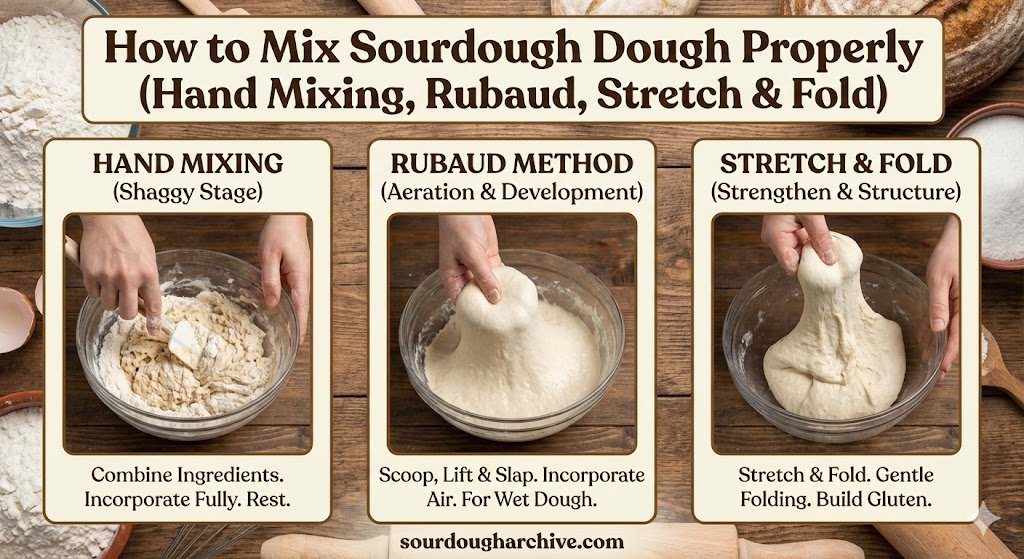
How to Mix Sourdough Dough Properly (Beginner Guide)
Mixing sourdough dough correctly is where structure begins. Poor mixing leads to weak gluten, sticky dough, dense crumb, and poor oven spring. Proper mixing, on the other hand, builds strength without overworking the dough.
If you’re baking for the first time, my sourdough recipe for beginners gives you the full picture before you dive into individual steps like this one.
This guide will show you how to mix sourdough dough properly using hand mixing, the Rubaud method, and stretch & folds — and how to know when you’ve done enough.
If you’re following the full beginner roadmap, this post connects with the Sourdough Mastery Guide.
Why Mixing Matters in Sourdough
Unlike commercial yeast dough, sourdough develops gluten more gradually. Mixing initiates gluten formation, but fermentation and folds continue strengthening it.
Once mixing is complete, measure your dough temperature immediately — that number determines everything about bulk fermentation. The sourdough bulk fermentation chart tells you exactly what to expect from that point forward.
- Hydration affects how sticky the dough feels
- Flour type affects strength potential
- Temperature affects how quickly structure relaxes
If your dough feels too wet to shape later, review How to Fix Sticky Dough and Sourdough Hydration Explained. After mixing you’ll move into stretch and folds — follow my stretch and fold schedule for beginners to keep the process simple and stress free.
Step 1: Autolyse (Optional but Powerful)
Autolyse means mixing flour and water first, then resting before adding starter and salt. This allows full hydration and begins passive gluten development.
Learn more in our detailed Autolyse Guide.
Rest time: 20–60 minutes.
Method 1: Basic Hand Mixing
This is the simplest beginner method.
- Add starter and salt to hydrated flour
- Squeeze and fold repeatedly
- Mix until no dry flour remains
- Dough should feel cohesive but slightly tacky
At this stage, stickiness is normal. Gluten is just forming.
Method 2: The Rubaud Mixing Method
The Rubaud method builds strength while incorporating air.
- Scoop dough from bottom
- Lift and slap gently against bowl
- Rotate bowl and repeat
- Continue 3–5 minutes
This method is ideal for higher hydration dough and helps reduce sourdough sticking to hands.
Method 3: Strength Through Stretch & Folds
Instead of aggressive mixing, sourdough often relies on stretch & folds during bulk fermentation.
See our full Stretch & Fold Schedule Guide.
- Perform every 30 minutes during early bulk
- 4 sets usually sufficient
- Stop when dough resists stretching
How to Know When You’ve Mixed Enough
- Dough pulls away from bowl cleanly
- Surface becomes smoother
- Feels elastic instead of tearing
- Passes partial windowpane test
If the dough tears easily, continue strengthening during bulk fermentation. Review Bulk Fermentation for Beginners.
Common Mixing Mistakes
- Adding flour to fix early stickiness
- Overmixing until dough becomes tight
- Ignoring dough temperature
- Skipping fermentation timing
Dough temperature plays a huge role in structure. If unsure, review How Dough Temperature Affects Fermentation. Once you’ve got mixing down, here’s the full how to make sourdough bread post to see how this step fits into the bigger picture.
For a complete structured beginner roadmap — including hydration charts and fermentation timing — visit the Sourdough Mastery Beginner Guide.
Want printable fermentation charts, timelines, and beginner-proof methods?
They’re inside the Sourdough Mastery System:
👉 https://sourdougharchive.com