Why Your Sourdough Starter Isn’t Rising: Complete Diagnostic Guide

Quick Navigation — Find Your Problem What “Not Rising” Actually Means Before we diagnose, let’s define what we’re looking for: A healthy starter should: If your starter shows NONE of these signs, it’s not rising. Section 1: No Bubbles at All — Zero Activity The Problem You feed your starter and nothing happens. No bubbles, […]
Sourdough Starter Smells Like Alcohol: What It Means & What to Do
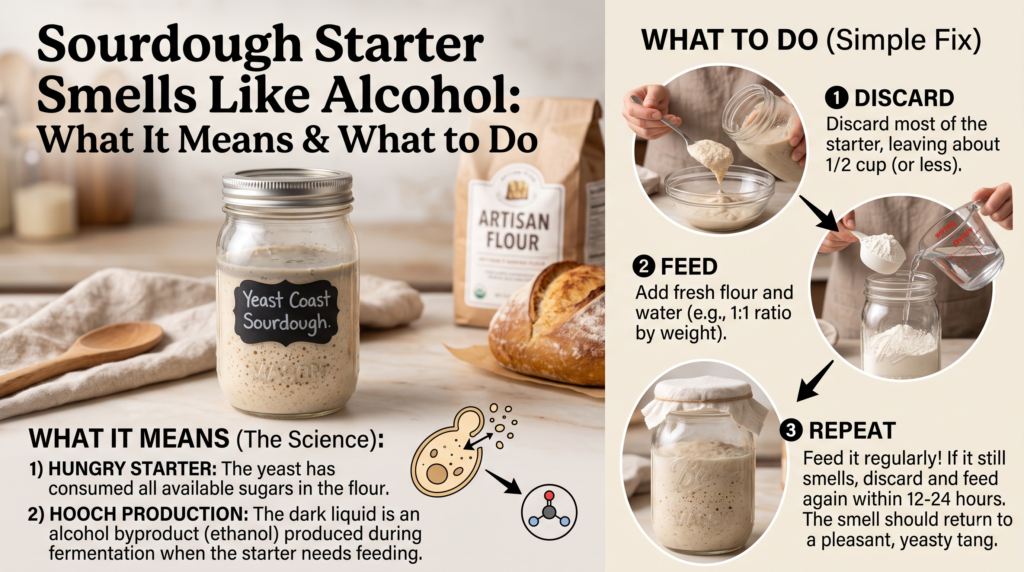
Short answer: your starter is hungry, not dead. An alcohol smell is one of the most normal things a sourdough starter can do — it means the yeast has consumed most of its available food and is producing ethanol as a byproduct. Feed it and the smell will fade within a few hours. There is […]
Sourdough Dough Tears During Stretch and Fold: 6 Fixes That Work

When your dough rips instead of stretches You reach into the bowl, grab a corner of the dough, pull up — and it snaps apart like wet tissue paper. Sometimes the whole top surface breaks. Sometimes it looks like a toddler tried to peel an orange. Either way: not what was supposed to happen. Dough […]
Sourdough Starter Smells Like Acetone: 5 Fixes + Recovery Timeline

Quick Answer: An acetone or nail polish remover smell means your starter is starving and producing stress metabolites — NOT dead. Fix it by discarding down to 20–50g and feeding at a 1:5:5 ratio (starter:flour:water) with lukewarm water (80–85°F). Most starters recover within 1–2 days of consistent feeding. The smell is not permanent — your […]
Is Rye Sourdough Supposed to Be Dense? (Yes — Here’s Why)

Short answer: yes. Rye sourdough is supposed to be denser than wheat sourdough — that’s not a sign your bake went wrong, it’s the correct, expected result of rye’s chemistry. If you’ve been comparing your rye loaf to an airy wheat boule and wondering what you did differently, the answer is nothing; you baked two […]
Why Is My Rye Sourdough Dough So Sticky? (Normal vs. Problem)
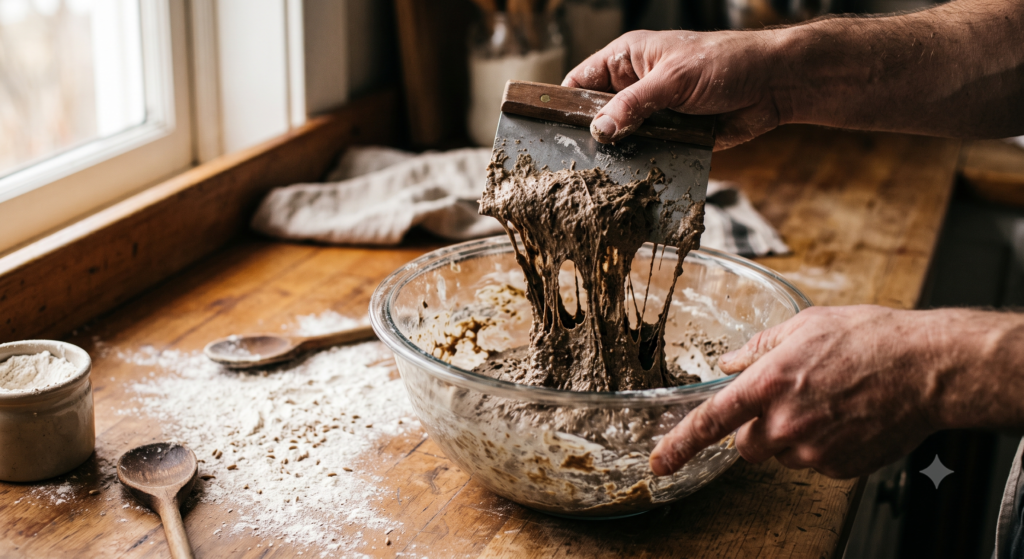
If you’ve searched this question and landed on general sourdough troubleshooting advice — longer autolyse, more stretch and folds, check your gluten development — that advice is built for wheat dough, and most of it doesn’t apply to rye at all. Rye has little to no gluten-forming capacity, so techniques designed to “develop” gluten can’t […]
Why Is My Sourdough Flat? (7 Mistakes Ruining Your Rise)

You follow the recipe. You feed your starter. You wait patiently for that perfect bulk fermentation. And then you pull a flat, pancake-like disc out of the oven and wonder: what went wrong?The frustrating part? There isn’t just one answer. A flat loaf can come from seven completely different causes — and the fix for […]
How to Keep Sourdough Dough Warm Without an Oven Light
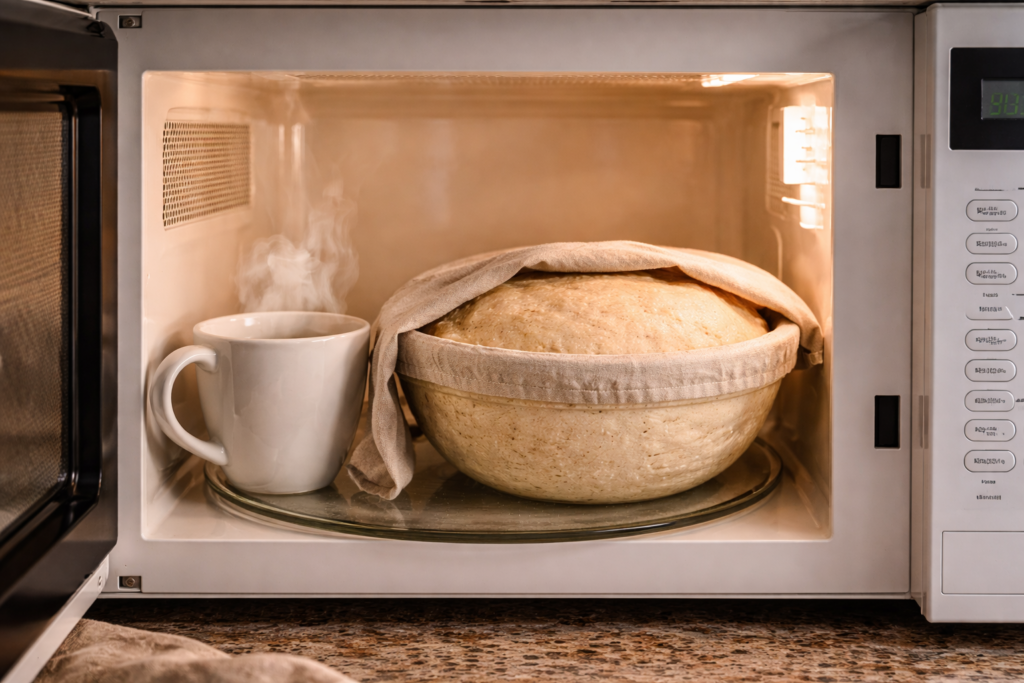
A cold kitchen is one of the most common reasons sourdough stays flat, dense, and unpredictable. Most recipes assume a 72–78°F environment — but the average home in winter sits well below that, often between 62–68°F, and your dough pays the price. If your sourdough isn’t rising in winter, temperature is almost always the first […]
Bread Poke Test: The Finger Method That Tells You When to Bake
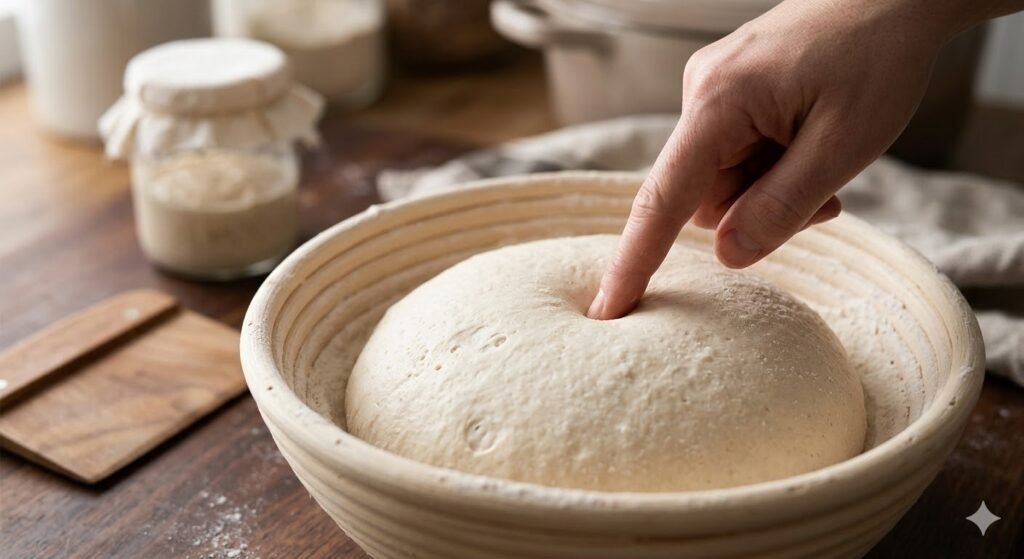
Quick Answer: The bread poke test tells you if your sourdough is ready to bake. Press a floured finger half an inch into the dough and watch the indent: springs back slowly (2–3 seconds) = perfectly proofed, bake now. Springs back instantly = underproofed, wait 30–60 minutes. Doesn’t spring back at all = overproofed, use […]