A cold kitchen is one of the most common reasons sourdough stays flat, dense, and unpredictable. Most recipes assume a 72–78°F environment — but the average home in winter sits well below that, often between 62–68°F, and your dough pays the price. If your sourdough isn’t rising in winter, temperature is almost always the first thing to check.
The good news: you do not need a proofing box or any special equipment to fix this. Most solutions use things already in your kitchen.
How to Keep Sourdough Dough Warm: Quick Answer
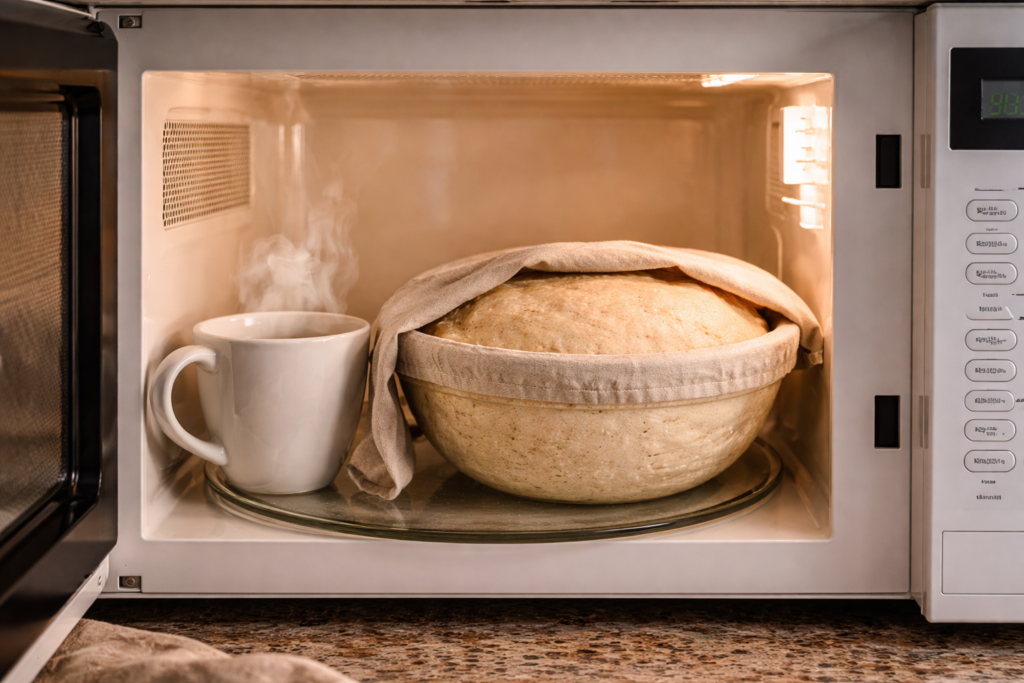
Sourdough dough should stay between 74–78°F during bulk fermentation. In a cold kitchen, the fastest fix is to create a small warm enclosure around the dough — not heat the whole room. The microwave trick (a mug of boiling water, door closed) works for 30–60 minutes. For longer ferments, a cooler with a jar of warm water or the oven-light method gives you more time.
Temperature management starts during bulk fermentation, before the dough ever goes into a proofing vessel. Our bulk fermentation chart covers the first stage — this guide picks up where that one ends.
Why Temperature Matters More Than Time
Sourdough is a living system — wild yeast and lactic acid bacteria respond directly to heat. Below 70°F, yeast activity drops sharply while acid-producing bacteria keep working, weakening your gluten before the loaf has a chance to rise. Simply extending fermentation time does not fully compensate: you can end up with a sour, slack dough that never develops proper structure. This is one of the core principles explained in the sourdough fermentation triangle.
The sweet spot — 75–78°F — keeps yeast producing CO₂ steadily while bacteria build flavor without overwhelming the gluten network. Go above 85°F and fermentation becomes too fast to control, risking overproofing and a sticky, collapsed dough. To understand exactly how dough temperature affects fermentation, including how to calculate your desired dough temperature (DDT), see our beginner’s guide.
7 Ways to Keep Sourdough Dough Warm Without Special Equipment
1. Microwave + Boiling Water (Best for Bulk Ferment, 1–2 Hours)
Boil a large mug or 2-cup measuring cup of water in the microwave. Remove it, place your covered dough bowl inside alongside the hot water, and close the door. Do not turn the microwave on. The trapped steam creates a warm, humid chamber — typically 75–80°F — that holds for 60–90 minutes. Refresh the water as it cools.
2. Oven with the Light On (Best for Overnight or Long Ferments)
A turned-off oven with the interior light on typically raises the temperature 5–10°F above room temp. Put a thermometer inside first — some ovens reach 85°F or higher with just the bulb. Important: newer ovens with LED lights produce almost no heat. Tape a sticky note to the oven handle so no one accidentally turns it on. This method works well for 3–8 hour bulk ferments. For a full side-by-side comparison of this method versus a dedicated proofer, see proofer vs. oven light.
3. Insulated Cooler with Warm Water (Most Stable DIY Method)
Place a quart jar filled with 100°F water into a small cooler, then set your dough bowl alongside it and close the lid. The insulation holds warmth for 1–2 hours with minimal temperature swings — better than open-air methods for long bulk fermentation. A 30–40 quart cooler works well. We cover this in more detail in the DIY proofing box cooler method guide.
4. Top of the Refrigerator
The compressor motor at the back of most refrigerators generates consistent warmth — often 5–8°F warmer than counter level. Set your dough on top, toward the back, covered. This is one of the most underrated free methods and works well when combined with tips from the complete winter sourdough guide.
5. Near a Heating Vent or Radiator
Place the dough a few feet away from an active heating vent (not directly on top of it — too hot and uneven). Drape a kitchen towel over the bowl to trap warmth. Check the temperature every 30 minutes with an instant-read thermometer.
6. Warm Water Bath
Fill a large mixing bowl or your sink with 80–90°F water. Place your dough container (sealed) inside. This method heats from the bottom but loses temperature relatively quickly — useful in a pinch for the first 30 minutes of bulk ferment.
7. Oven Proofing Setting (If Available)
Many modern ovens have a dedicated proof setting. Check the actual temperature before using it — most sit between 80–100°F, which is on the high end. If yours runs above 85°F, leave the door cracked an inch to prevent overproofing. If you’re unsure whether your dough has gone too far, the sourdough poke test visual guide will help you judge readiness.
When DIY Methods Aren’t Enough: Consistent Results Across Seasons
DIY methods work well for occasional baking, but they all require monitoring and adjustment as ambient temperature shifts. Many bakers who bake weekly eventually move to a temperature-controlled proofing box, which holds dough at a precise temperature for the entire ferment without any intervention. If you’re considering one, our guide to the best proofing boxes for sourdough breaks down the top options — including our full Brod & Taylor proofer review and a list of cheap alternatives to the Brod & Taylor if budget is a concern.
To understand how temperature interacts with fermentation timing and flavor, see the complete sourdough proofing temperature guide.
Frequently Asked Questions
What temperature is too cold for sourdough to rise?
Below 65°F, wild yeast becomes largely dormant and fermentation stalls. Your dough may take 12–24 hours to show any activity at all. If your dough won’t rise even after an extended wait, cold temperature combined with a weak starter is usually the culprit.
Can I use my Instant Pot to keep sourdough warm?
Only if your model has a “Low” yogurt setting that stays under 95°F. Most standard yogurt settings run at 106–113°F — hot enough to damage your yeast. Verify the temperature with a thermometer before using. The same caution applies when keeping your sourdough starter warm.
How do I know if my dough got too warm?
Signs of overheating include dough that smells sharply alcoholic, feels very slack and sticky, or has risen and then collapsed before you shaped it. Above 85°F, yeast burns through sugars faster than gluten can develop. If this has already happened, see how to save overproofed sourdough before you give up on the batch.
Does warming the water help?
Yes — using slightly warmer mixing water (80–85°F instead of cold tap water) raises the initial dough temperature, giving you a head start before ambient conditions take over. This ties directly into how hydration and water temperature interact during mixing.
What if I want to proof overnight instead?
Cold proofing in the fridge is a valid alternative that sidesteps the warm-kitchen problem entirely and often improves flavor. See our guide on how long to cold proof sourdough and the best final proof temperature for sourdough for a full breakdown.