Sourdough Baguette Recipe — Crispy Crust, Airy Crumb, Bakery Quality at Home
This sourdough baguette recipe delivers everything you want from a great baguette — a shatteringly crisp crust, an open and chewy crumb, and the subtle tang that only wild yeast fermentation can produce. It's a two-day process, but the hands-on time is minimal. If you can make a sourdough boule, you can make sourdough baguettes.
⬇ Jump to Recipe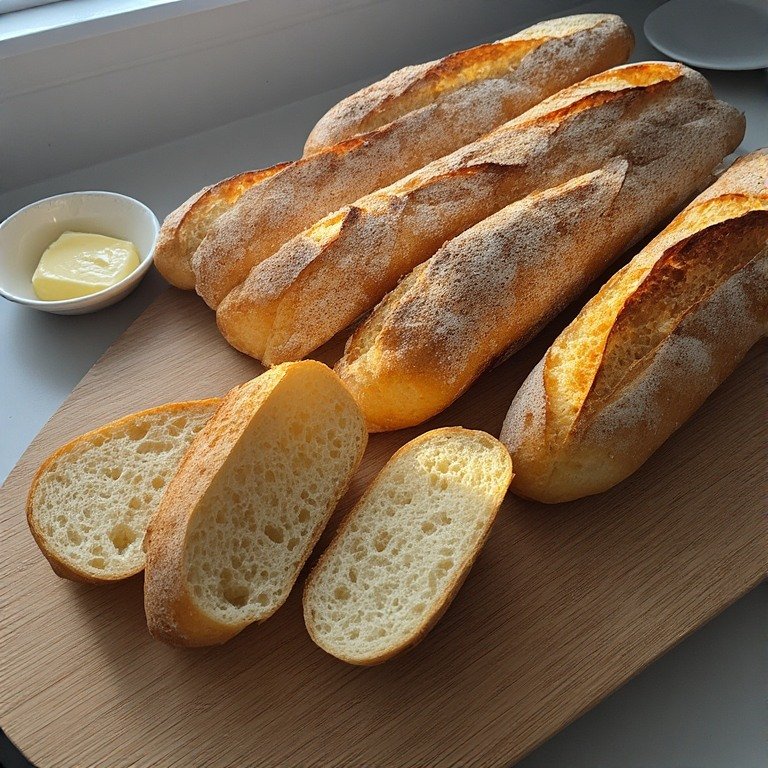
Crispy crust, open crumb, bakery tang — homemade sourdough baguettes are worth every minute.
- 450 g (3½ cups) bread flour — or 50/50 bread flour and all-purpose
- 125 g (½ cup) active sourdough starter, fed and bubbly
- 300 g (1¼ cups) water, room temperature (divided: 270 g + 30 g)
- 9 g (1½ tsp) fine sea salt
- For the oven: 1 cup boiling water or 1 cup ice cubes (for steam)
- Autolyse. In a large bowl, mix flour and 270 g of water until no dry flour remains. Cover and rest 45 minutes. This develops extensibility before you add the starter.
- Add starter and salt. Dissolve salt in the remaining 30 g water. Add starter and salt water to the autolysed dough. Mix thoroughly by hand using the pinch and fold method for 3–4 minutes until fully incorporated and dough feels smooth.
- Bulk ferment with stretch & folds. Cover and bulk ferment at room temperature (75–78°F). Perform 3 sets of stretch and folds, 30 minutes apart, during the first 1.5 hours. Then leave undisturbed for 2.5–3 more hours until the dough has grown 50–75% and feels airy with bubbles visible. Total bulk: 4–5 hours.
- Cold proof overnight. Cover tightly and refrigerate 12–16 hours. Cold fermentation builds flavor and makes the dough easier to shape.
- Divide and preshape. The next day, turn dough onto a lightly floured surface. Divide into 3 equal pieces (~290 g each). Shape each loosely into a rectangle. Rest uncovered 20–30 minutes.
- Shape baguettes. Working with one piece at a time: fold the bottom third up, press to seal. Fold the top third down, press to seal. Roll and elongate to about 14–16 inches. Place seam-side down on a baguette pan or floured couche.
- Final proof. Cover and proof at room temperature 60–90 minutes until slightly puffed. Don't over-proof — baguettes should look just barely risen.
- Preheat oven. Set oven to 475°F (245°C) with a baking stone or heavy baking sheet on the middle rack and an empty metal pan on the bottom rack. Preheat at least 45 minutes.
- Score. Using a lame or razor blade, make 3–5 diagonal cuts at a 30–45 degree angle along each baguette, about ½ inch deep. Score decisively — hesitant cuts tear the dough.
- Add steam and bake. Slide baguettes onto the hot stone. Immediately pour 1 cup boiling water (or add ice cubes) into the metal pan below to create steam. Close oven quickly. Bake 20 minutes with steam, then remove the water pan and bake another 10–12 minutes until deeply golden. Cool on a wire rack at least 15 minutes before slicing.
- Starter must be active. Feed 6–8 hours before use. It should be domed, bubbly, and pass the float test. See: how to feed and maintain your starter.
- Steam is non-negotiable. The first 15–20 minutes of steam creates the signature baguette crust. Without it, you'll get a soft, dull crust instead of a crispy one.
- Scoring angle matters. A 30–45 degree angle allows the baguette to open properly (called an "ear"). A 90-degree angle gives you a flatter cut that doesn't bloom.
- No baguette pan? Use a couche (floured kitchen towel with creases to hold shape) or roll the shaped baguettes in parchment and use the parchment as a sling to load them onto the hot stone.
- Freeze baked baguettes. Cool completely, wrap in foil, freeze up to 1 month. Reheat from frozen at 375°F for 12–15 minutes.
Sourdough Baguette Baking Schedule
The biggest challenge with sourdough baguettes is the timing. Here's a simple two-day schedule to work backwards from dinner:
Day 1 — Evening
- 5:00 PM Feed starter
- 9:00 PM Autolyse — mix flour and water, rest 45 min
- 9:45 PM Add starter and salt, mix
- 10:00 PM Set 1 of stretch & folds
- 10:30 PM Set 2 of stretch & folds
- 11:00 PM Set 3 of stretch & folds
- 11:00 PM–2:00 AM Continue bulk ferment undisturbed
- 2:00 AM Cover and refrigerate overnight
Day 2 — Next Day
- 10:00 AM Remove from fridge, divide and preshape
- 10:30 AM Shape baguettes, place on pan
- 10:30 AM Preheat oven to 475°F
- 11:30 AM Score and bake with steam
- 12:00 PM Baguettes out of oven, cooling
- 12:15 PM Ready to eat
Step-by-Step: How to Make Sourdough Baguettes
Step 1 — Feed Your Starter
A strong, active starter is the foundation of a good sourdough baguette. Feed at a 1:5:5 ratio (starter:water:flour) 6–8 hours before mixing for a moderate rise, or at 1:1:1 for a faster 4-hour build. The starter is ready when domed, bubbly, and just beginning to recede. Using starter past its peak produces a dense baguette with poor oven spring. See the full guide: how to feed and maintain your sourdough starter.

Starter at peak — domed, bubbly, and just beginning to recede. This is when to use it.
Step 2 — Autolyse
Mix flour and water together (no starter, no salt yet) and rest for 45 minutes. This autolyse step develops gluten passively — the flour absorbs water and proteins begin aligning on their own. The result is a more extensible, easier-to-shape dough that forms the open crumb structure baguettes are known for. See: sourdough autolyse guide.
Step 3 — Add Starter & Salt, Then Bulk Ferment
Add your starter and salt water, mix thoroughly, then bulk ferment for 4–5 hours at room temperature. Perform 3 sets of stretch and folds in the first 1.5 hours — this builds strength without deflating the dough. You're looking for 50–75% volume increase, visible gas bubbles, and a dough that jiggles when you shake the bowl. New to bulk fermentation? Read the full bulk fermentation guide for beginners.

After bulk ferment — dough should be 50–75% larger with visible bubbles throughout.
Step 4 — Cold Proof Overnight
Cover the bowl tightly and refrigerate for 12–16 hours. The cold slows fermentation dramatically, builds complex flavor, and firms up the dough making it much easier to divide and shape. You can cold proof up to 24 hours with good results. Read more: cold fermenting sourdough and how long can you cold proof sourdough?
Step 5 — Divide, Preshape & Shape
Turn the cold dough onto a lightly floured surface and divide into 3 equal pieces. Shape each loosely into a rectangle and rest 20–30 minutes — this relaxation is essential. A tight, resistant dough will tear when you try to elongate it. After resting, use the envelope fold method to shape: fold bottom third up, top third down, then roll and stretch to 14–16 inches. Even tension creates an even baguette.
Baguette dough is sensitive to over-fermentation — check the bulk fermentation chart for your dough temperature and aim for the lower end of the rise percentage range before shaping.

Rest the dough 20–30 minutes before shaping — cold, relaxed dough elongates without tearing.
Step 6 — Score and Bake with Steam
Scoring is what gives baguettes their signature look and ear. Hold your lame at a 30–45 degree angle and make 3–5 overlapping diagonal cuts along the length. Each cut should be about ½ inch deep and made in one confident stroke. Bake at 475°F with steam for the first 20 minutes — the steam keeps the crust pliable so the baguette can expand fully before it sets. Read more about how to score sourdough bread.

Score at 30–45 degrees in one confident stroke — hesitant cuts tear the dough.

Cool at least 15 minutes before slicing — the crumb is still setting inside.
How to Get a Crispy Sourdough Baguette Crust
The crust is everything on a baguette. Here's exactly how to nail it every time:
- Steam in the first 20 minutes. This is the single most important factor. Steam keeps the crust flexible so the baguette expands before it hardens. Use boiling water or ice cubes in a metal pan on the bottom rack.
- Preheat hot and long. 475°F for at least 45 minutes. A cold oven kills oven spring and produces a pale, soft crust.
- Use a baking stone or steel. Direct contact with a hot surface gives better bottom crust and oven spring than a cold baking sheet.
- Remove steam after 20 minutes. Take out the water pan and leave the oven door open for 30 seconds to vent steam. This allows the crust to crisp and caramelize for the remaining 10–12 minutes.
- Crack the oven door at the end. Turn off the oven and crack the door open 2–3 inches. Let the baguettes sit for 5 minutes. This dries out the crust completely without burning.
Sourdough Baguette Variations
Whole Wheat Sourdough Baguettes
Replace 20% of the bread flour (90 g) with whole wheat flour. Increase water by 10–15 g to compensate for whole wheat's higher absorption. The result is a nuttier, slightly denser baguette with more complex flavor.
Garlic & Herb Sourdough Baguettes
Fold in 3 minced garlic cloves and 2 tbsp chopped fresh rosemary during the second stretch and fold. Score and bake as normal. Exceptional with pasta or as a bruschetta base.
Seeded Sourdough Baguettes
Mist the shaped baguettes with water and roll in a mix of sesame seeds, poppy seeds, and everything bagel seasoning before the final proof. Press gently to adhere.
Cheese-Filled Sourdough Baguettes
During shaping, press 30 g of shredded Gruyère or sharp cheddar onto the dough before folding and rolling. The cheese melts into the crumb and creates pockets of flavor throughout.
Sourdough Baguette FAQ
More Sourdough Bread Recipes
- Sourdough Bread Recipe for Beginners
- How to Make Sourdough Bread
- Sourdough Bagels
- How to Score Sourdough
- How to Bake Sourdough in a Dutch Oven
- How to Get Better Oven Spring
Ready to Bake Your Sourdough Baguettes?
Sourdough baguettes are one of the most rewarding bakes you can attempt. The two-day process sounds intimidating but the active time is less than an hour — the oven does the hard work. Start with the schedule above, nail the steam method, and you'll have bakery-quality baguettes from your home oven.
New to sourdough? Start here: how to make a sourdough starter.