What Is Diastatic Malt Powder? The Enzyme-Rich Secret to Better Sourdough
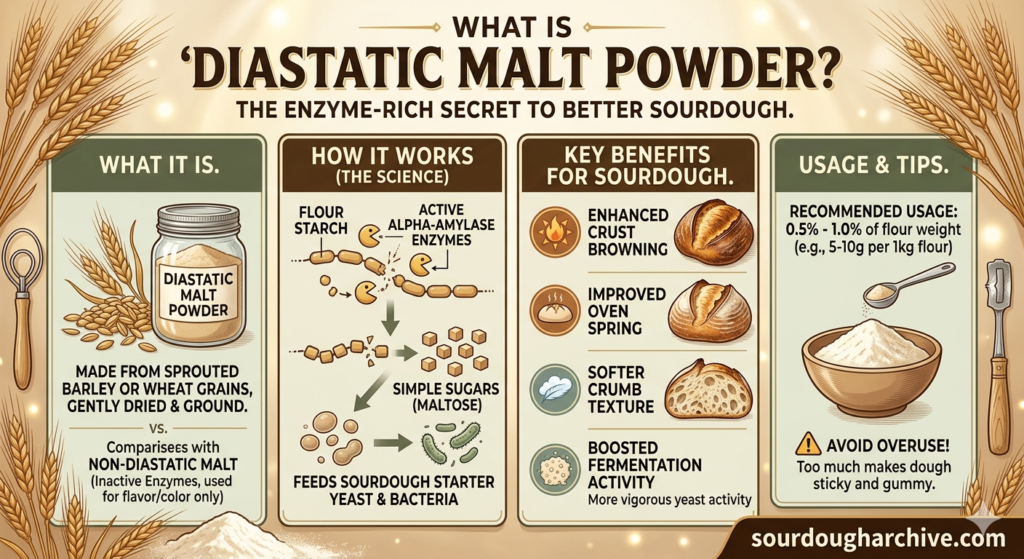
If you’ve ever wondered why professional sourdough bakers seem to get deeper crust color, more dramatic oven spring, and better control over their fermentation timing—diastatic malt powder is often the answer. Diastatic malt powder is sprouted, dried grain (typically barley) ground into fine powder that contains active enzymes capable of breaking down starch into fermentable […]
Sourdough Proofing Problems — Complete Fix Guide

Proofing is where most sourdough problems actually start — even issues that show up later (dense crumb, flat loaves, gummy centers) usually trace back to under- or over-proofed dough. Use this guide to find your problem and fix it before your next bake. Is My Dough Underproofed or Overproofed? The poke test is the fastest […]
What Is Non-Diastatic Malt Powder? Color & Flavor Without Fermentation Risk
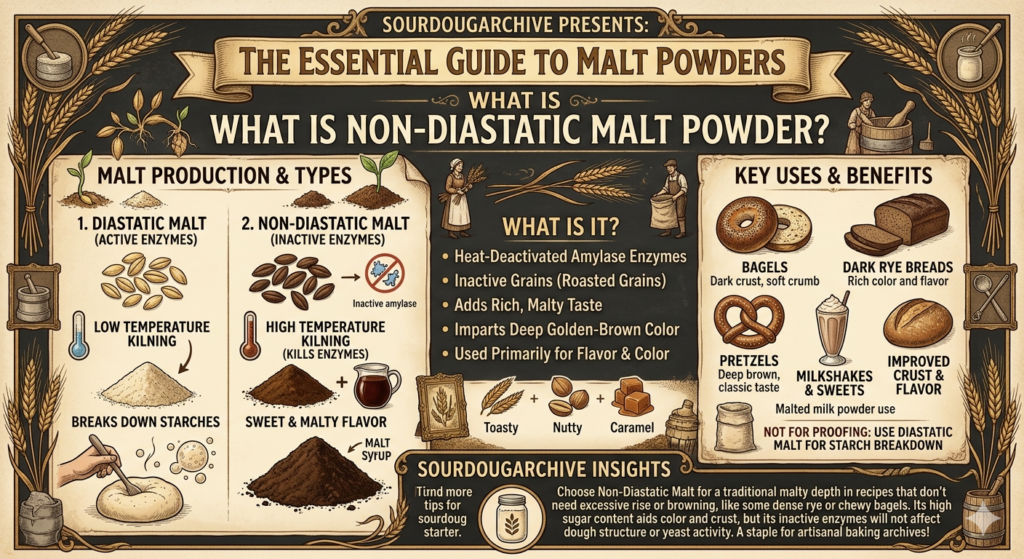
Non-diastatic malt powder is the safer choice for bakers who want the color, sweetness, and flavor boost of malt—without the risk of accelerating fermentation beyond your control. Non-diastatic malt powder is sprouted, dried barley (or other grains) that has been kiln-dried at high temperature to deactivate enzymes, leaving pure flavor and sugar behind. Unlike its […]
Bulk Fermentation Chart for Whole Wheat
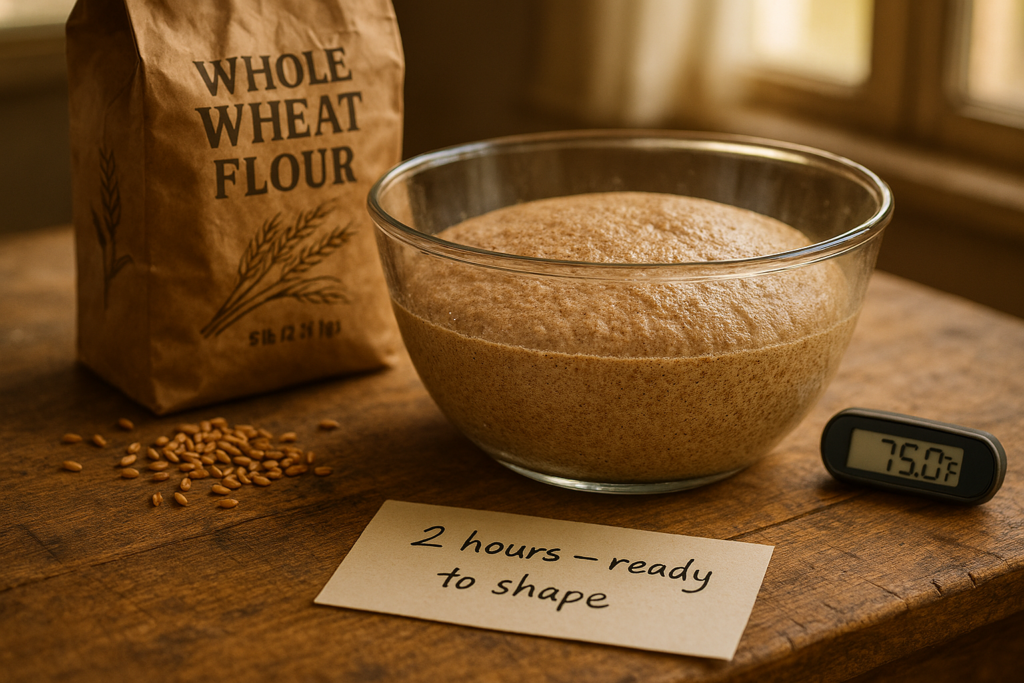
Whole wheat sourdough doesn’t follow the same fermentation timeline as white flour dough. The bran and germ contain enzymes that speed up fermentation, and the fiber structure changes how dough rises and holds gas. If you’ve been using standard bulk fermentation charts designed for all-purpose or bread flour, you’ve probably noticed your whole wheat dough […]
Bulk Fermentation Chart for High Hydration
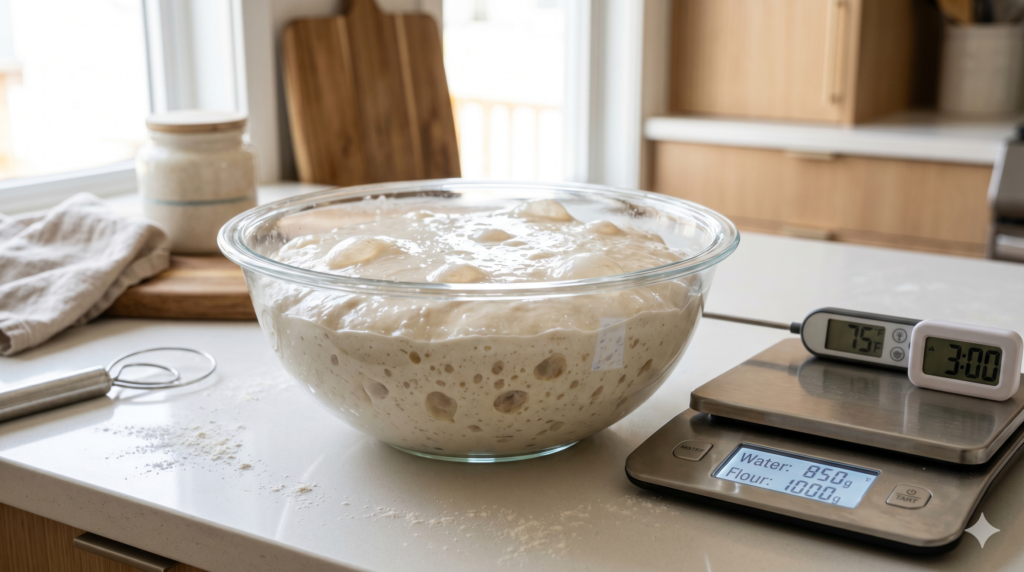
High hydration sourdough dough—anything above 78% water-to-flour ratio—ferments faster, feels slacker, and shows different visual cues than standard 70-75% hydration dough. If you’ve been following bulk fermentation charts designed for moderate hydration and recently pushed your water percentage higher, you’ve probably noticed your dough finishing earlier than expected or struggling to hold its shape during […]
Bulk Fermentation Chart — 6 Signs Your Dough Is Ready
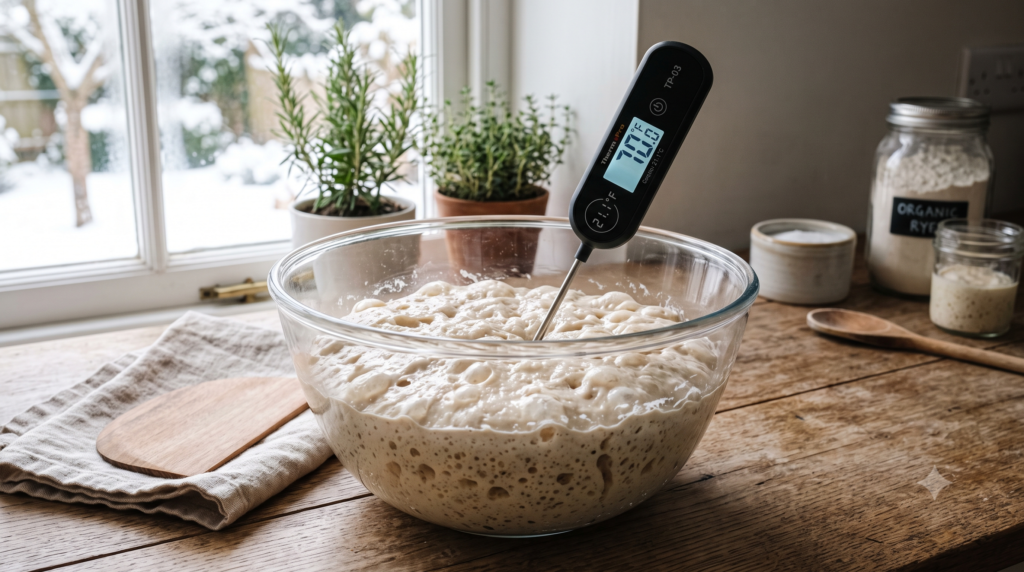
Baking sourdough in a cool kitchen presents unique timing challenges that catch many bakers off guard. At 70°F (21°C), your bulk fermentation will move significantly slower than standard recipes suggest, but this temperature offers substantial benefits: excellent flavor development, extended scheduling flexibility, and a more forgiving timeline that’s perfect for beginners. Understanding how to work […]
Aliquot Method vs. Windowpane Test: Which One Actually Tells You When Bulk Fermentation Is Done?

Both the aliquot method and the windowpane test involve pulling a small piece of dough and staring at it carefully. Both are used during bulk fermentation. But they measure completely different things — and using the wrong one at the wrong moment is one of the most consistent sources of confusion in sourdough baking. This […]
What Is Malt? The Complete Guide to Types, Production & Baking Benefits
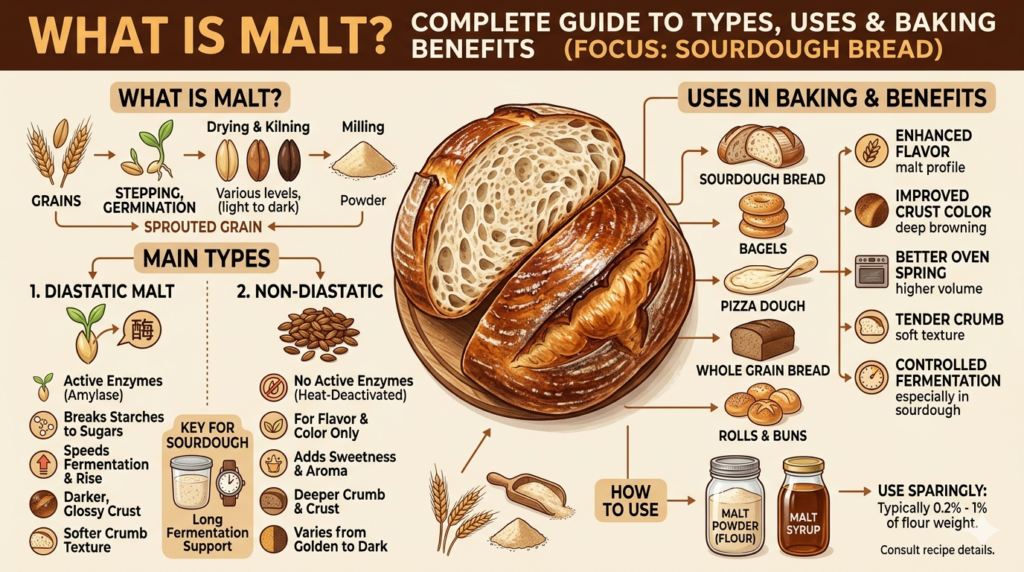
Malt is germinated cereal grains that have been dried through a controlled process that transforms their chemical composition and unlocks enzymes crucial for fermentation. If you’re a baker—especially a sourdough baker—malt isn’t just an ingredient: it’s a precision tool that controls oven spring, crust color, fermentation speed, and flavor development. In this guide, you’ll learn […]
Bulk Fermentation Chart for Beginners
