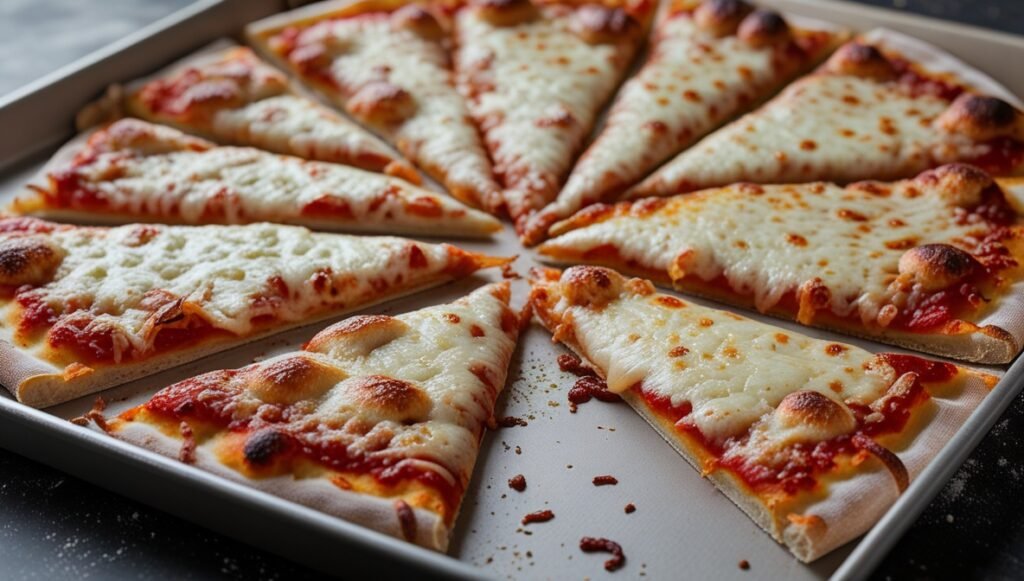
What Makes Detroit Style Pizza Different?
Detroit-style pizza is famous for its thick airy crust, crispy cheese edges, and rectangular shape. Unlike Neapolitan pizza, which relies on extreme heat and a thin crust, Detroit-style pizza focuses on a high-hydration dough baked in a well-oiled steel pan.
If you’re new to discard pizza recipes, start with our complete sourdough discard pizza dough guide. This recipe focuses specifically on the Detroit style.
Why Sourdough Discard Works Well for Detroit Style Pizza
Sourdough discard adds flavor complexity while helping create a lighter crumb structure. The long fermentation associated with discard dough complements Detroit-style pizza because the dough has time to develop strength, extensibility, and flavor.
If you’re comparing discard to active starter, see our guide on sourdough discard vs active starter pizza.
Best Flour for Detroit Style Pizza Dough
Bread flour is usually the best choice for Detroit-style pizza because the higher protein content supports the thick, airy structure that defines the style.
If you’re comparing flour options, read our guide to the best flour for sourdough pizza.
Unlike Neapolitan pizza, which often benefits from Italian flour, Detroit-style dough generally performs best with stronger bread flour rather than sourdough discard pizza dough with 00 flour.
Why High Hydration Matters
Detroit-style pizza relies on a wetter dough than many other pizza styles. Higher hydration helps create the open crumb and airy interior that make this pizza unique.
Most bakers achieve excellent results between 70% and 75% hydration.
If hydration calculations seem confusing, see our guide to sourdough hydration explained.
Cold Fermentation Improves Flavor
One of the easiest ways to improve Detroit-style pizza is extending fermentation.
An overnight cold ferment develops stronger flavor and makes the dough easier to handle. Learn more in our guide to cold ferment sourdough.
How to Press Detroit Pizza Dough Into the Pan
Many first-time bakers struggle because the dough shrinks back when pressed into the corners.
The solution is patience.
Press the dough partially into the pan, allow it to rest for 15 to 20 minutes, then continue pressing. As the gluten relaxes, the dough will naturally fill the pan.
If your dough tears or becomes difficult to handle, review our guide to stretching sourdough discard pizza dough without tearing.
How to Get Crispy Cheese Edges
The signature Detroit-style crust comes from baking cheese directly against the sides of the pan.
As the cheese melts and caramelizes, it creates the crispy edge often called the “frico” crust.
For more crust-improving techniques, read our guide to crispy sourdough discard pizza crust.
Common Detroit Pizza Problems
Dense Crumb
Dense pizza is usually caused by insufficient fermentation, weak dough development, or inadequate proofing time.
Learn the signs of proper fermentation in our fermentation guide.
Dough Feels Too Sticky
High-hydration dough naturally feels stickier than traditional pizza dough.
If stickiness becomes excessive, review how to fix sticky sourdough discard pizza dough.
Bottom Isn’t Crispy
This is usually caused by insufficient pan oiling or underbaking.
Detroit-style pizza often benefits from a few additional minutes in the oven to fully crisp the bottom crust.
Detroit Style vs Neapolitan Pizza
While both styles can be made with sourdough discard, they produce very different results.
Detroit-style pizza is thick, airy, and pan-baked.
Neapolitan pizza is thin, soft, and baked directly on a stone or pizza oven floor.
For a traditional Italian-style version, see our recipe for Neapolitan sourdough discard pizza dough.
Can You Bake Detroit Style Pizza in an Ooni?
Yes, although most bakers prefer a conventional oven for Detroit-style pizza. Ooni ovens are optimized for thinner pizzas and can sometimes brown the top too quickly.
If you regularly use an Ooni, see our guide to sourdough discard pizza dough for Ooni.
Frequently Asked Questions
Can you make Detroit-style pizza with sourdough discard?
Yes. Sourdough discard works exceptionally well in Detroit-style pizza because the long fermentation enhances flavor and texture.
What flour is best for Detroit-style pizza?
Bread flour is generally preferred because it provides the strength needed for a thick, airy crust.
Why are Detroit pizza edges crispy?
The cheese is baked directly against the sides of the pan where it caramelizes and creates the signature crispy edge.
Can I cold ferment Detroit pizza dough?
Yes. Cold fermentation improves flavor, dough strength, and overall texture.
Final Thoughts
Sourdough discard Detroit style pizza dough is one of the best ways to transform leftover discard into an incredible meal. The long fermentation, airy crumb, crispy cheese edges, and caramelized crust create a pizza style that is completely different from traditional round pizzas.
If you enjoy experimenting with pizza styles, be sure to try our Neapolitan sourdough discard pizza dough and sourdough discard pizza dough for Ooni guides next.
Sourdough Discard Detroit Style Pizza Dough
Equipment
- 1 9×13 Detroit-style pizza pan
- 1 Large mixing bowl
- 1 Bench scraper
- 1 Kitchen scale
Ingredients
- 500 g bread flour
- 350 g water
- 150 g sourdough discard
- 12 g fine sea salt
- 15 g olive oil
Instructions
- Combine water and sourdough discard in a large bowl.
- Add flour and mix until no dry flour remains.
- Rest 20 minutes.
- Add salt and olive oil.
- Mix until fully incorporated.
- Perform 3 stretch-and-fold sessions spaced 30 minutes apart.
- Cover and refrigerate for 18–24 hours.
- Transfer dough to an oiled Detroit-style pan.
- Allow dough to rest 2–3 hours until puffy.
- Gently press dough toward the corners.
- Add cheese to the edges of the pan.
- Bake at 500°F for 12–15 minutes until deeply golden.