You mixed your dough hours ago. You’ve done the stretch and folds. You’re watching the container like it owes you money. And it’s barely moved.
Slow bulk fermentation is one of the most frustrating parts of sourdough baking — especially when you can’t tell if you should wait it out or start troubleshooting. The good news: in almost every case, there’s a clear cause. Here are the seven most common reasons bulk fermentation drags, and exactly what to do about each one.
Quick Diagnosis Table
| Symptom | Most Likely Cause | Jump To |
|---|---|---|
| No rise, no bubbles after 6+ hours | Weak or inactive starter | Cause #1 |
| Slow rise, cool kitchen | Temperature too low | Cause #2 |
| Sluggish even in warm conditions | Too little starter in the recipe | Cause #3 |
| Starter fine, dough still slow | Chlorinated tap water | Cause #4 |
| Using whole wheat or rye | Flour type slowing fermentation | Cause #5 |
| No stretch and folds done | Weak gluten structure | Cause #6 |
| Recipe includes butter, oil, or sugar | Fat or sugar inhibiting fermentation | Cause #7 |
Cause #1: Your Starter Is Too Weak
This is the most common cause of slow bulk fermentation by far. Sourdough bulk fermentation is only as fast as the starter powering it. If your starter isn’t reliably doubling within 4–8 hours of feeding at room temperature, it doesn’t have enough active yeast to drive your dough forward on any reasonable timeline.
🧮 Calculate Your Bulk Fermentation Time
Is your bulk actually too slow, or just on schedule? Calculate your expected timing:
Accounts for temperature, starter %, hydration, and flour type
Signs this is your problem:
- Dough shows little to no rise after 6+ hours at room temperature
- No visible bubbles along the sides or surface
- Your starter itself takes longer than 8 hours to peak after feeding
The fix:
Don’t bake with it yet. Give your starter 3–5 days of twice-daily feedings at room temperature (74–78°F) and check that it’s doubling consistently before using it in a recipe. Adding a small amount of rye or whole wheat flour to your feedings can speed up recovery — both flours are loaded with enzymes and nutrients that wild yeast thrive on.
For a full recovery plan, see our guide on how to strengthen a weak sourdough starter.
Rule of thumb: If your starter isn’t doubling reliably within 4–8 hours at room temperature, no chart or technique will fix slow bulk fermentation. The starter is the engine — fix that first.
Cause #2: Your Kitchen Is Too Cold
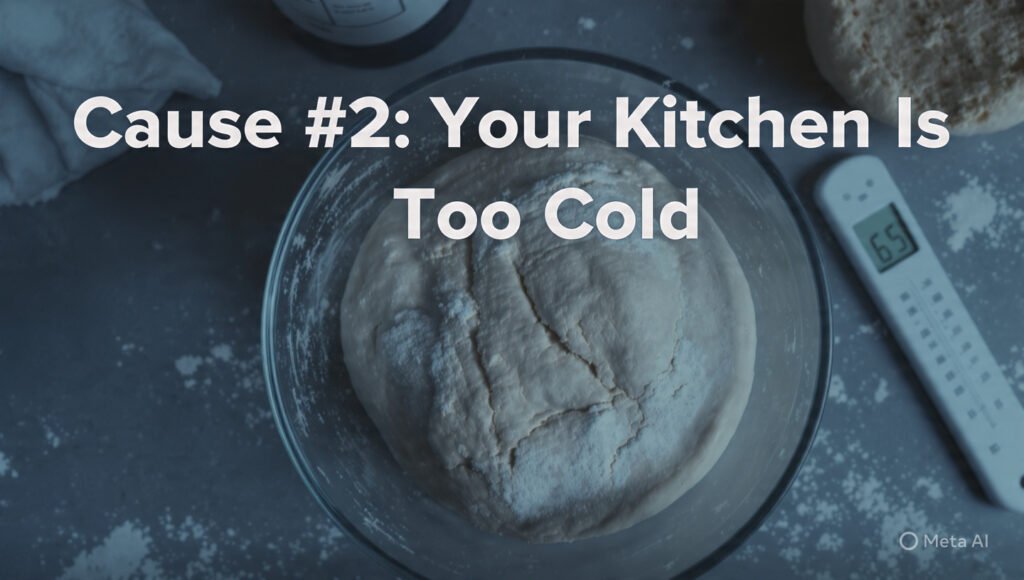
Temperature is the single biggest driver of bulk fermentation speed. Wild yeast activity slows dramatically as temperatures drop — and the effect is bigger than most bakers expect. Every 10°F drop in dough temperature roughly doubles the time needed for bulk fermentation.
How cold is too cold?
| Kitchen Temp | Bulk Fermentation Time (20% starter) | Notes |
|---|---|---|
| 78–80°F / 26–27°C | 3–4 hours | Fast — watch closely |
| 74–76°F / 23–24°C | 4–5 hours | Ideal range |
| 70–72°F / 21–22°C | 6–8 hours | Slow but normal |
| 68°F / 20°C | 10–12 hours | Very slow |
| 65°F / 18°C | 14–16 hours | Overnight territory |
| Below 65°F / 18°C | Unpredictable | Fermentation nearly stalled |
For a full temperature and timing reference, see the sourdough bulk fermentation chart.
The fix:
- Find a warmer spot: top of the refrigerator, inside the oven with just the light on (not the heat), near a warm appliance
- Use warmer water (around 85°F) when mixing your dough — it raises the dough temperature and gives fermentation a head start
- If you have a Brød & Taylor proofer or similar device, set it to 75–78°F for consistent results
Cause #3: Too Little Starter in the Recipe
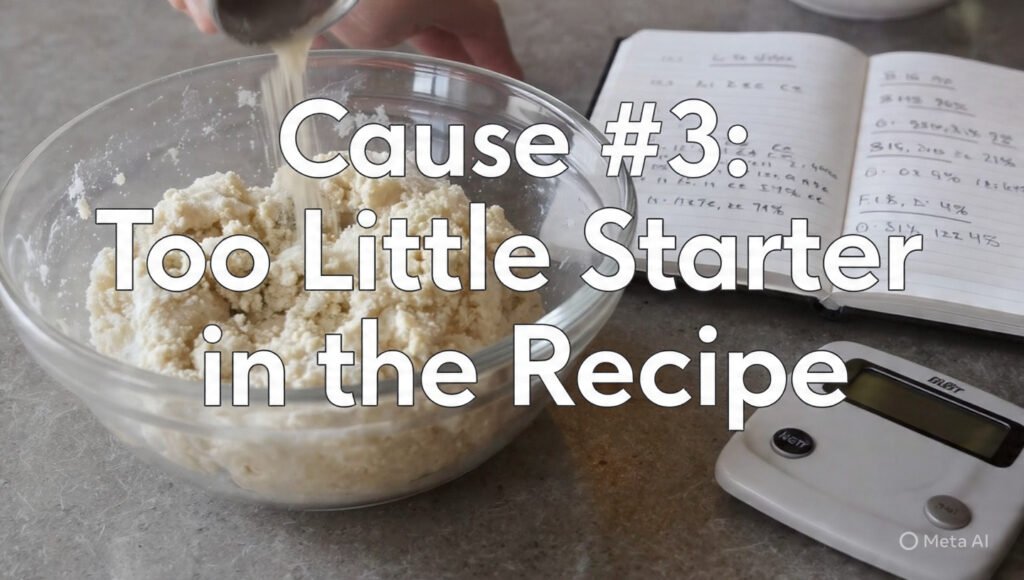
The percentage of starter (inoculation rate) directly controls how quickly bulk fermentation happens. Standard recipes call for 15–20% starter relative to flour weight. If you’re using 10% or less, fermentation will move significantly slower — intentionally so in some cases, but a problem if you’re expecting a 5-hour bulk and using a low-inoculation recipe without realizing it.
The fix:
Check your recipe’s starter percentage. If it calls for 10% or less, expect a longer bulk — or increase your starter to 15–20% for a more typical timeline. Note that if you’re doing an overnight bulk fermentation intentionally, lower starter percentages are correct by design.
Cause #4: Chlorinated Tap Water
Chlorine is added to municipal tap water specifically to kill bacteria. The problem is it can also slow or inhibit the wild yeast and bacteria in your starter and dough — particularly if your water is heavily treated.
Signs this might be your problem:
- Your starter is active and healthy, but bulk fermentation consistently underperforms
- Your tap water smells noticeably of chlorine
The fix:
Use filtered water, or fill a jug with tap water and leave it uncovered overnight before using. Chlorine is volatile and dissipates with air exposure within a few hours. This is a small change that makes a noticeable difference for bakers in heavily chlorinated municipal water areas.
Cause #5: Your Flour Type Is Slowing Fermentation
Not all flours ferment at the same rate. White bread flour ferments relatively slowly because it has fewer natural enzymes and nutrients compared to whole grain flours. If you’ve switched flour types recently — or are following a recipe developed with different flour — your timing will shift.
How flour affects bulk fermentation speed:
| Flour Type | Relative Fermentation Speed | Notes |
|---|---|---|
| White bread flour | Baseline | Most recipes calibrated to this |
| All-purpose flour | Slightly slower | Less protein, slightly less activity |
| Whole wheat flour | Faster | More enzymes and nutrients |
| Rye flour | Significantly faster | Highest enzyme content |
| Einkorn / ancient grains | Variable | Often faster but different gluten behavior |
The fix:
If you’re baking with high-extraction or whole grain flours and bulk is moving too fast, that’s normal and expected — reduce your starter percentage slightly. If you’re using only white flour and things seem very slow, temperature or starter strength is more likely the culprit.
Cause #6: You Skipped or Rushed the Stretch and Folds
Stretch and folds don’t directly cause fermentation, but they develop the gluten network that allows the dough to trap gas and visibly rise. Without adequate gluten development, your dough may be fermenting normally underneath — producing gas — but can’t hold it, so it doesn’t appear to be rising. The result looks like slow fermentation when it’s actually a structural issue.
The fix:
Complete 4 sets of stretch and folds in the first 2 hours of bulk fermentation, spaced roughly 30 minutes apart. Each set is 4 folds — north, south, east, west — rotating the bowl a quarter turn each time. After the final set, leave the dough alone and let fermentation do its work.
Cause #7: Your Recipe Includes Fat, Sugar, or Dairy
Enriched doughs — recipes that include butter, oil, honey, eggs, or milk — ferment more slowly than lean doughs. Fats coat the flour particles and slow the activity of wild yeast. This isn’t a problem with your starter or technique; it’s simply how enriched doughs behave.
The fix:
Expect a longer bulk fermentation with enriched doughs — sometimes 6–10 hours even in a warm kitchen. Don’t try to speed it up by adding more starter or raising the temperature dramatically. Let it run its natural course and watch the dough, not the clock.
What to Do If Bulk Fermentation Is Still Slow Right Now
If your dough is already mixed and moving too slowly, here’s how to triage in real time:
- Check and raise the temperature first. Move the dough somewhere warmer — oven with light on, top of fridge. Give it 30–60 minutes and reassess.
- Be patient if the dough is showing some signs. Small bubbles along the edges and a slight change in texture mean fermentation is happening — it’s just slow. Give it more time.
- Don’t add more starter mid-fermentation. It won’t incorporate properly and will throw off your dough’s balance.
- If there’s zero activity after 8+ hours at 70°F+, the starter was likely the problem. Bake it anyway — you may get a denser loaf, but it’s worth understanding what went wrong before your next bake.
How to Tell When Bulk Fermentation Is Finally Done
Once your dough does get moving, look for these signs before shaping:
- 50–75% volume increase (not a full double for most sourdoughs)
- Bubbles visible along the sides of the container
- A slightly domed top surface
- Dough jiggles when you gently shake the container
- Feels airy and light when you scrape it, not dense and tight
For a complete breakdown of every sign, see: Signs Bulk Fermentation Is Done.
Related Guides
- Sourdough Bulk Fermentation Chart — Full temperature and timing reference
- How Long Does Bulk Fermentation Take?
- Signs Bulk Fermentation Is Done
- Overnight Bulk Fermentation
- What Happens If Bulk Fermentation Goes Too Long?
FAQ
Why is my sourdough bulk fermentation taking so long?
The most common reasons are a weak starter, a cold kitchen, or too little starter in the recipe. Temperature is the biggest factor — every 10°F drop in dough temperature roughly doubles bulk fermentation time. Check your kitchen temperature and your starter’s activity first.
How long is too long for bulk fermentation?
It depends on temperature. At 75°F with 20% starter, bulk fermentation should finish in 4–5 hours. If it’s taking 8+ hours in warm conditions with no signs of activity, your starter is likely the issue. In a cool kitchen (65–68°F), 12–16 hours is completely normal.
Can I speed up bulk fermentation if it’s taking too long?
Yes — move the dough somewhere warmer. The oven with just the light on maintains roughly 75–78°F in most ovens and is one of the easiest ways to speed up a slow bulk fermentation. Avoid temperatures above 85°F, which can start to damage gluten structure.
Does chlorinated water slow sourdough fermentation?
It can, particularly if your municipal water is heavily treated. Use filtered water or let tap water sit uncovered overnight to allow the chlorine to dissipate before using it in your dough or starter.
Why is my dough not rising at all during bulk fermentation?
No rise after 6+ hours at room temperature almost always points to a weak or inactive starter. The starter should double reliably within 4–8 hours of feeding before you use it in a recipe. If it doesn’t, spend a few days strengthening it before baking again.
Does whole wheat flour make bulk fermentation faster or slower?
Faster. Whole wheat and rye flours contain more natural enzymes and nutrients than white bread flour, which accelerates wild yeast activity. If you’re adding whole grain flour to a recipe, expect bulk fermentation to finish sooner than the recipe suggests.