Overnight bulk fermentation is one of the most convenient schedules in sourdough baking. Mix your dough in the evening, let it ferment while you sleep, shape in the morning, and bake. No hovering over the dough all day.
But it comes with one real risk: overproofing. Leave a warm dough on the counter all night and you could wake up to a collapsed, sticky mess. Done correctly, though, overnight bulk fermentation produces some of the best-tasting sourdough you’ll bake — with a more complex flavor, a blistered crust, and an open crumb.
This guide covers exactly how to pull it off.
The Quick Answer
You can safely bulk ferment overnight one of two ways:
- Counter overnight (cool kitchen only): Works if your kitchen stays at or below 68°F (20°C). Use a lower starter percentage (5–10%) so fermentation moves slowly enough to last 8–12 hours without overproofing.
- Fridge overnight (retarded bulk): The more reliable method. Give the dough 1–2 hours of active fermentation at room temperature first, then move it to the fridge for 8–16 hours. Shape cold the next morning.
The biggest mistake bakers make is leaving a standard 20% starter dough on a warm counter overnight. At 75°F, that dough is fully fermented in 4–5 hours — it will be overproofed well before morning.
🧮 Calculate Your Bulk Fermentation Time
Planning an overnight bulk? Calculate the right temperature and starter percentage for your schedule:
Accounts for temperature, starter %, hydration, and flour type
Method 1: Overnight Bulk Fermentation on the Counter
This only works reliably if your kitchen is consistently cool — around 65–68°F (18–20°C). At those temperatures, bulk fermentation takes 12–16 hours, which fits neatly into a nighttime window.
How to Set It Up
- Mix your dough in the evening (7–9 PM)
- Reduce your starter to 5–10% of flour weight (instead of the typical 15–20%)
- Do your stretch and folds in the first 2 hours
- Cover the container and leave it on the counter
- Shape in the morning (7–9 AM) when the dough has risen 50–75%
Counter Overnight Temperature Guide
| Kitchen Temp | Starter % | Estimated Bulk Time | Safe Overnight? |
|---|---|---|---|
| 65°F / 18°C | 10% | 14–16 hours | ✅ Yes |
| 68°F / 20°C | 7–10% | 12–14 hours | ✅ Yes |
| 70°F / 21°C | 5–7% | 10–12 hours | ⚠️ Use 5% or less |
| 72°F / 22°C | 5% | 8–10 hours | ⚠️ Risky — check early |
| 75°F / 24°C | 20% (standard) | 4–5 hours | ❌ Will overproof overnight |
| 78°F / 26°C | 20% (standard) | 3–4 hours | ❌ Will overproof overnight |
Important: If your kitchen is above 70°F at night, use Method 2 (fridge bulk) instead. A warm kitchen and an overnight counter bulk is a recipe for overproofed dough.
Method 2: Overnight Bulk Fermentation in the Fridge (Retarded Bulk)
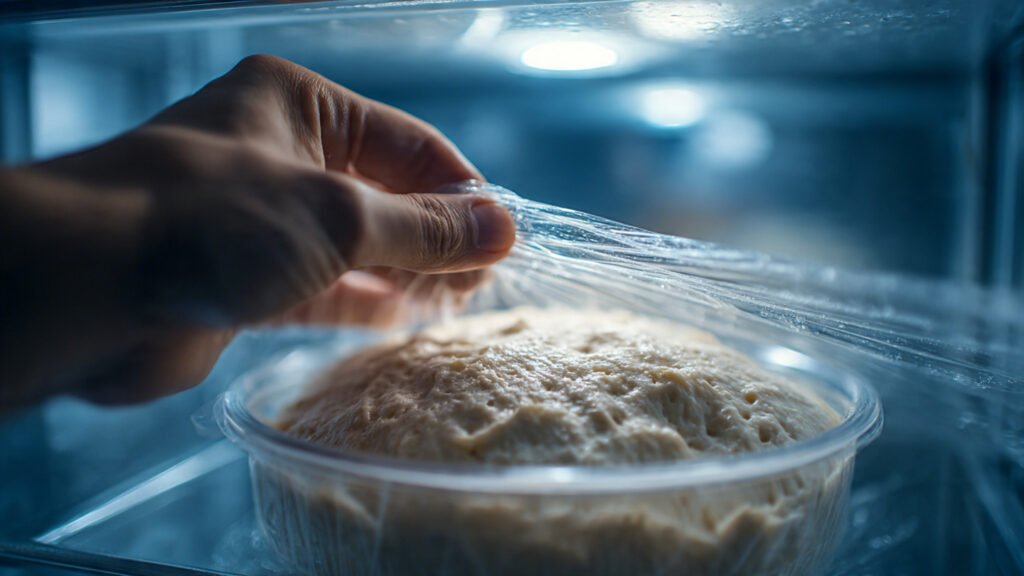
This is the method most experienced bakers prefer. It works in any kitchen, any season, and gives you more control over your schedule.
How to Set It Up
- Mix your dough in the evening using your normal starter percentage (15–20%)
- Do your stretch and folds over the first 2 hours at room temperature
- Once the dough shows the first signs of activity — some bubbles on the edges, a slight dome — move it to the fridge
- Let it ferment in the fridge for 8–16 hours
- Remove it in the morning and shape while it’s still cold
The dough will continue fermenting slowly as it cools down, then maintain a slow, steady fermentation overnight. The cold slows yeast activity dramatically but doesn’t stop it entirely — this long, cold fermentation is what builds the deep, complex flavor sourdough is known for.
Key rule: Don’t skip the room-temperature start. The dough needs at least 1–2 hours of active fermentation before the cold slows things down. Putting fresh dough straight into the fridge produces very little fermentation activity.
What to Expect in the Fridge Overnight
| Fridge Temp | Room Temp Start | Fridge Time | Result |
|---|---|---|---|
| 38–40°F / 3–4°C | 1–2 hours | 8–12 hours | Lightly fermented, mild flavor |
| 38–40°F / 3–4°C | 2–3 hours | 8–12 hours | Well fermented, good flavor development |
| 38–40°F / 3–4°C | 2 hours | 12–16 hours | Deep flavor, slightly more sour — excellent |
Once the dough hits refrigerator temperature, fermentation slows to a near-halt. This means the difference between 10 hours and 16 hours in the fridge is not dramatic — you have a wide window to shape in the morning.
Which Method Is Right for You?
| Counter Overnight | Fridge Overnight | |
|---|---|---|
| Best for | Cool kitchens (≤68°F) | Any kitchen, any season |
| Starter % | 5–10% | 15–20% (normal) |
| Flexibility | Low — temperature-dependent | High — 8–16 hour window |
| Flavor | Complex, mildly sour | Deep, complex, more sour |
| Risk of overproofing | Higher | Lower |
| Shaping temp | Room temperature | Cold (easier to handle) |
How to Know When Overnight Bulk Fermentation Is Done
Whether you bulk on the counter or in the fridge, the signs of a finished bulk fermentation are the same. Don’t rely on the clock alone — always check the dough.
Signs Bulk Fermentation Is Done
- Volume increase: Dough has risen 50–75% (not doubled — that’s usually too far for sourdough)
- Surface bubbles: You can see bubbles along the edges of the container and small bubbles on the surface
- Dome shape: The top of the dough is slightly domed, not flat or sunken
- Jiggly texture: Gently shake the container — the dough should wobble like Jello, not slosh like a liquid
- Smooth, airy feel: When you scrape it onto the bench, it should feel light and slightly sticky, not dense and stiff
For a full breakdown of every visual and tactile sign, see our complete guide: Signs Bulk Fermentation Is Done.
What If It’s Not Ready in the Morning?
If you pull your dough out of the fridge and it hasn’t risen enough, let it sit at room temperature for 30–60 minutes before shaping. This is normal, especially in winter when fridges run colder.
The Most Common Overnight Bulk Fermentation Mistakes
1. Leaving a warm dough on the counter all night
This is the most common way overnight bulk fermentation goes wrong. If your kitchen is above 70°F at night and you use a standard 20% starter, your dough will be done fermenting before midnight. By morning, it’ll be overproofed — sticky, slack, and difficult to shape. Use the fridge, or significantly reduce your starter percentage.
2. Putting dough straight into the fridge without a room-temperature start
The fridge dramatically slows fermentation, but it doesn’t create it. If you mix dough with a cold starter and immediately refrigerate it, very little fermentation will happen overnight. Always give the dough at least 1–2 hours of active room-temperature fermentation first.
3. Using too much starter for a fridge bulk with low room-temp time
If you’re only giving the dough 30–45 minutes at room temperature before refrigerating, reduce your starter to 10–15%. A high-inoculation dough with barely any room-temperature time will be under-fermented, no matter how long it sits in the fridge.
4. Shaping cold dough and immediately baking it
After shaping cold dough from the fridge, it still needs a final proof before baking. Shape it, place it in the banneton, and either let it proof at room temperature for 1–2 hours or do another cold proof in the fridge before baking.
Overnight Bulk Fermentation and Flavor
One of the biggest benefits of overnight bulk fermentation — especially the fridge method — is flavor development. The slow, cold fermentation shifts the balance of acid production. Cooler temperatures favor acetic acid (the sharper, tangy sourness) over lactic acid (the smooth, yogurt-like sourness). The result is a more complex, layered flavor that’s difficult to achieve with a fast, warm bulk fermentation.
This is why many bakers who try overnight bulk fermentation for the first time say their bread has never tasted better — even before they fully understand why.
Overnight Bulk Fermentation for Busy Schedules
The main reason bakers switch to overnight bulk is schedule flexibility. Instead of babysitting dough all day, you can:
- Mix dough at 8 PM → shape at 7 AM → bake by 9 AM
- Mix dough at 10 PM → let it sit in the fridge → shape Saturday morning when you’re ready
- Do your stretch and folds during the evening, then go to bed and wake up to ready dough
The fridge method in particular gives you a wide 8–16 hour window. Once the dough is cold, the difference between waking up at 6 AM and 9 AM doesn’t matter much.
Related Guides in This Series
- Sourdough Bulk Fermentation Chart — The full temperature and timing reference
- How Long Does Bulk Fermentation Take?
- Signs Bulk Fermentation Is Done
- What Happens If Bulk Fermentation Goes Too Long?
- Why Is My Bulk Fermentation So Slow?
FAQ
Can I bulk ferment sourdough overnight on the counter?
Yes, but only if your kitchen stays at or below 68°F (20°C) overnight. You also need to reduce your starter to 5–10% so fermentation is slow enough to last 8–12 hours. In a warm kitchen (above 70°F), counter overnight bulk will almost always overproof.
Can I bulk ferment sourdough in the fridge overnight?
Yes — this is called retarded bulk fermentation and it’s a reliable method. Give the dough 1–2 hours of room-temperature fermentation first, then move it to the fridge for 8–16 hours. Shape cold the next morning.
How do I know if my overnight bulk fermentation is done?
Look for a 50–75% volume increase, surface bubbles along the edges of the container, a slightly domed top, and a dough that jiggles when you gently shake it. See our full guide: Signs Bulk Fermentation Is Done.
What happens if I leave bulk fermentation going too long overnight?
Overproofed dough becomes slack, sticky, and difficult to shape. It may smell strongly acidic or alcoholic. If it’s only slightly overproofed, shape it quickly and bake it as soon as possible. See our guide on what happens if bulk fermentation goes too long.
What starter percentage should I use for overnight bulk fermentation?
It depends on the method. For counter overnight, use 5–10% to slow fermentation down. For fridge overnight (retarded bulk), you can use your normal 15–20% — the cold handles the timing for you.
Can I do a cold bulk fermentation without any room-temperature fermentation first?
Not effectively. The dough needs some initial activity at room temperature before the cold slows things down. Without at least 1–2 hours at room temperature first, very little fermentation will occur overnight in the fridge.