Can You Make Pizza With Sourdough Discard No Yeast?
YES — if your discard meets 4 conditions. NO — if it doesn’t. The difference between a crispy pizza tonight and a dense, flat disappointment comes down to starter age and fermentation science that most guides skip.
You’ve got a jar of sourdough discard sitting in the fridge. You want homemade pizza tonight. And you just realized you’re completely out of commercial yeast.
Good news: you don’t need it.
✓ Can You Make Pizza Dough Without Yeast Using Only Discard?
YES — IF your discard meets these conditions:
- ✓ From a starter at least 2 weeks old
- ✓ Used within 1 week of the last feeding
- ✓ Stored in the fridge (not left out for weeks)
- ✓ No pink/orange mold visible
If your discard is older or weaker: Add ½–1 tsp instant yeast as insurance, or extend bulk fermentation by 1–2 hours. See the Discard Strength Chart below for specifics.
This sourdough discard pizza dough no yeast recipe turns that forgotten jar of discard into a flavorful, chewy, crispy-bottomed pizza crust — with zero commercial yeast required. No special equipment. No overnight planning required (though you can if you want). Just real, fermented dough that tastes better than anything from a packet.
For a lot of home bakers, sourdough discard feels like a problem to solve. You feed your starter, you pour off the excess, and you wonder what to do with it. Sourdough discard recipes are one of the most searched topics in home baking — and pizza dough is one of the best uses there is. It’s forgiving, fast, and the results are genuinely impressive.
Whether you’re looking for a quick pizza dough no yeast option for a weeknight dinner, or you want to experiment with a slow overnight ferment for a more complex flavor, this guide covers everything you need to know — including the science behind why it works, how to troubleshoot problems, and how to get that perfectly crispy crust.

30-Minute Sourdough Discard Pizza (No Yeast)
Equipment
- 1 Oven
Ingredients
Pizza Dough
- 1 Cup Sourdough Discard (unfed/inactive)
- ½ to ¾ Cup All-Purpose Flour (plus extra for dusting)
- 1 tbsp Olive Oil
- ½ tsp Salt
- 1 tsp Dried Oregano or Garlic Powder (optional)
- 1 tbsp Baking Powder (for a standard batch using about 1 cup of discard).
The Sauce
- 1 ¼ cup Pizza Sauce (don't over-sauce!)
- 1 ¼ cup Low-moisture Mozzarella cheese
Instructions
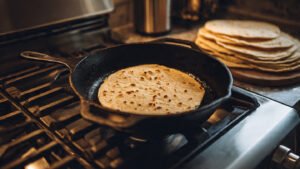
- Step 1: Preheat & Prep. Turn broiler to HIGH. Heat a 12-inch cast-iron skillet on the stove over medium-high heat until smoking hot (approx. 450°F).
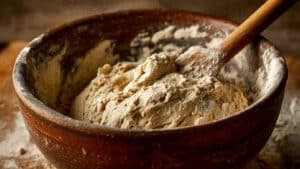
- Step 2:Mix the Dough. In a medium bowl, whisk the flour and baking powder together, then add the sourdough discard, oil, and salt. Aim for a soft, sticky 'thick batter' consistency rather than a firm ball.
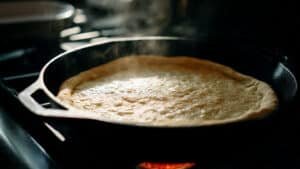
- Step 3: The Skillet Fry. Drizzle oil in the hot skillet. Drop the dough in and press out to the edges. Cook for 3-5 minutes until the bottom is deep golden brown with “leopard spots.”
- Step 4: Top & Broil. Spread a thin layer of sauce and cheese. Place the skillet under the broiler for 3-5 minutes until the cheese bubbles and the edges char. Let rest on a wire rack for 2 minutes before slicing

Notes
- Recipe Note: If your discard is very old (1+ week), add ½ tsp of baking soda to the dough to neutralize the acid and boost the “Maillard” browning reaction
- Carbohydrates: 42g
- Protein: 9g
- Fat: 8g
Do You Need Yeast to Make Sourdough Pizza Dough?
No — and this is the question most people have before they try this recipe for the first time. If the discard isn’t your active, bubbly starter — if it’s the stuff you scraped off before feeding — does it actually have enough power to leaven pizza dough?
The answer is yes, and here’s why.
Wild Yeast Is Already in Your Sourdough Discard
Sourdough discard isn’t dead. It’s dormant. Your discard contains the same wild yeast strains — primarily Saccharomyces cerevisiae and various Kazachstania species — that live in your active starter. When you feed your starter, you’re diluting these populations and giving them fresh food. The portion you discard is older, hungrier, and slower — but it still has living organisms in it.
When you mix that discard into a pizza dough with flour and water, you’re giving those wild yeasts a fresh food source. They wake up and begin producing carbon dioxide — which, combined with gluten development, creates the lift and structure you need in a pizza crust.
This is the fundamental principle behind how to use sourdough discard for leavening: the organisms are there, they just need time and warmth to get going.
Active Discard vs. Inactive Discard: Does It Matter?
Yes — and this is where a lot of people go wrong.
✓ Active Discard (Best Results)
- Used within 1–2 days of last feeding
- Shows small bubbles when stirred
- Smells mildly tangy (not harsh)
- Creates better rise & flavor
- No yeast needed
⚠️ Older Discard (Still Works)
- Sitting in fridge 1–2 weeks
- Flat, no visible bubbles
- Very acidic smell (vinegar/alcohol)
- Slower fermentation, denser result
- May need ½ tsp yeast boost
Active discard (used within a day or two of the last feeding, stored at room temperature or recently taken from the fridge) will produce a noticeably better rise and more flavor. It still has plenty of viable yeast and bacteria.
Older discard (sitting in the fridge for 1–2 weeks or more) is more acidic and has fewer active organisms. It will still work in pizza dough, but expect a denser result and a more pronounced sour flavor. You may want to let the dough ferment longer to compensate.
If your discard is more than two weeks old, it’s worth refreshing your starter and using fresher discard for the best results. For a full breakdown of how long discard stays viable, see how long sourdough discard is good for.
The Fermentation Science: What Happens Inside the Dough
When your sourdough starter discard dough is resting, it’s not just sitting there. Wild yeast is producing CO2 (creating bubbles and lift), while lactic acid bacteria are producing lactic and acetic acids. These acids do two things: they develop flavor — that slightly tangy, complex taste that sets sourdough pizza crust apart from commercial yeast crust — and they strengthen gluten bonds through acidification, contributing to a chewier, more resilient crumb structure.
The longer the fermentation, the more developed these flavors and textures become. This is why a same day pizza dough and an overnight pizza dough, made with the same recipe, will taste noticeably different. Neither is wrong — they just serve different goals. For precise control over fermentation timing, use the aliquot method to know exactly when your bulk fermentation is finished, regardless of temperature.
How Sourdough Discard Pizza Differs From Commercial Yeast Dough
Commercial yeast pizza dough is fast and reliable, but the flavor is relatively neutral. Sourdough discard pizza dough has a more complex flavor, a slightly chewier texture, and better browning characteristics due to the sugars produced during fermentation.
The crust tends to be more extensible — meaning it stretches without springing back as aggressively — which makes it easier to shape into a thin base. And because the fermentation process partially breaks down gluten and starches, many people find sourdough pizza dough without yeast easier to digest than a fast-risen commercial dough.
Can You Make Sourdough Bread Recipes Without Yeast Using Only Discard?
This comes up constantly in sourdough communities, and the answer is: yes, absolutely — with a few conditions. Whether you’re making pizza dough or a full sourdough loaf, wild yeast from your discard or active starter is all the leavening power you need. Commercial yeast is optional, not required.
Does the Discard Need to Be Bubbly?
Not necessarily. Bubbles are a sign of active fermentation, but even discard that looks flat can contain enough wild yeast to leaven pizza dough over time. The key difference is that bubbly, active discard will produce results faster. Flat, refrigerator-cold discard will need more time to get going — plan for a longer bulk ferment at room temperature (3–5 hours) rather than a short one.
If you want faster results and have the option, pull your discard out of the fridge a few hours before mixing. Let it come to room temperature and you’ll see more activity — and get better results.
Will Sourdough Dough Rise Without Commercial Yeast?
Yes — but “rise” looks different in pizza dough than in a sandwich loaf. You’re not looking for the dough to double in size. You’re looking for it to puff slightly, feel more pillowy and aerated than when you first mixed it, and show some bubble structure when you stretch it. That’s enough to produce a great crust.
Why No-Yeast Sourdough Discard Pizza Dough Sometimes Fails
If your no yeast pizza dough with sourdough discard is coming out flat, dense, or gummy, the most common culprits are:
- Discard that’s too old or inactive — if it smells very acidic (like nail polish remover or alcohol), it’s past its prime. Sourdough starter that smells like acetone is a sign of a very hungry, depleted starter.
- Dough that’s too cold — wild yeast works slowly. If your kitchen is cold (below 68°F), fermentation slows dramatically. Aim for a dough temperature of 75–78°F for best results.
- Not enough fermentation time — be patient. This isn’t commercial yeast. Give the dough the time it needs.
- Too much flour added — a stiff dough ferments poorly. Sourdough pizza dough should feel slightly tacky, not dry.
🌡️ Temperature Troubleshooting: Why Your Kitchen Temp Matters
Cold Kitchen (below 68°F): Fermentation slows by 50% or more. Extend bulk ferment by 1–2 hours or place dough in a turned-off oven with the light on. For a cold climate, bulk fermentation timing varies significantly by temperature — reference a complete temperature chart for precision.
Warm Kitchen (75–80°F): Ideal range. Follow timeline as written.
Hot Kitchen (above 82°F): Fermentation accelerates. Check dough 30–60 minutes earlier than expected to avoid overproofing.
Quick fix: Use warm water (85–90°F) when mixing to jumpstart cold discard.
Same Day vs. Overnight Sourdough Pizza Dough Without Yeast
One of the most useful features of this recipe is its flexibility. You can make it work in a few hours or ferment it slowly overnight — and both approaches produce great results.
Same Day Sourdough Pizza Dough
If you want pizza tonight, this is your path. Mix the dough, let it bulk ferment at room temperature for 3–5 hours (depending on how active your discard is and how warm your kitchen is), then shape and top. The crust will be lighter on flavor complexity but still noticeably better than commercial yeast dough. For a faster approach, check out this same day sourdough discard pizza guide.
Best for: Weeknight pizza, spontaneous baking, milder flavor preference.
Overnight Sourdough Pizza Dough
Mix the dough in the evening, let it rest at room temperature for an hour, then refrigerate overnight (8–16 hours). Cold fermentation dramatically improves flavor — the slow, cool environment gives lactic acid bacteria time to develop a more complex, nuanced tang without over-fermenting the dough. Pull it out an hour before you want to bake to take the chill off.
This is the method used by most serious pizza makers, and the difference in flavor is worth the planning. For a deeper dive into cold fermentation technique, see cold ferment sourdough.
Best for: Weekend pizza, meal prep, maximum flavor development.
How to Get a Crispy Sourdough Pizza Crust Without Commercial Yeast

Crispiness is the thing people want most from homemade pizza crust — and it’s the thing most home ovens struggle to deliver. Here’s how to maximize it with sourdough discard pizza dough.
Use High Heat
The single biggest factor in a crispy crust is oven temperature. Preheat your oven as high as it will go — typically 500–550°F (260–290°C). If your oven only reaches 450°F, that works too, but you’ll need to bake a little longer.
Use a Pizza Stone, Steel, or Cast Iron
A cold baking sheet produces a steamed, soft crust. A preheated pizza stone or steel conducts intense bottom heat directly into the dough — the same effect as a wood-fired oven floor. Preheat your stone or steel for at least 45–60 minutes before baking. For a full breakdown of techniques, see how to get a crispy sourdough discard pizza crust.
Don’t Overload the Toppings
Heavy, wet toppings steam the crust rather than letting it crisp. Use a thin layer of sauce (spread to within half an inch of the edge), moderate cheese, and add any water-heavy toppings (fresh tomatoes, mushrooms) after baking or drain them thoroughly first.
Par-Baking for Extra Crispiness
For an extra-crispy base, par-bake the crust for 4–5 minutes before adding toppings. This sets the structure and dries out the surface before the moisture from toppings has a chance to soften it. More on this technique: how to par-bake sourdough pizza.
Thin vs. Thick Crust Variations
This dough is versatile enough to handle both styles. The key variable is how much dough you use per pizza and how thin you stretch it.
Thin Crust Sourdough Pizza
For a thin crust sourdough pizza, divide the dough into two portions for a standard 12-inch pie. Stretch it as thin as you comfortably can without tearing — aim for roughly 10–11 inches from a standard dough ball. A higher-hydration dough (70%+) stretches more easily and bakes up crispier.
Thin crust benefits from very high heat and a shorter bake time — 6–8 minutes on a preheated stone.
Thick Crust / Pan Pizza
For a thicker, focaccia-style crust, use the full dough for one pizza and bake it in an oiled cast iron skillet or sheet pan. Press the dough into the pan, let it rest 20–30 minutes to puff slightly, then top and bake. The oil in the pan creates a fried, golden base that’s deeply satisfying.
This style is more forgiving with less active discard, because the dough is thicker and the structure doesn’t depend as much on lift.
Prefer thick pan pizza? Try our sourdough discard Detroit style pizza dough recipe.
Troubleshooting: Dense or Flat Sourdough Discard Pizza Dough
Even experienced bakers run into problems. Here’s how to diagnose and fix the most common issues with easy sourdough discard pizza dough.
Dough won’t stretch without tearing: The gluten is too tight. Let it rest for 20–30 minutes (bench rest) before stretching. Gluten relaxes with time. Also check that you haven’t added too much flour. For more on stretching sourdough discard pizza dough without tearing, see the dedicated guide.
Dough is too sticky to work with: Lightly flour your hands and work surface — but resist adding lots of flour to the dough itself, which will make it tough. A bench scraper is your best friend for sticky dough. See how to fix sticky sourdough discard pizza dough.
Crust is dense and bready: Fermentation was insufficient. Either the discard was too inactive, the bulk ferment was too short, or the kitchen was too cold. Next time, extend the ferment time or use fresher discard.
Crust is soft and pale, not crispy: Oven temperature too low, or the stone/steel wasn’t preheated long enough. Also check that you’re not overloading with toppings.
Dough tastes flat: Your discard was too old and the wild yeast population was too depleted to produce meaningful flavor. Use fresher discard or extend the fermentation window significantly.
Best Flour for Sourdough Discard Pizza Dough
Flour choice makes a real difference in the final texture and structure of your crust.
Bread flour is the top recommendation for pizza dough. Its higher protein content (12–14%) develops stronger gluten, which creates a chewier, more elastic crust that holds its shape under toppings.
Looking for a traditional Italian-style crust? Try our Neapolitan sourdough discard pizza dough recipe.
All-purpose flour works well and produces a slightly softer, more tender crust. Fine for most home bakers.
00 flour (Italian-style fine-milled flour) is the traditional choice for Neapolitan-style thin crust. It produces a very extensible, silky dough that stretches beautifully. Best suited for very high-heat baking (900°F+ in a wood-fired oven or 550°F+ at home).
For a complete walkthrough, see our guide to sourdough discard pizza dough with 00 flour.
Whole wheat flour can be substituted for up to 30% of the total flour without significantly affecting texture. More than that and the crust becomes noticeably denser. Whole wheat does add a pleasant nutty flavor. For a comprehensive comparison of flour options, see best flour for sourdough pizza.
Using an Ooni? Read our complete guide to sourdough discard pizza dough for Ooni.
How to Store Leftover Sourdough Pizza Dough
Made too much dough? No problem.
Refrigerator: Wrap individual dough balls tightly in plastic wrap or store in oiled zip-lock bags. They’ll keep in the fridge for up to 3 days, and the flavor will actually improve as they slowly ferment. See our guide on how long sourdough discard pizza dough lasts for the full storage breakdown.
Freezer: Freeze dough balls after shaping. Wrap tightly and freeze for up to 3 months. Thaw overnight in the fridge, then bring to room temperature before stretching.
This dough proves your discard has enough wild activity to leaven dough on its own — the same principle behind our complete guide to sourdough without added yeast.
Want pizza tonight? Follow our hour-by-hour same-day sourdough discard pizza timeline for the exact schedule from mixing to bake.
Discard Strength Chart: Do You Need to Add Yeast?
Whether your discard needs a commercial yeast boost depends entirely on how old your starter is and how recently it was fed. Use this chart to decide before you mix.
| Starter Age / Discard Condition | Expect | Recommendation |
|---|---|---|
| Starter less than 2 weeks old | Weak rise, slower ferment | Add 1 tsp instant yeast to guarantee results |
| Starter 2–4 weeks old, discard from fridge (1 week old) | Moderate activity | Add ½ tsp instant yeast for insurance, or extend bulk ferment by 1–2 hrs |
| Established starter (2+ months), discard 3–5 days old | Good activity | No yeast needed — discard will leaven the dough on its own |
| Established starter (6+ months), recently fed | Strong activity | No yeast needed — may ferment faster than expected, monitor closely |
| Any starter, discard more than 2 weeks old | Very weak / depleted | Feed starter first, use fresh discard OR add 1 tsp instant yeast |
If you’re unsure about your starter’s health, our guides on how to feed and maintain your sourdough starter and sourdough starter not working can help you diagnose and fix any issues before baking.
The No-Knead Skillet Method (Fastest Option)
If you need pizza on the table in under 30 minutes — no bulk ferment, no shaping, no stress — there’s a method that works: pour your discard directly into a hot, oiled cast iron skillet and bake it as-is.
This isn’t traditional pizza dough — it’s more like a batter-style crust. But it’s genuinely crispy, fast, and a great way to use discard when you have no time at all.
How to Make Skillet Sourdough Pizza (No Knead)
- Preheat oven to 500°F (260°C) with a cast iron skillet inside.
- When the skillet is fully hot (about 15 minutes), remove carefully and add a generous drizzle of olive oil.
- Pour in your sourdough discard (roughly 200g) and spread it thin with the back of a spoon.
- Add a pinch of salt, garlic powder, or dried herbs if desired.
- Return to the oven and bake 10–12 minutes until the edges are golden and pulling away from the pan.
- Add sauce and toppings, then bake another 6–8 minutes until cheese is melted and bubbly.
The result is thin, crispy, and ready in under 30 minutes total. The discard’s natural acidity gives it a pleasant tang, and the pre-heated cast iron creates the fried base that makes it genuinely crispy. This is not the same as a fully fermented pizza dough — but on a busy weeknight, it’s excellent.
Frequently Asked Questions
Do you need yeast to make sourdough bread or pizza dough?
No. Sourdough bread and pizza dough do not require commercial yeast. A sourdough starter — or even sourdough discard — contains wild yeast and lactic acid bacteria that provide all the leavening power you need. The trade-off is time: wild yeast works more slowly than commercial yeast, so sourdough recipes require longer fermentation windows (typically 3–16 hours depending on the recipe and temperature). The reward is better flavor, chewier texture, and a more digestible crust.
What sourdough bread recipes can you make without yeast?
With an active sourdough starter or discard, you can make virtually any bread without commercial yeast — including classic artisan sourdough loaves, sourdough sandwich bread, focaccia, flatbreads, pizza dough, and more. See our full guide to sourdough bread recipes without yeast for a complete overview of what’s possible with discard alone.
Can I use sourdough discard instead of yeast in pizza dough?
Yes. Sourdough discard contains wild yeast that can leaven pizza dough without any commercial yeast. The result is a more flavorful, slightly tangy crust with a chewier texture than a quick commercial-yeast dough. Allow more time for fermentation — typically 3–5 hours at room temperature for same-day pizza, or overnight in the fridge for best flavor.
Does sourdough discard pizza dough need to rise?
It doesn’t need to double in size the way a bread loaf does, but it should puff and feel airy after the bulk ferment. If your dough shows no signs of fermentation after several hours, your discard may be too inactive. Try using fresher discard or extending fermentation time in a warmer spot.
If you’ve already pulled off a no-yeast pizza crust, baking sourdough without added yeast as a full loaf is a natural and rewarding next challenge.
How long should I ferment sourdough discard pizza dough?
For same-day pizza: 3–5 hours at room temperature (68–75°F). For overnight pizza: 1 hour at room temperature, then 8–16 hours in the refrigerator. Longer fermentation produces better flavor and a more digestible crust.
What if my sourdough discard isn’t bubbly?
You can still use it. Flat discard just needs more time to get going. Let your discard come to room temperature before mixing, extend the bulk ferment by an hour or two, and make sure your kitchen is warm enough (ideally 70°F+). Alternatively, check whether your sourdough discard has liquid on top — that “hooch” is a sign it’s hungry but still alive.
Can I make sourdough discard pizza dough the night before?
Absolutely — and it’s actually the preferred method for best flavor. Mix the dough the night before, let it rest at room temperature for an hour, then refrigerate overnight. Pull it out about an hour before baking to relax.
What’s the difference between using active starter and discard for pizza dough?
Active starter (recently fed and at peak) will produce more lift and a less sour flavor. Discard (older, not recently fed) will work more slowly, produce a tangier flavor, and may result in a slightly denser crust. Both work well for pizza — it just depends on your timeline and flavor preferences. See the full sourdough discard vs active starter pizza comparison for more detail.
Why is my sourdough pizza dough sticky?
Some stickiness is normal and expected in a well-hydrated dough — don’t rush to add more flour. Lightly flour your hands rather than the dough, and use a bench scraper to manage the dough. If it’s unmanageably sticky after a long ferment, it may be slightly overproofed. Shape quickly and get it in a hot oven.
Is sourdough made without commercial yeast healthier?
Many bakers choose sourdough specifically to avoid commercial yeast, and there are real reasons to. The extended fermentation in naturally leavened sourdough allows lactic acid bacteria to break down phytic acid (an anti-nutrient in wheat) and partially pre-digest gluten proteins, which many people find easier on digestion. A fast-risen commercial yeast loaf skips this process. That said, individual tolerance varies, and sourdough made without commercial yeast is not appropriate for those with celiac disease.
What hydration should my sourdough starter be for pizza dough?
This recipe is designed for a 100% hydration starter — equal parts flour and water by weight. If your starter is at a different hydration (50% hydration is common in some European traditions), reduce your added water by 20–30g to compensate.
Yes. Sourdough discard pizza dough can be frozen for up to 3 months. Thaw overnight in the refrigerator and bring to room temperature before stretching
Most home bakers achieve the best balance of stretchability and crispness between 65% and 70% hydration.
Yes. Overnight cold fermentation improves flavor, gluten development, and crust texture. Most dough performs best after 12 to 48 hours of refrigeration.
Final Thoughts
Sourdough discard pizza dough without yeast is one of the most practical, delicious, and satisfying ways to use up your discard — and once you try it, it’s hard to go back to commercial yeast pizza. The flavor is better, the texture is more interesting, and the process teaches you something real about fermentation that carries over into every other sourdough bake you do.
Start with a same-day dough if you’re in a hurry. Try an overnight cold ferment when you have the time. Experiment with flour types, hydration levels, and crust thickness. The recipe is forgiving, and the discard is free — so there’s no reason not to experiment.
If you want to go deeper into the techniques that produce consistently great results, explore more sourdough discard flatbread, on the blog.
Want to master sourdough from starter to crust? Get step-by-step techniques, troubleshooting guides, and recipes for every skill level in the Sourdough Archive Bundle Course.
8 Responses
Looks Amazing I will have to give this a try. I just bought a bread maker. I am ready to try all kinds of recipes. Can’t wait to try pizza. Thanks for the post
This was good! Yes, you have to try. I added olive and pineapple, pepperoni to mine. I know pineapple on pizza. If you know you know!
I can not find how much baking powder to use. Every other ingredient is listed.. but that 1. Help!
Thank you so much for catching that! You are absolutely right—the baking powder is the ‘secret’ to getting that rise without the yeast. I have updated the recipe to include 1 teaspoon of baking powder. You should whisk it into your flour before adding the discard. Happy baking, and let me know how the crust turns out!”
The baking powder is added under the incorrect sections. It’s under the “Sauce” ingredients and listed as a step in #5 which is too late to add. Instructions are very confusing.
Good eye — you’re right, that was a formatting error on my end. The baking powder should be mixed in with the dry flour in Step 2, not the sauce. I’m fixing the recipe card now so the instructions read correctly start to finish. Thanks for catching it!”
I’m trying to make method 2 and cannot seem to find the part where it says how much water to use? Help! 🙁
You don’t need to add any water to this recipe.
The **1 cup of sourdough discard already contains water**, because sourdough starter is made from flour and water. That discard acts as the liquid in the dough.
So when you mix the ingredients together, the moisture from the discard should be enough to bring the dough together.
**What the dough should feel like:**
* Soft
* Slightly sticky
* Easy to press into the pan
**If the dough feels off:**
* **Too sticky:** sprinkle in a little more flour (1 tablespoon at a time).
* **Too dry or crumbly:** add a tiny splash of water (about 1 teaspoon at a time).
For most sourdough discard, though, **no extra water is needed.** 🍕